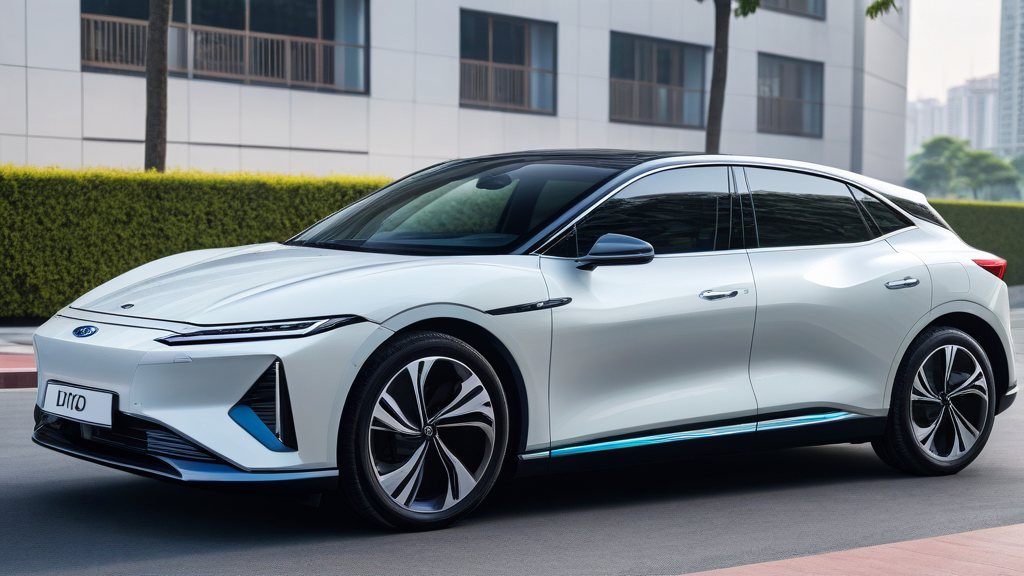
I still remember my first ride in a Chinese EV. It was 2021, and a friend picked me up in a Nio ES6 near my apartment in Shanghai. I climbed in expecting some budget knock-off vibes. What I got instead was a cabin nicer than any Audi I’d ever sat in — ambient lighting, a voice assistant that actually understood my terrible Mandarin, and acceleration that pinned me to the seat.
Four years later, that “surprisingly good” impression has become “this is the best EV market on the planet.” And I’m not exaggerating.
China doesn’t just produce the most electric cars in the world. It produces some of the best. In 2026, if you’re not paying attention to BYD, Nio, and XPeng, you’re missing the story that’s reshaping the global auto industry.
Let me break it down for you.
—
The Big Picture: China’s EV Market in 2026
Let’s start with the numbers, because they’re genuinely staggering.
In 2025, new energy vehicles (NEVs) — that’s battery EVs, plug-in hybrids, and fuel-cell vehicles — accounted for **over 50% of all new car sales in China for the first time**. According to the China Passenger Car Association (CPCA), NEV sales hit roughly **12.8 million units** in 2025, up from about 11.5 million in 2024.
To put that in perspective: in 2020, NEVs were less than 6% of the market. Six years later, they’re the majority. That’s not a trend — that’s a landslide.
| Year | China NEV Sales (Million Units) | Market Share |
|---|---|---|
| 2020 | 1.37 | 5.8% |
| 2021 | 3.52 | 13.4% |
| 2022 | 6.89 | 25.6% |
| 2023 | 9.49 | 31.6% |
| 2024 | 11.5 | 42.1% |
| 2025 | 12.8 | 51.2% |
*(Sources: CPCA, China EV Data Center)*
And it’s not slowing down. The first quarter of 2026 has already seen NEV penetration hovering around 54-55%. The Chinese government has set a target of 70% NEV sales by 2030, and honestly? I’d bet on them hitting it early.
What’s driving this? Three things:
Let’s look at the three biggest players.
—
BYD: The Unstoppable Giant
If you only know one Chinese EV brand, it’s BYD. And in 2026, BYD has basically become China’s Volkswagen, Toyota, and Tesla rolled into one.
**The numbers are absurd.** BYD sold over **4.27 million NEVs globally in 2025** — that’s more than Tesla and almost double what they sold in 2023. Their market cap hit $150 billion at one point. They now have factories in Hungary, Brazil, Thailand, Uzbekistan, and Indonesia.
The lineup that covers everything
BYD’s secret weapon is range. They’ve got something for every budget:
Why BYD is different
BYD does something almost no other carmaker does: they make their own batteries. The **Blade Battery** — their LFP (lithium iron phosphate) cell — is safer, more durable, and cheaper than the competition. They also produce their own semiconductors, motors, and even the IGBT chips that control the power electronics.
This vertical integration means BYD can cut prices whenever they want. In early 2026, they launched a new version of the Seagull priced at ¥69,800 with a **Blade Battery and 8-in-1 electric drive system**. Western automakers simply can’t compete on cost.
—
Nio: The Premium Experience
Nio is the Chinese EV brand that feels most like a Silicon Valley startup — if that startup had unlimited money and ambitious enough to build a nationwide battery swap network.
Let me tell you about my experience with battery swapping. I drove a Nio ET5 from Shanghai to Nanjing — about 300km. Instead of charging for 40 minutes, I pulled into a Nio swap station, the car lined itself up automatically, and **four minutes later** I had a fresh battery at 93%. Faster than filling a petrol tank.
By the end of 2025, Nio had over **2,700 battery swap stations globally**, with more than 1,600 in China alone. They’re targeting 5,000 total by 2027.
Nio’s lineup in 2026
Nio focuses on the premium segment, and their cars feel it:
The subscription model
Nio also pioneered **BaaS (Battery as a Service)** — you can buy the car without the battery and pay a monthly subscription starting at ¥728. This drops the purchase price by about ¥70,000. In 2026, over 60% of Nio buyers choose BaaS.
Nio’s other differentiator? The **NIO Houses** — swanky club-like spaces in city centers where owners can hang out, work, or grab a coffee. It sounds gimmicky but Nio owners genuinely love the community. There are over 200 NIO Houses across China.
—
XPeng: The Tech Player
XPeng doesn’t try to beat BYD on scale or Nio on luxury. They compete on **smart driving technology** — and in this arena, they’re arguably ahead of both.
XNGP: XPeng’s autonomous driving
XPeng’s **XNGP (XPeng Navigation Guided Pilot)** system was already impressive in 2024. By 2026, it’s something else entirely.
I tried XNGP in a XPeng G6 in Guangzhou last year. The car navigated a chaotic five-way intersection with zero intervention from me. A scooter cut in front of us — the car braked smoothly and continued. I went from “this is cool” to “this is genuinely useful” in about 10 minutes.
The lineup
Flying cars? Seriously.
XPeng’s sister company, XPeng AeroHT, is developing a flying car. The **X2** prototype completed its first public flight in 2022, and in early 2026, they announced the **X3** — a modular flying vehicle that can drive on roads and take off vertically. They’re aiming for production by 2028.
Am I skeptical? Absolutely. But the fact that they’re building it at all shows the ambition level in this industry.
—
Comparison: BYD vs Nio vs XPeng
Here’s how the three brands stack up against each other:
| Feature | BYD | Nio | XPeng |
|---|---|---|---|
| **Price Range** | ¥69,800 – ¥1,096,000 | ¥298,000 – ¥800,000+ | ¥189,900 – ¥359,900 |
| **Best For** | Budget to mass market | Premium & luxury | Tech enthusiasts |
| **Battery Tech** | Blade Battery (LFP) | Battery Swap + 150kWh solid-state (2026) | 800V ultra-fast charging |
| **Autonomous Driving** | DiPilot (good, not great) | NIO Aquila + NAD (cautious) | XNGP (best in class) |
| **Global Presence** | 90+ countries | Germany, Norway, UK | Europe (limited) |
| **Unique Selling Point** | Vertical integration, lowest costs | Battery swap, NIO Houses | Smart driving, 800V charging |
| **2025 Global Sales** | 4.27M | 221,000 | 190,000 |
*(Data: company earnings reports and CPCA, 2025-2026)*
—
What It’s Actually Like to Own an EV in China
I’ve been driving EVs in China since 2021 — first a rental Nio, then a BYD Atto 3 I borrowed from a friend for a month. Here’s what you need to know:
Charging is everywhere
In major cities like Shanghai, Beijing, Shenzhen, and Guangzhou, you’re never more than 1-2 km from a public charger. Most shopping malls have charging stations in the parking lot. Many offer **free charging** if you spend over a certain amount.
For home charging, most new apartment buildings in China include EV charger installations. If yours doesn’t, installation costs about ¥3,000-5,000 depending on the setup.
Cost comparison
| Fuel Type | Cost per 100km (approx.) |
|---|---|
| Petrol car (7L/100km at ¥8/L) | ¥56 |
| EV (home charging at ¥0.6/kWh) | ¥9-12 |
| EV (public fast charger at ¥1.5/kWh) | ¥22-30 |
You’re saving 75-80% on fuel costs with an EV. Over a year of driving 20,000km, that’s roughly ¥8,800 saved.
The green plate
EVs in China get distinctive green license plates — and with them, benefits like:
Challenges
It’s not all perfect. Long-distance travel during peak seasons (Chinese New Year, National Day) means queuing for chargers. Battery degradation in northern winters can knock 20-30% off your range. And some older apartment complexes don’t have charger installations yet.
But every year these problems get smaller. In 2026, I’d say the EV experience in China is better than the petrol experience for 90% of drivers.
—
The Export Story: Chinese EVs Go Global
This is the part that’s shaking up the world. In 2025, China exported approximately **1.75 million NEVs**, up from 1.28 million in 2024.
The EU slapped additional tariffs of up to 45% on Chinese EVs in late 2024, and the US imposed a 100% tariff in 2025. But Chinese brands have responded by building factories overseas — BYD in Hungary and Brazil, Chery in Spain, SAIC in Europe.
Chinese EVs are gaining traction in:
The tariffs haven’t stopped the wave. They’ve just forced Chinese brands to become local manufacturers.
—
FAQ: Electric Cars in China
1. Can a foreigner buy and register an EV in China?
Yes. If you have a valid residence permit and Chinese driver’s license, you can buy an EV just like a local. The process is the same — green plate included. Some dealerships in Shanghai even have English-speaking sales staff (Nio and BYD are especially good at this).
2. Can I take a Chinese EV on a road trip?
Absolutely. I’ve done Shanghai to Beijing (1,200km) in a Nio ET7 with zero issues. Just plan your charging stops — the WeChat mini-programs for State Grid, TELD, and Star Charge apps make finding chargers easy. Chinese New Year is the only time I’d avoid long drives.
3. Which Chinese EV brands are available outside of China?
BYD is available in over 90 countries. Nio sells in Germany, Norway, the Netherlands, Sweden, and the UK. XPeng has a limited presence in Europe. MG (owned by SAIC) is basically a Chinese EV sold under a British badge — and it’s the top-selling Chinese brand in Europe.
4. Are Chinese EVs safe?
Yes. All three brands have scored 5-star ratings in Euro NCAP and C-NCAP (China’s safety rating system). BYD’s Blade Battery passed the nail penetration test with no fire or explosion — something that gave many early EV owners nightmares. If anything, Chinese EVs are over-engineered on safety because the market demands it.
5. How long do Chinese EV batteries last?
Most Chinese EV batteries are warrantied for 8 years or 150,000-200,000 km. BYD’s Blade Battery is rated for over 5,000 charge cycles — that’s roughly 1.5 million km of driving. Real-world degradation is about 5-8% after 100,000 km, based on reports from Chinese EV forums.
—
Final Thoughts
I’ve been in China for 8 years, and the pace of change in the EV industry still catches me off guard. When I first arrived, seeing an electric car was an event. Now I walk through any parking lot and half the cars have green plates.
BYD, Nio, and XPeng aren’t just competing with Tesla. They’re redefining what an EV can be — from a ¥69,800 city car to a floating luxury SUV with a tank turn. The driving tech, the battery innovation, the sheer variety of choices — there’s nothing like it anywhere else in the world.
If you’re in China, buy an EV. You’d be mad not to. If you’re outside China, keep an eye on these brands — because they’re coming to a dealership near you, tariffs or not.
And that quiet hum you hear? It’s the sound of an industry being turned upside down.