Mục lục
When you pick up a book, set sail, or light a firework, you are experiencing the legacy of ancient Chinese inventors. Long before the Industrial Revolution, China pioneered technologies that reshaped human civilization. From paper to gunpowder, these inventions did not just stay within China’s borders—they traveled along the Silk Road, sparked revolutions in Europe, and laid the foundation for the modern world. Here are the ancient Chinese inventions that changed the world.
The Four Great Inventions
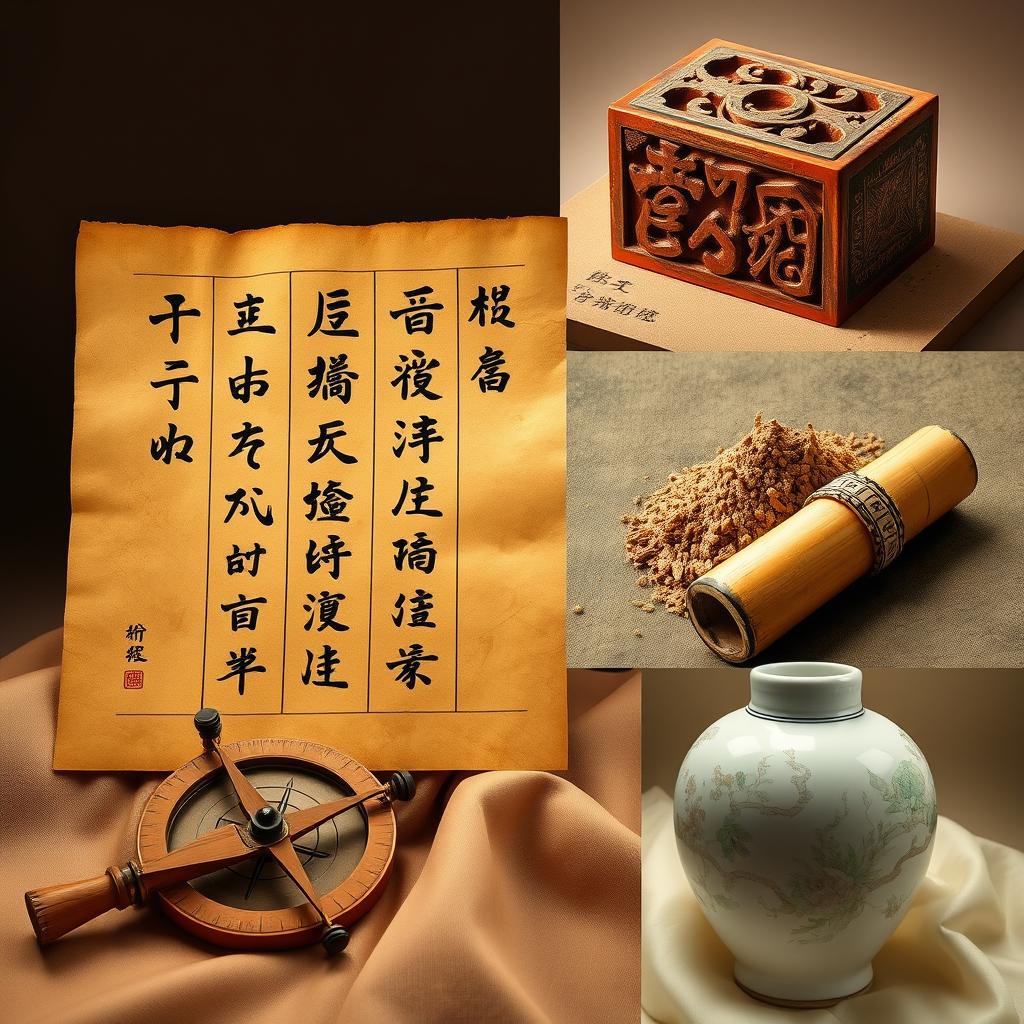
The “Four Great Inventions” of ancient China—papermaking, printing, gunpowder, and the compass—are widely recognized as the most transformative contributions to global history. Each one revolutionized how people communicate, travel, fight, and explore.
Papermaking: From Cai Lun to Global Literacy
Papermaking is traditionally attributed to Cai Lun, a Chinese court official, in 105 CE. However, archaeological finds reveal paper fragments dating back to the 2nd century BCE. Before paper, writing materials like bamboo strips, silk, and clay tablets were cumbersome or expensive. Cai Lun’s innovation—mixing mulberry bark, hemp, and rags into a pulp—created a lightweight, cheap, and versatile medium. This invention spread via the Silk Road to the Islamic world and eventually to Europe, where it enabled mass production of books and increased literacy. By contrast, Europe relied on parchment and vellum until the 12th century, making China’s papermaking far ahead of its time.
Printing: Woodblock and Movable Type
Before Gutenberg, there was China. The earliest known woodblock printing dates to the 7th century, and the Diamond Sutra (868 CE) survives as the oldest printed book with a date. In 1040 CE, Bi Sheng invented movable type using baked clay pieces, allowing text to be rearranged quickly. While movable type did not catch on as widely in China due to the complexity of Chinese characters, woodblock printing flourished, mass-producing texts for exams, literature, and religious works. China’s printing revolution predated Europe’s by centuries, democratizing knowledge and fueling cultural growth.
Gunpowder: From Alchemy to Military Revolution
Alchemists in Tang-dynasty China accidentally discovered gunpowder around 850 CE while searching for an elixir of immortality. The earliest known formulas appear in the Wujing Zongyao (1044), a military manual. Initially used for fireworks and signals, gunpowder soon transformed warfare: by the 10th century, Chinese armies employed flamethrowers, grenades, and rockets. When the formula reached the Middle East and Europe, it ended the era of knights and castles, enabling the rise of centralized nation-states. The impact was so profound that historian Joseph Needham called gunpowder the most important invention before the steam engine.
Compass: Navigation and Exploration
The magnetic compass was used in China as early as the 4th century BCE for divination and fortune-telling. By the 11th century, Chinese sailors relied on it for maritime navigation, enabling long-distance voyages like Zheng He’s treasure fleets. The compass reached Europe around the 13th century, later enabling the Age of Exploration. Without it, Columbus might never have crossed the Atlantic, and global trade routes would have remained limited. China’s mastery of magnetic technology gave it a head start in seafaring—one that Europe would eventually capitalize on.
Other Transformative Inventions
Beyond the Four Great Inventions, ancient China gave the world silk, porcelain, tea, the heavy moldboard iron plow, and the seismograph. Each of these innovations had lasting global impact.
Silk and Porcelain
Silk production began as early as 2700 BCE, and the Silk Road trade network, established in the 2nd century BCE, carried this luxury fabric to Rome and beyond. Porcelain, perfected under the Song dynasty (960–1279), was prized for its beauty and resilience—Europe would not crack the recipe until the 18th century. These items were not just goods; they were catalysts for cultural exchange.
The Heavy Moldboard Iron Plow
Around the 3rd century BCE, Chinese farmers began using a heavy iron plow with a moldboard that turned soil deeply. This innovation increased crop yields by 50% or more, enabling surplus food and population growth. In contrast, Europe’s light scratch plow could not handle heavy soils until the Middle Ages. China’s agricultural efficiency gave it an economic edge for centuries.
The Seismograph
In 132 CE, polymath Zhang Heng invented the first seismoscope—a bronze vessel with eight dragons holding balls. When an earthquake struck, a pendulum inside would trigger a dragon’s mouth to drop a ball into a toad’s mouth, indicating direction. This ancient device could detect earthquakes hundreds of miles away, centuries before any comparable instrument existed in the West.
Conclusion
From the page to the battlefield, ancient Chinese inventions laid the groundwork for modern civilization. Paper, printing, gunpowder, and the compass are just the beginning—silk, porcelain, iron plows, and seismographs also changed the world. While these innovations often reached the West after long delays, their origins in China are undeniable. Acknowledging this legacy enriches our understanding of global history and reminds us that innovation knows no borders.
FAQ
Are the Four Great Inventions really Chinese?
Yes, historical evidence—including archaeological finds and written records—confirms that papermaking, printing, gunpowder, and the compass were first invented in China.
Why is gunpowder considered a Chinese invention?
The first recorded formulas for gunpowder appear in Chinese manuscripts from 850 CE, and Chinese alchemists and military strategists developed its early uses.
Did China invent the compass before Europe?
Yes. The Chinese used magnetic lodestones for direction as early as the 4th century BCE, while Europe’s first compass appeared in the 12th century.
How did papermaking spread to the rest of the world?
Papermaking traveled via the Silk Road to the Arab world (8th century) and then to Europe (12th century), where it enabled the printing revolution.
What other inventions did ancient China contribute?
Silk, porcelain, tea, the heavy moldboard plow, the seismograph, and many more innovations originated in China.
Are these inventions still used today?
Yes, in evolved forms. Modern paper, printing presses, firearms, and compasses trace their roots directly to ancient Chinese inventions.