Is tap water safe to drink in China? While urban tap water meets national standards, most Chinese boil or filter it. Learn why, plus regional differences, costs, and practical tips for travelers and expats.
Ready
EN
Mục lục
Quick Facts / Key Takeaways
Table of Contents
Historical Context: Why Trust Was Broken
The Legacy of Industrial Pollution
The 'Wushui' Stigma
Current Tap Water Quality Standards: GB5749-2006
What the Standard Covers
How It Compares Globally
Enforcement Challenges
Regional Variations: North vs. South, Urban vs. Rural
Urban Tap Water Quality
Rural Water Quality
South vs. North: Hard Water and Taste
The 'Kai Shui' Culture: Boiling as a Universal Practice
Why Boiling Is Universal
Effectiveness of Boiling
The Booming Bottled Water and Water Filter Market
Bottled Water: A Multi-Billion Yuan Industry
Water Filters: Increasingly Common
Government Investments in Water Infrastructure
Massive Spending (2016-2020)
Ongoing Improvements
Expert Opinions and Studies
What Researchers Say
International Organizations
Practical Advice for Travelers and Expats
Should You Drink Tap Water?
Tips for Ensuring Water Safety
FAQ
Conclusion
If you've ever traveled to China or moved there as an expat, one of the first questions you'll hear is: "Is tap water safe to drink in China?" It's a valid concern rooted in decades of pollution headlines and cultural habits. The short answer is: In most urban areas, tap water meets national safety standards after treatment, but it's rarely consumed straight from the tap due to taste concerns and old pipes. In this guide, we'll dive into the history, current regulations, regional differences, and practical advice for anyone living in or visiting China.
Here's what we'll cover: historical water challenges, China's drinking water standards (GB5749-2006), regional variations, the ubiquitous practice of boiling water (kai shui), the booming water filter market, government investments in infrastructure, expert opinions, and actionable recommendations.
Quick Facts / Key Takeaways
86.5% of China's surface water met Grade I–III quality standards in 2020 (good quality for treatment).
China's drinking water standard GB5749-2006 regulates 106 parameters, similar to WHO guidelines.
75% of urban Chinese households boil tap water before drinking (2019 survey).
Government invested over 1 trillion yuan (~$140 billion USD) in water infrastructure from 2016 to 2020.
Tap water in major cities like Beijing is tested daily and meets national standards, but many residents still prefer bottled or filtered water.
Table of Contents
Historical Context: Why Trust Was Broken
Current Tap Water Quality Standards: GB5749-2006
Regional Variations: North vs. South, Urban vs. Rural
The 'Kai Shui' Culture: Boiling as a Universal Practice
The Booming Bottled Water and Water Filter Market
Government Investments in Water Infrastructure
Expert Opinions and Studies
Practical Advice for Travelers and Expats
FAQ
Conclusion
Historical Context: Why Trust Was Broken
The Legacy of Industrial Pollution
For decades, China's rapid industrialization came at an environmental cost. Rivers like the Huai and Yangtze faced heavy pollution from factories and agriculture. In 2005, a benzene spill on the Songhua River left millions without drinking water for days. Such incidents eroded public trust in tap water quality.
The 'Wushui' Stigma
The word wushui (sewage) became synonymous with untreated waste. Even though water treatment plants improved, the memory of toxic algae blooms and heavy metal contamination lingers in many people's minds, especially among older generations.
Current Tap Water Quality Standards: GB5749-2006
What the Standard Covers
China's national standard for drinking water, GB5749-2006 (implemented in 2007), sets limits for 106 parameters, including bacteria, heavy metals, organic compounds, and disinfectants. This is comparable to the World Health Organization (WHO) guidelines. For example, the standard limits lead to 0.01 mg/L and arsenic to 0.01 mg/L, identical to WHO recommendations.
How It Compares Globally
Parameter
China GB5749-2006
EU Directive
US EPA
Lead (mg/L)
0.01
0.01
0.015
Arsenic (mg/L)
0.01
0.01
0.01
Nitrate (mg/L)
20
50
10
Total Coliforms
Absent in 100 mL
Absent in 100 mL
Absent (0)
Note: China's nitrate limit is stricter than the EU but less strict than the US. Overall, the standard is robust on paper.
Enforcement Challenges
While the standard exists, enforcement varies. In large cities, water utilities conduct daily tests. But in rural or remote areas, compliance can be spotty due to aging infrastructure or limited monitoring. A 2020 study found that 10-20% of rural water supply schemes failed to meet the standard for indicator parameters like turbidity and chlorine residual.
Regional Variations: North vs. South, Urban vs. Rural
Urban Tap Water Quality
In tier-1 cities like Beijing, Shanghai, and Guangzhou, tap water is generally safe after treatment. Beijing's water authority claims it passes national standards 99.9% of the time. However, taste issues arise from chlorine residual (used to kill pathogens) and hard water in northern regions where groundwater is rich in minerals like calcium and magnesium.
Rural Water Quality
Rural areas rely more on untreated groundwater or small-scale treatment plants. While the government has invested heavily in rural water projects (achieving 88% rural tap water coverage by 2020), quality assurance remains inconsistent. Boiling is even more critical in these areas.
South vs. North: Hard Water and Taste
Northern China (e.g., Beijing, Tianjin) has harder water due to geological sources. Southern China (e.g., Guangzhou, Shenzhen) generally has softer water but faces higher risks of microbial contamination from surface water sources. Taste differences lead many to prefer bottled water regardless of safety.
The 'Kai Shui' Culture: Boiling as a Universal Practice
Why Boiling Is Universal
Boiling water (kai shui) is deeply rooted in Chinese culture. For centuries, it was the only reliable way to kill bacteria and viruses. Today, even with modern treatment, boiling remains the default habit. According to a 2019 China Water Risk survey, 75% of urban households boil tap water before drinking. Hotels and restaurants always provide boiled or filtered water.
Effectiveness of Boiling
Boiling for 1-3 minutes effectively kills most pathogens, including bacteria, viruses, and protozoa. However, it does not remove chemical contaminants (e.g., heavy metals, pesticides) or reduce chlorine taste. That's why many Chinese also use water filters or buy bottled water.
The Booming Bottled Water and Water Filter Market
Bottled Water: A Multi-Billion Yuan Industry
In 2021, China's bottled water market was valued at over 200 billion yuan (approx. $28 billion USD). Brands like Nongfu Spring, C'estbon, and Ganten dominate. Consumption is highest in cities: a typical office worker in Beijing may drink 2-3 liters of bottled water daily. For context, 1 RMB ≈ 0.14 USD, so a 1.5-liter bottle costs around 2-4 RMB ($0.28-$0.56).
Water Filters: Increasingly Common
Many households install point-of-use filters: activated carbon filters for taste or reverse osmosis (RO) systems for comprehensive purification. The water purifier market in China was worth over 30 billion RMB in 2022 (~$4.2 billion USD). For instance, a decent RO system costs about 2,000-4,000 RMB ($280-$560), with replacement filters adding ~500 RMB/year ($70). Filtered water is often used for cooking and direct drinking.
Government Investments in Water Infrastructure
Massive Spending (2016-2020)
The Chinese government invested over 1 trillion yuan (approx. $140 billion USD) in urban water supply and wastewater treatment from 2016 to 2020. This funded new treatment plants, pipeline upgrades, and monitoring systems. Result: 98% of urban residents have access to treated tap water, and wastewater treatment rates exceed 95% in cities.
Ongoing Improvements
China aims to achieve 95% compliance with GB5749-2006 for rural drinking water by 2025. Smart technologies like real-time water quality sensors are being deployed in pilot cities. While challenges remain, the trend is positive.
Expert Opinions and Studies
What Researchers Say
Dr. Wang Tao, a water quality researcher at Tsinghua University, states: "In most Chinese cities, tap water leaving the plant meets international standards. The main risk is from aged pipes in older neighborhoods, which can re-introduce iron, rust, or bacteria." Studies show that lead levels in some older buildings can exceed limits due to brass fixtures or lead solder.
International Organizations
The World Bank praises China's progress but notes that secondary contamination in distribution systems is a remaining issue. The WHO recognizes that boiling is an effective household treatment but encourages disinfection for sensitive populations.
Practical Advice for Travelers and Expats
Should You Drink Tap Water?
Short-term visitors: Avoid drinking tap water directly. Stick to bottled or boiled water. However, brushing teeth with tap water is generally safe in cities.
Long-term residents: If you're staying more than a few months, consider installing a water filter (especially RO) or continue boiling. You can also use taste-improving filtered pitchers. Avoid relying on bottled water exclusively due to plastic waste.
Tips for Ensuring Water Safety
Boil water for at least 3 minutes if you don't have a filter.
Use a certified water filter – check for NSF/ANSI certification (though rare in China, some brands market it).
Check your building's pipes – new constructions (post-2000) use safer materials.
Run the tap for 30 seconds in the morning to flush out standing water.
Ask locals – neighborhood-specific advice from long-term expats is gold.
FAQ
1. Is tap water safe to drink in China after boiling?
Yes, boiling kills most harmful bacteria and viruses. However, it doesn't remove chemical pollutants or heavy metals. For complete safety, use a water filter or buy bottled water.
2. Why do Chinese people drink hot water instead of cold?
The custom of drinking hot water (re kai shui) dates back to ancient times when boiling was the only way to purify water. It's also believed to aid digestion and maintain health according to traditional Chinese medicine.
3. Is bottled water in China safe?
Reputable brands like Nongfu Spring and C'estbon are regulated and safe. Avoid unbranded or refilled bottles. Bottled water is the safest option for travelers.
4. Can I drink tap water in Shanghai?
Shanghai's tap water meets national standards, but many expats and locals still boil it or use filters due to taste and residual chlorine. It's generally safe after boiling.
5. Does boiling remove chlorine?
Boiling accelerates the evaporation of chlorine, so it reduces the chemical taste. However, it does not remove other chemicals like heavy metals.
6. What is the best water filter for China?
Reverse osmosis (RO) filters are most effective for removing heavy metals, bacteria, and chemicals. Brand options include Qinyuan, Angel, and 3M. Prices range from 1,000 to 5,000 RMB.
7. How much does bottled water cost in China?
A 500ml bottle costs 1-3 RMB ($0.14-$0.42) in convenience stores. Larger 1.5L bottles cost 2-5 RMB ($0.28-$0.70). Delivery services (like Nongfu Spring) offer 18.9L jugs for around 20 RMB ($2.80).
8. Is it safe to brush teeth with tap water in China?
In urban areas, yes. The small amount ingested poses negligible risk. In rural areas, use bottled or boiled water.
Conclusion
In summary, tap water in China is generally safe after treatment in cities, but the cultural preference for boiling or filtering remains strong due to taste and legacy concerns. For travelers, sticking to bottled or boiled water is the prudent choice. For expats, investing in a water filter is a smart, sustainable solution. China's water quality is improving—government investments and modern standards are paying off—but due diligence is still advised. Next time you visit, remember: kai shui is your friend, and a good water filter is worth every yuan.
For more insights on living in China, check out our guides on what salary to live in Shanghai and Chinese tea culture.
Mục lục
If you've ever traveled to China or moved there as an expat, one of the first questions you'll hear is: "Is tap water safe to drink in China?" It's a valid concern rooted in decades of pollution headlines and cultural habits. The short answer is: In most urban areas, tap water meets national safety standards after treatment, but it's rarely consumed straight from the tap due to taste concerns and old pipes. In this guide, we'll dive into the history, current regulations, regional differences, and practical advice for anyone living in or visiting China.
Here's what we'll cover: historical water challenges, China's drinking water standards (GB5749-2006), regional variations, the ubiquitous practice of boiling water (kai shui), the booming water filter market, government investments in infrastructure, expert opinions, and actionable recommendations.
Quick Facts / Key Takeaways
86.5% of China's surface water met Grade I–III quality standards in 2020 (good quality for treatment).
China's drinking water standard GB5749-2006 regulates 106 parameters, similar to WHO guidelines.
75% of urban Chinese households boil tap water before drinking (2019 survey).
Government invested over 1 trillion yuan (~$140 billion USD) in water infrastructure from 2016 to 2020.
Tap water in major cities like Beijing is tested daily and meets national standards, but many residents still prefer bottled or filtered water.
Historical Context: Why Trust Was Broken
The Legacy of Industrial Pollution
For decades, China's rapid industrialization came at an environmental cost. Rivers like the Huai and Yangtze faced heavy pollution from factories and agriculture. In 2005, a benzene spill on the Songhua River left millions without drinking water for days. Such incidents eroded public trust in tap water quality.
The 'Wushui' Stigma
The word wushui (sewage) became synonymous with untreated waste. Even though water treatment plants improved, the memory of toxic algae blooms and heavy metal contamination lingers in many people's minds, especially among older generations.
Current Tap Water Quality Standards: GB5749-2006
What the Standard Covers
China's national standard for drinking water, GB5749-2006 (implemented in 2007), sets limits for 106 parameters, including bacteria, heavy metals, organic compounds, and disinfectants. This is comparable to the World Health Organization (WHO) guidelines. For example, the standard limits lead to 0.01 mg/L and arsenic to 0.01 mg/L, identical to WHO recommendations.
How It Compares Globally
Parameter
China GB5749-2006
EU Directive
US EPA
Lead (mg/L)
0.01
0.01
0.015
Arsenic (mg/L)
0.01
0.01
0.01
Nitrate (mg/L)
20
50
10
Total Coliforms
Absent in 100 mL
Absent in 100 mL
Absent (0)
Note: China's nitrate limit is stricter than the EU but less strict than the US. Overall, the standard is robust on paper.
Enforcement Challenges
While the standard exists, enforcement varies. In large cities, water utilities conduct daily tests. But in rural or remote areas, compliance can be spotty due to aging infrastructure or limited monitoring. A 2020 study found that 10-20% of rural water supply schemes failed to meet the standard for indicator parameters like turbidity and chlorine residual.
Regional Variations: North vs. South, Urban vs. Rural
Urban Tap Water Quality
In tier-1 cities like Beijing, Shanghai, and Guangzhou, tap water is generally safe after treatment. Beijing's water authority claims it passes national standards 99.9% of the time. However, taste issues arise from chlorine residual (used to kill pathogens) and hard water in northern regions where groundwater is rich in minerals like calcium and magnesium.
Rural Water Quality
Rural areas rely more on untreated groundwater or small-scale treatment plants. While the government has invested heavily in rural water projects (achieving 88% rural tap water coverage by 2020), quality assurance remains inconsistent. Boiling is even more critical in these areas.
South vs. North: Hard Water and Taste
Northern China (e.g., Beijing, Tianjin) has harder water due to geological sources. Southern China (e.g., Guangzhou, Shenzhen) generally has softer water but faces higher risks of microbial contamination from surface water sources. Taste differences lead many to prefer bottled water regardless of safety.
The 'Kai Shui' Culture: Boiling as a Universal Practice
Why Boiling Is Universal
Boiling water (kai shui) is deeply rooted in Chinese culture. For centuries, it was the only reliable way to kill bacteria and viruses. Today, even with modern treatment, boiling remains the default habit. According to a 2019 China Water Risk survey, 75% of urban households boil tap water before drinking. Hotels and restaurants always provide boiled or filtered water.
Effectiveness of Boiling
Boiling for 1-3 minutes effectively kills most pathogens, including bacteria, viruses, and protozoa. However, it does not remove chemical contaminants (e.g., heavy metals, pesticides) or reduce chlorine taste. That's why many Chinese also use water filters or buy bottled water.
The Booming Bottled Water and Water Filter Market
Bottled Water: A Multi-Billion Yuan Industry
In 2021, China's bottled water market was valued at over 200 billion yuan (approx. $28 billion USD). Brands like Nongfu Spring, C'estbon, and Ganten dominate. Consumption is highest in cities: a typical office worker in Beijing may drink 2-3 liters of bottled water daily. For context, 1 RMB ≈ 0.14 USD, so a 1.5-liter bottle costs around 2-4 RMB ($0.28-$0.56).
Water Filters: Increasingly Common
Many households install point-of-use filters: activated carbon filters for taste or reverse osmosis (RO) systems for comprehensive purification. The water purifier market in China was worth over 30 billion RMB in 2022 (~$4.2 billion USD). For instance, a decent RO system costs about 2,000-4,000 RMB ($280-$560), with replacement filters adding ~500 RMB/year ($70). Filtered water is often used for cooking and direct drinking.
Government Investments in Water Infrastructure
Massive Spending (2016-2020)
The Chinese government invested over 1 trillion yuan (approx. $140 billion USD) in urban water supply and wastewater treatment from 2016 to 2020. This funded new treatment plants, pipeline upgrades, and monitoring systems. Result: 98% of urban residents have access to treated tap water, and wastewater treatment rates exceed 95% in cities.
Ongoing Improvements
China aims to achieve 95% compliance with GB5749-2006 for rural drinking water by 2025. Smart technologies like real-time water quality sensors are being deployed in pilot cities. While challenges remain, the trend is positive.
Expert Opinions and Studies
What Researchers Say
Dr. Wang Tao, a water quality researcher at Tsinghua University, states: "In most Chinese cities, tap water leaving the plant meets international standards. The main risk is from aged pipes in older neighborhoods, which can re-introduce iron, rust, or bacteria." Studies show that lead levels in some older buildings can exceed limits due to brass fixtures or lead solder.
International Organizations
The World Bank praises China's progress but notes that secondary contamination in distribution systems is a remaining issue. The WHO recognizes that boiling is an effective household treatment but encourages disinfection for sensitive populations.
Practical Advice for Travelers and Expats
Should You Drink Tap Water?
Short-term visitors: Avoid drinking tap water directly. Stick to bottled or boiled water. However, brushing teeth with tap water is generally safe in cities.
Long-term residents: If you're staying more than a few months, consider installing a water filter (especially RO) or continue boiling. You can also use taste-improving filtered pitchers. Avoid relying on bottled water exclusively due to plastic waste.
Tips for Ensuring Water Safety
Boil water for at least 3 minutes if you don't have a filter.
Use a certified water filter – check for NSF/ANSI certification (though rare in China, some brands market it).
Check your building's pipes – new constructions (post-2000) use safer materials.
Run the tap for 30 seconds in the morning to flush out standing water.
Ask locals – neighborhood-specific advice from long-term expats is gold.
FAQ
1. Is tap water safe to drink in China after boiling? Yes, boiling kills most harmful bacteria and viruses. However, it doesn't remove chemical pollutants or heavy metals. For complete safety, use a water filter or buy bottled water.
2. Why do Chinese people drink hot water instead of cold? The custom of drinking hot water (re kai shui) dates back to ancient times when boiling was the only way to purify water. It's also believed to aid digestion and maintain health according to traditional Chinese medicine.
3. Is bottled water in China safe? Reputable brands like Nongfu Spring and C'estbon are regulated and safe. Avoid unbranded or refilled bottles. Bottled water is the safest option for travelers.
4. Can I drink tap water in Shanghai? Shanghai's tap water meets national standards, but many expats and locals still boil it or use filters due to taste and residual chlorine. It's generally safe after boiling.
5. Does boiling remove chlorine? Boiling accelerates the evaporation of chlorine, so it reduces the chemical taste. However, it does not remove other chemicals like heavy metals.
6. What is the best water filter for China? Reverse osmosis (RO) filters are most effective for removing heavy metals, bacteria, and chemicals. Brand options include Qinyuan, Angel, and 3M. Prices range from 1,000 to 5,000 RMB.
7. How much does bottled water cost in China? A 500ml bottle costs 1-3 RMB ($0.14-$0.42) in convenience stores. Larger 1.5L bottles cost 2-5 RMB ($0.28-$0.70). Delivery services (like Nongfu Spring) offer 18.9L jugs for around 20 RMB ($2.80).
8. Is it safe to brush teeth with tap water in China? In urban areas, yes. The small amount ingested poses negligible risk. In rural areas, use bottled or boiled water.
Conclusion
In summary, tap water in China is generally safe after treatment in cities, but the cultural preference for boiling or filtering remains strong due to taste and legacy concerns. For travelers, sticking to bottled or boiled water is the prudent choice. For expats, investing in a water filter is a smart, sustainable solution. China's water quality is improving—government investments and modern standards are paying off—but due diligence is still advised. Next time you visit, remember: kai shui is your friend, and a good water filter is worth every yuan.
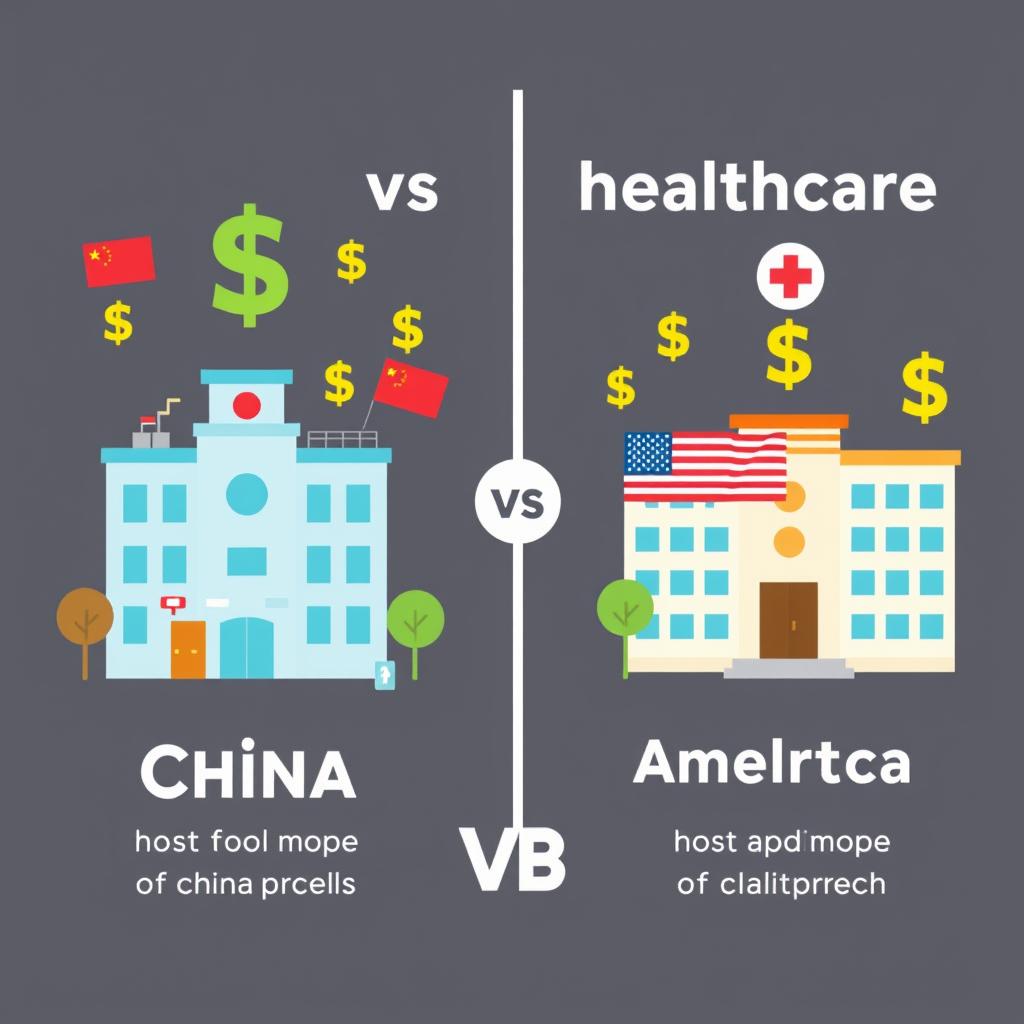
China spends far less on healthcare than the US yet achieves higher life expectancy, universal coverage, and more hospital beds. Discover how China's model outperforms America's in this data-driven comparison.
Healthcare in China costs a fraction of US prices. A doctor visit runs $20, not $200, and hospital stays are 90% cheaper. Discover how China achieves this and what the US can learn.
2 thoughts on “Is Tap Water Safe to Drink in China? A Comprehensive Guide for Travelers and Expats”
Lived in Shanghai for 2 years and never drank tap water. Boiled water is fine for tea, but I always used a filter.
Lived in Shanghai for 2 years and never drank tap water. Boiled water is fine for tea, but I always used a filter.
What about using tap water for cooking? Do you need to boil it first even for pasta?