It Started With a Bet
I’d been in Chengdu for all of three days when a local mate dared me to try “real” Sichuan hotpot. “Ni gan ma?” — you dare? Well, I’d survived a month trekking in Yunnan; how bad could a soup be?
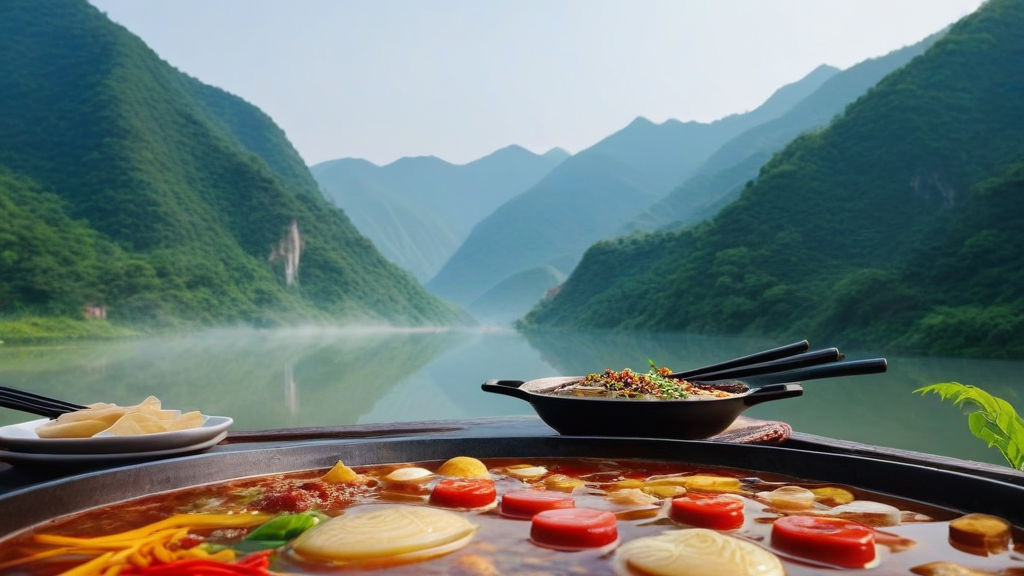
Pretty bad, as it turns out. Or rather, pretty amazing. That first spoonful of broth hit my tongue like a tiny electric shock – chilli heat, Sichuan pepper’s weird tingling numbness, and a deep savoury richness I couldn’t place. I coughed, sweat ran down my temples, and yet somehow reached for another ladleful. That was the moment I understood why locals call it huǒguō (火鍋) – fire pot. It sets something alight inside you.
Since then, I’ve eaten hotpot in Chongqing where the streets smell of chilli oil, in Beijing with lamb slices, and even in London where they charge triple. But nothing – and I mean nothing – beats the real thing in Sichuan. So here’s my guide: the nitty-gritty, the dirty secrets, and how to emerge from a hotpot dinner not just alive but ravenous for the next one.
What Makes Sichuan Hotpot Special?
Let’s clear up the biggest confusion first. Most Chinese hotpot is delicious, but Sichuan-style is an entirely different beast. The signature is málà (麻辣) – a one-two punch of “numbing” (麻, from Sichuan pepper) and “spicy” (辣, from chilli). The pepper creates a strange, fizzy sensation on your tongue, almost like popping candy, which somehow makes you able to eat more chilli than you thought possible.
Other regional hotpots are more gentle. Beijing’s is a clear broth with lamb, and Cantonese hotpot is all about seafood and subtle stock. Sichuan laughs at subtlety. The broth here is typically made from beef tallow (not vegetable oil) – that’s the secret to that rich, silky mouthfeel. Chongqing hotpot uses lǎoyóu (老油, reused oil) because locals swear it builds up flavour over days. Yes, reused. I know, it sounds dodgy. But it’s been a tradition for centuries, and honestly, the depth of flavour is undeniable. Most place these days filter it properly.
The Table is a Battlefield
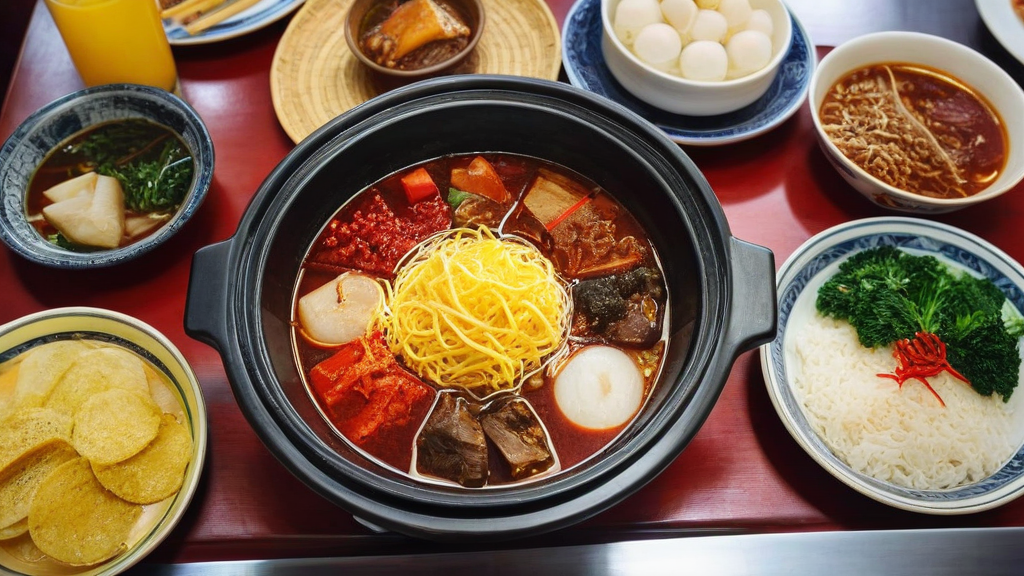
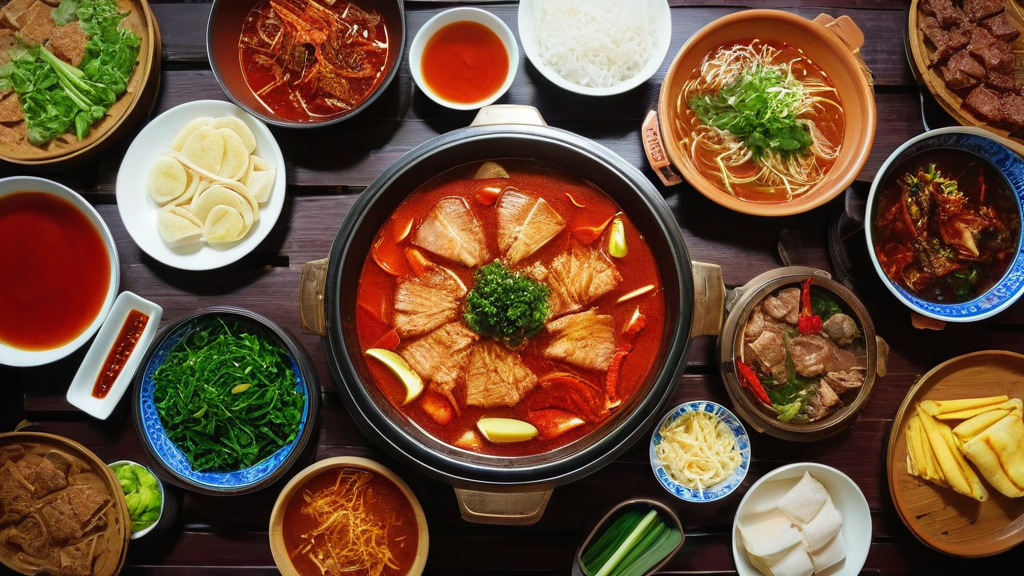
A proper Sichuan hotpot table looks chaotic. A giant metal pot sits on a gas burner, split in two: one side blazing red with floating chillies, the other a pale, mild broth for the faint-hearted (or for dipping veggies). Around the pot: a dozen small plates of raw ingredients, a personal bowl of yóu dié (油碟, oil dip – sesame oil, crushed garlic, maybe a splash of vinegar), and a mountain of napkins because you will drip.
The key rule: don’t dump everything in at once. That’s not hotpot, that’s soup. Each ingredient goes in one by one and you watch it cook. The most prized items – máo dǔ (毛肚, beef tripe) and huáng hóu (黄喉, pork aorta) – only need 10–15 seconds. Overcook them and they turn into rubber bands.
Here’s a quick reference for the essential items most first-timers overlook:
Ingredient
Chinese name
Cook time
My verdict
Beef tripe
毛肚 (máo dǔ)
10–15 sec
The star. Crispy, absorbs broth perfectly. Must-order.
Pork aorta
黄喉 (huáng hóu)
2–3 min
Sounds weird, tastes amazing. Crunchy like tendon.
Duck intestine
鸭肠 (yā cháng)
15–20 sec
Slippery, fun texture. Dip in dry chilli powder.
Potato slices
土豆片 (tǔdòu piàn)
3–4 min
Absolute sleeper hit. They soak up all the spice.
Tofu skin
豆皮 (dòupí)
1–2 min
Soft, slightly chewy. Great for cooling your mouth.
Lotus root
莲藕 (lián ǒu)
2–3 min
Crunchy and sweet. Balances the heat.
Hand-made noodles
手工面 (shǒugōng miàn)
5 min
Finish with these. The broth-soaked noodles are heaven.
Prices? A decent hotpot meal in Chengdu runs about ¥50–80 per person. In Chongqing, you can find places for ¥40. At a tourist spot? Maybe ¥120. Always cheaper than back home.
Hotpot Survival Tactics
1. Pick your spice level wisely. Most places offer wēilà (微辣, mild), zhònglà (中辣, medium), and tèlà (特辣, extra spicy). For a first timer, go wēilà. Trust me. I once ordered tèlà with a group of Sichuan locals and could only eat for ten minutes before my vision blurred. They laughed. Then they ordered me a bowl of bīngfěn (冰粉, ice jelly dessert) which saved my life.
2. The dip is not optional. That little bowl of sesame oil? It’s not a garnish. It coats your food and reduces the burn. Add a crushed garlic clove, a teaspoon of Chinese black vinegar (陈醋), and maybe a pinch of salt. Some people add raw egg yolk – I’m not brave enough.
3. Drink wisely. Beer is the classic partner – Qīngdǎo (Tsingtao) or Chóngqìng (Chongqing brand). But the real secret is suānnǎi (酸奶, yoghurt drink) or dòunǎi (豆奶, soy milk). They contain casein and fat that neutralise capsaicin. Water just spreads the fire.
4. Watch your table manners. Hotpot is communal. Use the serving chopsticks (公筷) for raw food, don’t stick your personal chopsticks into the pot, and don’t hog the best cuts. Also, wait for the broth to boil fully before you start – cold ingredients drop the temperature.
Chengdu vs Chongqing: The Rivalry
If you ask a local from either city, they’ll tell you the other’s hotpot is wrong. Chengdu-style tends to be slightly milder, with more emphasis on broth flavour and a wider variety of ingredients. Chongqing hotpot is brute force – heavier on chilli, more oil, and the menu is mostly offal. Chongqing people say “our hotpot has hún (soul)”; Chengdu people say “theirs is just chilli soup”.
Both are fantastic. My recommendation: start in Chengdu if you’re nervous, then go to Chongqing for the real deal. Either way, bring Pepto-Bismol.
The Aftermath
The morning after a serious hotpot dinner is a rite of passage. Your stomach might feel like a war zone – but honestly, after a few times, your gut adapts. I now eat hotpot multiple times a month without issue. The secret? Drink plenty of water, maybe a glass of hot tea before bed, and don’t fear the spice. Your body learns to handle it.
And of course, there’s the smell. Your clothes, hair, bag – everything will reek of chilli and oil for two days. Embrace it. Wear it like a badge of honour. When my non-Chinese friends ask “what’s that smell?”, I just smile and say “victory”.
FAQ – Real Questions I’ve Been Asked
Q: Is there a vegetarian Sichuan hotpot?
Sort of. You can order a clear broth side with lots of veggies and tofu, but the broth itself is usually beef tallow or chicken stock. Some places now offer a sùguō (素锅, vegetarian pot), but flavour suffers. Honestly, go for a Chinese hotpot restaurant that specialises in mushroom broth – but that’s not really “Sichuan” anymore.
Q: How spicy is it really? Can I get a non-spicy version?
You can ask for bùlà (不辣, not spicy), but the staff will look at you like you just asked for a cheese pizza. The mildest version still has some chilli – it’s Sichuan pride. If you really can’t handle it, pick the clear broth side of a yuānyāng guō (鸳鸯锅, mandarin duck pot – half spicy, half mild). That’s your safe zone.
Q: What’s the best drink to cool down?
I’ve tried everything. Water is weakest. Beer helps a little. The absolute champion is a cold bowl of bīngfěn – a jelly made from plant seeds, served with brown sugar syrup and raisins. Or suānnǎi. Actual yoghurt. It’s a lifesaver.
Q: Do I need to learn how to use chopsticks?
Well, you’ll have a tough time otherwise. But most hotpot restaurants have tāngchí (汤匙, soup ladle) and strainers. You can manage with a spoon. That said, picking up a slippery piece of tripe with chopsticks is a skill you’ll learn by the third bowl of chilli.
Q: Is it safe for foreigners?
Perfectly safe, so long as you’re not allergic to shellfish or sesame. The oil is cooked at high temperature for ages. Just make sure the place looks busy – a busy hotpot joint means fresh ingredients. If the máo dǔ looks grey and slimy, walk away.
Final Thoughts (No Summary, Just Advice)
If there’s one meal that captures the spirit of Sichuan, it’s this. The heat, the communal chaos, the laughter, the endless ordering of extra tripe at 11pm – it’s not just food, it’s an event. I’ve spent countless evenings around the pot, bonding with strangers who became friends, sweating together, and learning that real connection often happens over something that sets your mouth on fire.
So go find a hotpot place – preferably in Chengdu, but your local Chinatown will do. Don’t be afraid to ask the waiter for recommendations. Point at someone’s table and say “wǒ yào nà ge” (I want that). And when the broth boils, take a deep breath, dip your first piece, and let the heat do its magic.
You’ll thank me later. Probably from the toilet, but still.
—
Mark is a British writer based in Chengdu, China. He’s eaten hotpot in 27 cities so far and still can’t handle the extra-spicy level.
It Started With a Bet
I’d been in Chengdu for all of three days when a local mate dared me to try “real” Sichuan hotpot. “Ni gan ma?” — you dare? Well, I’d survived a month trekking in Yunnan; how bad could a soup be?
Pretty bad, as it turns out. Or rather, pretty amazing. That first spoonful of broth hit my tongue like a tiny electric shock – chilli heat, Sichuan pepper’s weird tingling numbness, and a deep savoury richness I couldn’t place. I coughed, sweat ran down my temples, and yet somehow reached for another ladleful. That was the moment I understood why locals call it huǒguō (火鍋) – fire pot. It sets something alight inside you.
Since then, I’ve eaten hotpot in Chongqing where the streets smell of chilli oil, in Beijing with lamb slices, and even in London where they charge triple. But nothing – and I mean nothing – beats the real thing in Sichuan. So here’s my guide: the nitty-gritty, the dirty secrets, and how to emerge from a hotpot dinner not just alive but ravenous for the next one.
What Makes Sichuan Hotpot Special?
Let’s clear up the biggest confusion first. Most Chinese hotpot is delicious, but Sichuan-style is an entirely different beast. The signature is málà (麻辣) – a one-two punch of “numbing” (麻, from Sichuan pepper) and “spicy” (辣, from chilli). The pepper creates a strange, fizzy sensation on your tongue, almost like popping candy, which somehow makes you able to eat more chilli than you thought possible.
Other regional hotpots are more gentle. Beijing’s is a clear broth with lamb, and Cantonese hotpot is all about seafood and subtle stock. Sichuan laughs at subtlety. The broth here is typically made from beef tallow (not vegetable oil) – that’s the secret to that rich, silky mouthfeel. Chongqing hotpot uses lǎoyóu (老油, reused oil) because locals swear it builds up flavour over days. Yes, reused. I know, it sounds dodgy. But it’s been a tradition for centuries, and honestly, the depth of flavour is undeniable. Most place these days filter it properly.
The Table is a Battlefield
A proper Sichuan hotpot table looks chaotic. A giant metal pot sits on a gas burner, split in two: one side blazing red with floating chillies, the other a pale, mild broth for the faint-hearted (or for dipping veggies). Around the pot: a dozen small plates of raw ingredients, a personal bowl of yóu dié (油碟, oil dip – sesame oil, crushed garlic, maybe a splash of vinegar), and a mountain of napkins because you will drip.
The key rule: don’t dump everything in at once. That’s not hotpot, that’s soup. Each ingredient goes in one by one and you watch it cook. The most prized items – máo dǔ (毛肚, beef tripe) and huáng hóu (黄喉, pork aorta) – only need 10–15 seconds. Overcook them and they turn into rubber bands.
Here’s a quick reference for the essential items most first-timers overlook:
Ingredient
Chinese name
Cook time
My verdict
Beef tripe
毛肚 (máo dǔ)
10–15 sec
The star. Crispy, absorbs broth perfectly. Must-order.
Pork aorta
黄喉 (huáng hóu)
2–3 min
Sounds weird, tastes amazing. Crunchy like tendon.
Duck intestine
鸭肠 (yā cháng)
15–20 sec
Slippery, fun texture. Dip in dry chilli powder.
Potato slices
土豆片 (tǔdòu piàn)
3–4 min
Absolute sleeper hit. They soak up all the spice.
Tofu skin
豆皮 (dòupí)
1–2 min
Soft, slightly chewy. Great for cooling your mouth.
Lotus root
莲藕 (lián ǒu)
2–3 min
Crunchy and sweet. Balances the heat.
Hand-made noodles
手工面 (shǒugōng miàn)
5 min
Finish with these. The broth-soaked noodles are heaven.
Prices? A decent hotpot meal in Chengdu runs about ¥50–80 per person. In Chongqing, you can find places for ¥40. At a tourist spot? Maybe ¥120. Always cheaper than back home.
Hotpot Survival Tactics
1. Pick your spice level wisely. Most places offer wēilà (微辣, mild), zhònglà (中辣, medium), and tèlà (特辣, extra spicy). For a first timer, go wēilà. Trust me. I once ordered tèlà with a group of Sichuan locals and could only eat for ten minutes before my vision blurred. They laughed. Then they ordered me a bowl of bīngfěn (冰粉, ice jelly dessert) which saved my life.
2. The dip is not optional. That little bowl of sesame oil? It’s not a garnish. It coats your food and reduces the burn. Add a crushed garlic clove, a teaspoon of Chinese black vinegar (陈醋), and maybe a pinch of salt. Some people add raw egg yolk – I’m not brave enough.
3. Drink wisely. Beer is the classic partner – Qīngdǎo (Tsingtao) or Chóngqìng (Chongqing brand). But the real secret is suānnǎi (酸奶, yoghurt drink) or dòunǎi (豆奶, soy milk). They contain casein and fat that neutralise capsaicin. Water just spreads the fire.
4. Watch your table manners. Hotpot is communal. Use the serving chopsticks (公筷) for raw food, don’t stick your personal chopsticks into the pot, and don’t hog the best cuts. Also, wait for the broth to boil fully before you start – cold ingredients drop the temperature.
Chengdu vs Chongqing: The Rivalry
If you ask a local from either city, they’ll tell you the other’s hotpot is wrong. Chengdu-style tends to be slightly milder, with more emphasis on broth flavour and a wider variety of ingredients. Chongqing hotpot is brute force – heavier on chilli, more oil, and the menu is mostly offal. Chongqing people say “our hotpot has hún (soul)”; Chengdu people say “theirs is just chilli soup”.
Both are fantastic. My recommendation: start in Chengdu if you’re nervous, then go to Chongqing for the real deal. Either way, bring Pepto-Bismol.
The Aftermath
The morning after a serious hotpot dinner is a rite of passage. Your stomach might feel like a war zone – but honestly, after a few times, your gut adapts. I now eat hotpot multiple times a month without issue. The secret? Drink plenty of water, maybe a glass of hot tea before bed, and don’t fear the spice. Your body learns to handle it.
And of course, there’s the smell. Your clothes, hair, bag – everything will reek of chilli and oil for two days. Embrace it. Wear it like a badge of honour. When my non-Chinese friends ask “what’s that smell?”, I just smile and say “victory”.
FAQ – Real Questions I’ve Been Asked
Q: Is there a vegetarian Sichuan hotpot?
Sort of. You can order a clear broth side with lots of veggies and tofu, but the broth itself is usually beef tallow or chicken stock. Some places now offer a sùguō (素锅, vegetarian pot), but flavour suffers. Honestly, go for a Chinese hotpot restaurant that specialises in mushroom broth – but that’s not really “Sichuan” anymore.
Q: How spicy is it really? Can I get a non-spicy version?
You can ask for bùlà (不辣, not spicy), but the staff will look at you like you just asked for a cheese pizza. The mildest version still has some chilli – it’s Sichuan pride. If you really can’t handle it, pick the clear broth side of a yuānyāng guō (鸳鸯锅, mandarin duck pot – half spicy, half mild). That’s your safe zone.
Q: What’s the best drink to cool down?
I’ve tried everything. Water is weakest. Beer helps a little. The absolute champion is a cold bowl of bīngfěn – a jelly made from plant seeds, served with brown sugar syrup and raisins. Or suānnǎi. Actual yoghurt. It’s a lifesaver.
Q: Do I need to learn how to use chopsticks?
Well, you’ll have a tough time otherwise. But most hotpot restaurants have tāngchí (汤匙, soup ladle) and strainers. You can manage with a spoon. That said, picking up a slippery piece of tripe with chopsticks is a skill you’ll learn by the third bowl of chilli.
Q: Is it safe for foreigners?
Perfectly safe, so long as you’re not allergic to shellfish or sesame. The oil is cooked at high temperature for ages. Just make sure the place looks busy – a busy hotpot joint means fresh ingredients. If the máo dǔ looks grey and slimy, walk away.
Final Thoughts (No Summary, Just Advice)
If there’s one meal that captures the spirit of Sichuan, it’s this. The heat, the communal chaos, the laughter, the endless ordering of extra tripe at 11pm – it’s not just food, it’s an event. I’ve spent countless evenings around the pot, bonding with strangers who became friends, sweating together, and learning that real connection often happens over something that sets your mouth on fire.
So go find a hotpot place – preferably in Chengdu, but your local Chinatown will do. Don’t be afraid to ask the waiter for recommendations. Point at someone’s table and say “wǒ yào nà ge” (I want that). And when the broth boils, take a deep breath, dip your first piece, and let the heat do its magic.
You’ll thank me later. Probably from the toilet, but still.
—
Mark is a British writer based in Chengdu, China. He’s eaten hotpot in 27 cities so far and still can’t handle the extra-spicy level.
评论
One response to “So You Think You Can Handle Sichuan Hotpot? A Brit’s Guide to Surviving (and Loving) China’s Most Addictive Meal”
Laura
Made it through my first Sichuan hotpot without crying. Yogurt before the meal really helped!

Leave a Reply