I still remember my first mouthful of Sichuan hotpot – tears streaming, nose running, and a strange addiction forming. After eight years in China, I’ve learned the tricks that’ll help you navigate the bubbling cauldron of chili oil and Sichuan pepper without losing your dignity (or your taste buds).
Ready
EN
# Sichuan Hotpot: A British Bloke’s Guide to Surviving (and Loving) China’s Spiciest Meal
I still remember my first Sichuan hotpot experience. It was a cold November evening in Chengdu, and my Chinese colleague, Xiao Wang, insisted we go to his “secret spot” – a tiny place down an alley, with plastic stools and the smell of chili so thick you could taste it before you even sat down.
“Don’t worry,” he said, grinning. “It’s mild.”
Mate, it was not mild. My face turned the colour of the broth within minutes. But here’s the weird thing: I couldn’t stop eating. That initial shock of heat, followed by the tingling numbness from the Sichuan pepper (huājiāo, 花椒), and then this deep, savoury richness – it was like nothing I’d ever had. By the end of the meal, I was sweating through my shirt, but I was already planning my next visit.
Eight years on, I’ve eaten hotpot in more cities than I can count, from Beijing’s lamb-heavy versions to Cantonese seafood broths. But nothing – absolutely nothing – compares to the real deal: Sichuan hotpot. If you’re coming to China, you’ve got to try it. But you need to know what you’re doing. Here’s everything I wish someone had told me before I dived in.
What Actually Makes Sichuan Hotpot Different?
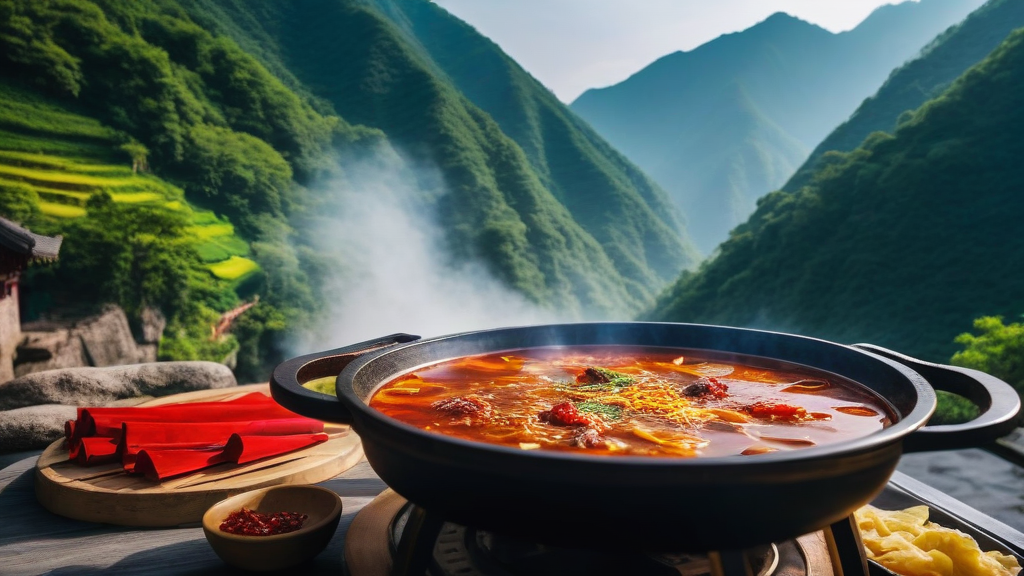
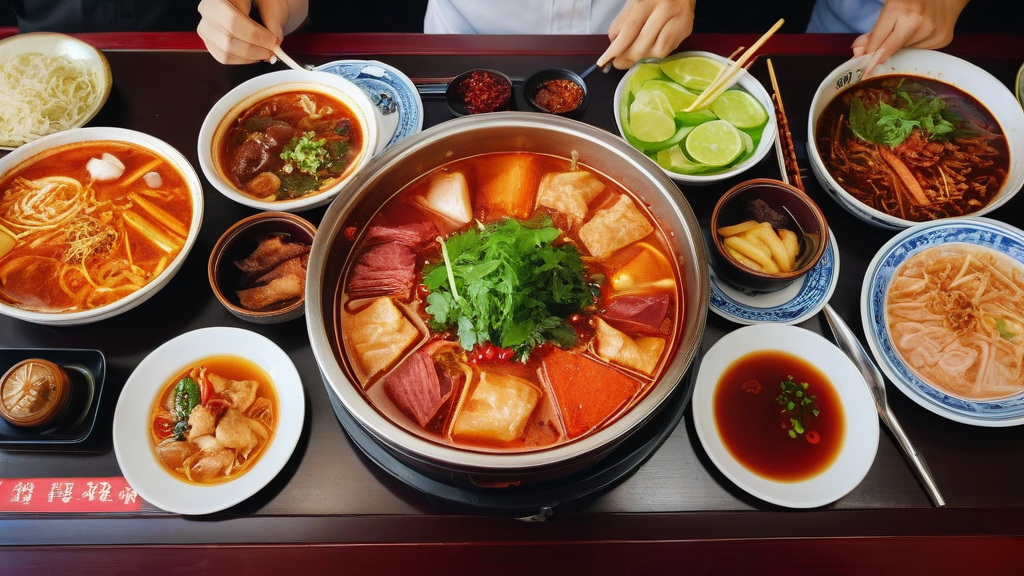
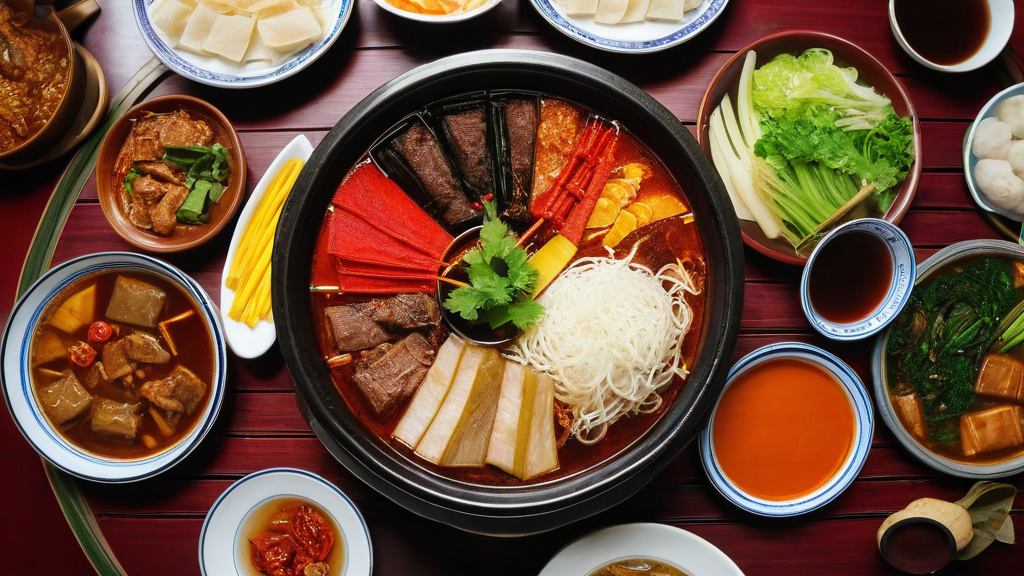
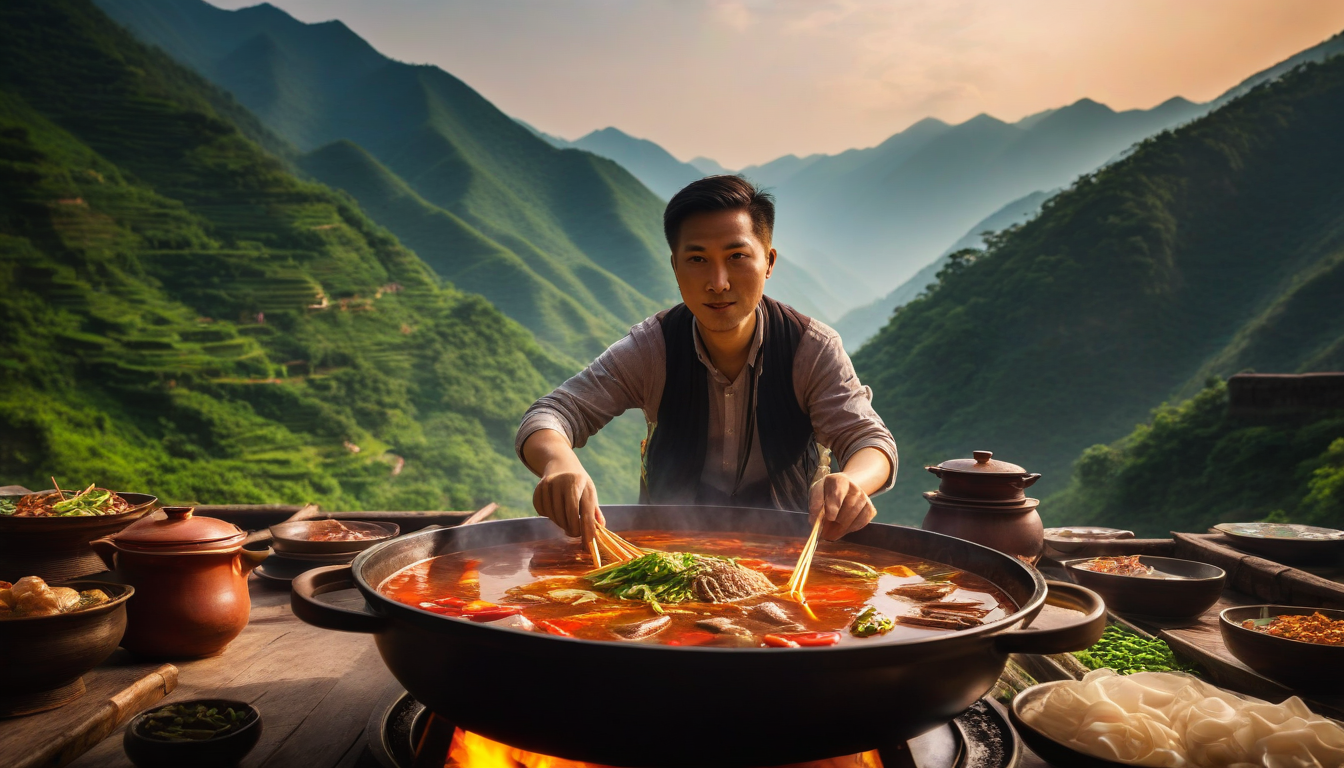
Let’s get one thing straight: not all hotpot is created equal. The Sichuan version – often called Sìchuān huǒguō (四川火锅) – is defined by two things: málà (麻辣), meaning “numbing and spicy,” and the dramatic split-pot known as yuānyāng guō (鸳鸯锅), or “mandarin duck pot,” which gives you a spicy half and a mild, clear broth half.
But the real star is the niúyóu (牛油) – beef tallow. Most hotpot elsewhere uses vegetable oil, but Sichuan insists on beef fat, which gives the broth a thickness that clings to every ingredient. Drop a slice of beef tripe in there for 10 seconds, and it comes out coated in a layer of molten, numbing goodness. It’s the kind of flavour that makes you forget your mouth is on fire.
The spice comes from dried chili peppers (gān làjiāo, 干辣椒) – typically a mix of facing-heaven chillies and erjingtiao – and the numbness from Sichuan pepper. The combination is almost addictive: the heat hits you fast, then the numbing kicks in and dulls the burn just enough that you want another bite. It’s a clever trick. Your brain can’t decide whether to cry or celebrate.
The Golden Rules of Eating Sichuan Hotpot
I’ve seen too many foreigners walk into a hotpot restaurant and treat it like a regular meal. You don’t just dump everything in at once. You don’t use the same chopsticks for raw and cooked food. And you definitely don’t drink the broth when no one’s looking (yes, I did that once. Regret. Water. Shame.).
Here are the rules I’ve learned the hard way:
1. Order the right broth
If you’re a spice novice, go for the yuānyāng split pot. The mild side is usually a mushroom or tomato base – perfectly fine for dipping while you build up courage for the red side. If you’re feeling brave, order the quán là guō (全辣锅) – all spicy. But be warned: even locals sometimes tap out. A friend of mine from Chongqing once admitted he can’t handle the extra-spicy version at the famous chain, Hǎidǐ Láo (海底捞). So no shame in playing it safe.
2. Master the dipping sauce
The dipping sauce (zhōu liào, 蘸料) is where you control the final flavour. In most Sichuan hotpot places, you’ll find a sauce bar with at least 15 ingredients. My go-to mix:
A base of sesame oil (zhīma yóu, 芝麻油) – it cools the burn
A spoonful of minced garlic (suàn ní, 蒜泥)
A dash of Chinese black vinegar (chén cù, 陈醋)
Some chopped spring onions and cilantro
A pinch of salt and MSG (yes, MSG. It’s fine. Don’t be scared.)
Variations: Some people add oyster sauce, hoisin sauce, or even raw egg yolk for silkiness. The rule is: no single right answer. Experiment.
3. Cook ingredients in the right order
There’s a hierarchy. Meat and organ meats go first (they flavour the broth). Then vegetables and tofu. Then everything else. The classic Sichuan hotpot ingredients include:
Ingredient
Chinese name
Cooking time (approx)
Notes
Beef tripe
niú yè (牛肚)
8–10 seconds
The classic. Should still be crunchy.
Pork kidney
zhū yāo (猪腰)
30–45 seconds
Thinly sliced, slightly gamey.
Sliced beef
niú ròu piàn (牛肉片)
15–20 seconds
Look for marbled cuts.
Duck blood curd
yā xuè (鸭血)
3–5 minutes
Silky texture. Don’t knock it till you try it.
Lotus root
lián ǒu (莲藕)
3–4 minutes
Adds a nice crunch.
Potato slices
tǔ dòu piàn (土豆片)
4–5 minutes
Thick enough to hold shape.
Tofu
dòu fu (豆腐)
2–3 minutes
Absorbs broth like a sponge – dangerous with spicy broth!
Noodles
miàn tiáo (面条)
3–5 minutes
Usually added at the end to soak up all the flavour.
4. Don’t be a chopstick criminal
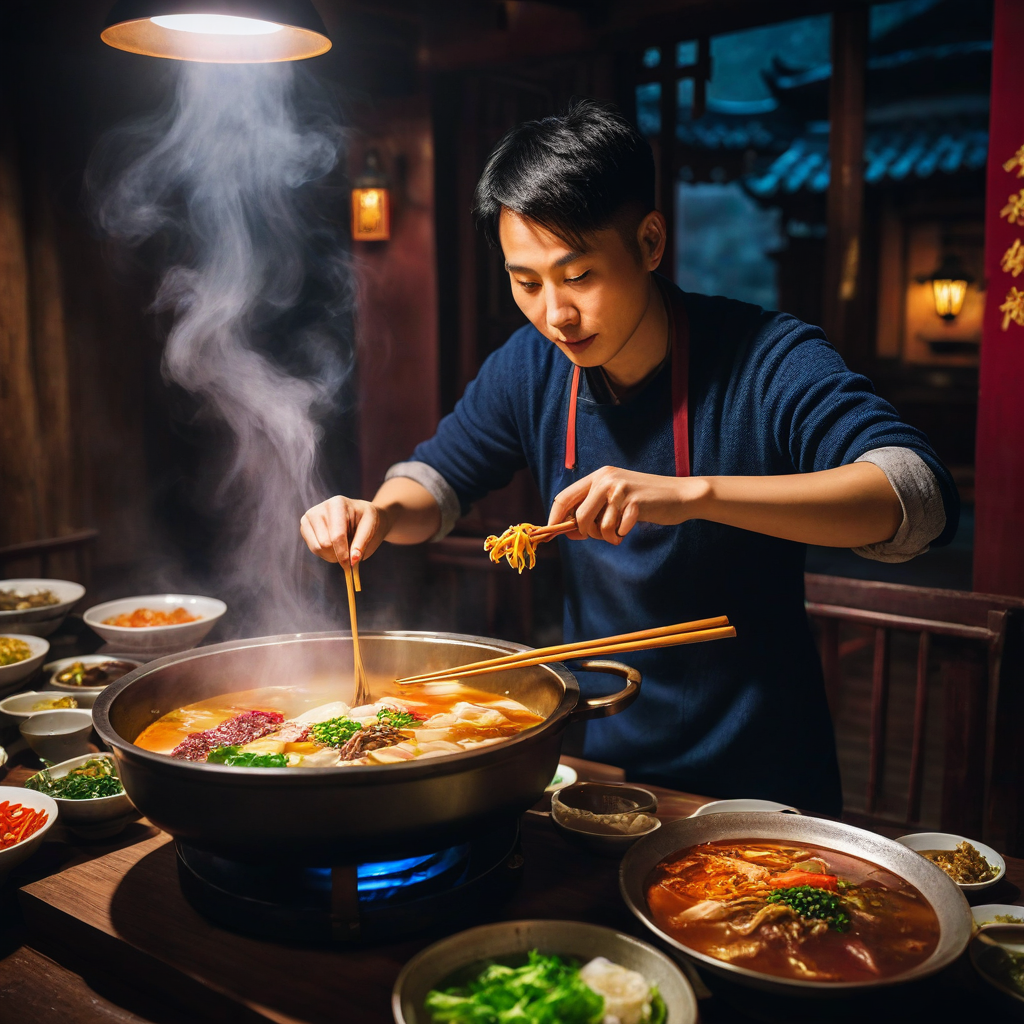
You get two sets of chopsticks: one for grabbing raw food from the platter, one for eating cooked food from the pot. Mix them up and you’ll get a very deserved side-eye from your Chinese dining companions. If the restaurant doesn’t provide separate serving chopsticks, use the communal ladle (gōng kuài, 公筷).
Navigating the Menu Without Tears
Hotpot menus in China are overwhelming. They’re often pictureless, covered in characters, and divided into categories that make sense to locals but baffle outsiders. Here’s a quick cheat sheet for what to look for:
肉类 (ròu lèi) – Meats. Look for xiān qiē niú ròu (鲜切牛肉, freshly sliced beef) or yáng ròu juǎn (羊肉卷, lamb rolls).
内脏 (nèi zàng) – Offal. The real Sichuan experience. Máo dù (毛肚, beef stomach) is a must-try. Huáng hóu (黄喉, pork aorta) – sounds weird, but it’s crunchy and delicious.
蔬菜 (shū cài) – Vegetables. Wō sǔn (莴笋, lettuce stem) and bái luó bo (白萝卜, white radish) are great.
菌菇 (jūn gū) – Mushrooms. Jīn zhēn gū (金针菇, enoki mushrooms) are popular, but be warned: they’re notorious for getting stuck in your teeth and causing the “enoki floss” effect.
The Great Chengdu vs. Chongqing Debate
If you really want to sound like you know what you’re talking about, learn this: Chengdu hotpot and Chongqing hotpot are not the same thing. Locals get fiercely protective about their regional styles.
Chengdu hotpot tends to be more refined. The broth often includes a mix of different chilis and more aromatics like star anise and cardamom. It’s slightly less aggressive with the numbing, and the sauce bars are bigger, more creative. Think of it as the gentleman’s hotpot.
Chongqing hotpot is a bare-knuckle brawl in a pot. The broth is pure beef tallow, loaded with massive piles of dried chilis and Sichuan pepper. There’s no dipping sauce tradition – just sesame oil with a little garlic and salt. The ingredients are simpler – mainly offal and beef. It’s hotter, oilier, and more confrontational. And honestly? I think it’s better.
I once asked a Chongqing taxi driver about the difference. He said, “Chengdu hotpot is for tourists trying to impress their girlfriends. Chongqing hotpot is for real men.” Then he laughed and added, “But also real women. My mother can eat three times more chili than me.”
Common Mistakes Foreigners Make
I’ve made all of these. Maybe you’ll avoid some.
Eating too fast. The broth is deceptively hot – I mean temperature-wise, not spice-wise. You’ll burn your mouth and won’t taste anything for the rest of the meal.
Ordering too much. Hotpot looks small on the menu, but a plate of meat for two people is plenty. You’ll end up with leftovers and a bill that hurts. A good rule: order 2–3 ingredients per person, plus noodles or rice.
Not drinking the right thing. Beer is common – usually Qīngdǎo (青岛) or Chóngqìng (重庆) local lager. But the real match is suān méi tāng (酸梅汤, sour plum juice) – sweet, tangy, and cuts through the grease. Or just cold water. Stay away from milk – it curdles and makes things worse.
Ignoring the dipping sauce. Some people eat hotpot straight from the broth. That’s fine if you want your tongue to file for divorce. The oil in your sauce coats your mouth and dulls the spice. Trust the system.
Going alone. Hotpot is a social meal. You share the pot, you cook for each other, you laugh and sweat together. Going solo is like having a barbecue by yourself – technically possible, but deeply sad.
Is There a Spice-Level Ladder?
Most hotpot places let you choose your spice level. In my experience, the scale goes roughly like this:
Wēi là (微辣) – “micro spicy.” Barely registers. If you have a normal Western spice tolerance, this is your starting point.
Zhōng là (中辣) – “medium spicy.” This is where it gets real. You’ll sweat, but you’ll enjoy it.
Tè là (特辣) – “extra spicy.” For locals and masochists. I’ve seen grown men cry over this.
Chóngqìng běn dì là – unlisted on the menu, but if you ask the waiter for “what you would eat,” they’ll bring out something that should be classified as a chemical weapon.
I once made the mistake of ordering tè là at a small Chongqing joint. The waiter looked at me – a white foreigner – and asked three times, “Are you sure?” I nodded confidently. Two bites in, I had to excuse myself to the bathroom to splash water on my face. The waiter just nodded knowingly when I returned.
Hotpot Etiquette – Don’t Be That Foreigner
Wait for the broth to boil properly. Don’t start dipping the second the pot arrives. The bubbles need to be rolling hard. Usually takes 5–10 minutes.
Don’t hog the pot. Cook small batches. Let others get their food before you drop more in.
Don’t stir your dip directly in the pot. That’s what the small bowls are for.
If someone cooks for you, thank them. It’s a gesture of care. Return the favour.
Don’t drink the broth. I know it smells amazing. I know the noodles soak up all the flavour. But drinking it straight is a recipe for stomach lining disaster. And you’ll look like a rookie.
My Personal Hotpot Survival Kit
After eight years, I’ve got a routine. If I’m going for Sichuan hotpot, here’s what I do:
Wear old clothes. You will smell like a chili factory for three days. Don’t ruin your favourite shirt.
Bring wet wipes. Most places provide tissues, but wet wipes are better for getting oil off your hands.
Order a plate of cucumber salad (pāi huáng guā, 拍黄瓜) on the side. It’s cold, refreshing, and gives your mouth a break between spicy bites.
Drink beer slowly. Don’t chug – cold beer will make the oil congeal in your stomach and you’ll regret it later.
Accept the sweat. It’s part of the experience. In Sichuan, they call it “pái dú” (排毒) – expelling toxins. Whether that’s true or not, it feels therapeutic.
FAQ – Real Questions Tourists Ask
Is Sichuan hotpot extremely spicy?
Yes, but it’s not just heat – it’s numbing. The Sichuan pepper creates a tingling sensation that actually reduces the perception of capsaicin burn. So it’s spicy, but in a more complex way. Most restaurants offer a mild broth option alongside the spicy one. Start with that.
Can I find vegetarian options?
Yes, many places have vegetable-only broths and tofu-based dips. But be careful: even the “mild” broth might use beef tallow. Ask for sù guō (素锅) – a vegetarian pot. Also, many vegetable dishes may be cooked in meat broth if you share a pot. So either get a separate pot or stick to mushroom broth.
How much does a hotpot meal cost?
It varies wildly. A budget meal at a local joint in Chengdu might run ¥80–120 per person. A mid-range chain like Hǎidǐ Láo (海底捞) costs about ¥150–250 per person. Fancy spots can go over ¥400 per person. For comparison, that’s about £9–28. Still cheaper than most dinners out in London.
What if I don’t like offal?
You’re not alone. Most hotpot places have plenty of standard meats – beef, lamb, chicken – and loads of vegetables. You can completely avoid offal and still have a great meal. But I’d encourage you to try máo dù at least once. It’s not as scary as it sounds. Think of it as a chewier, more flavourful version of calamari.
Do I need to speak Chinese to order?
It helps, but not essential. Many hotpot chains have picture menus or English translations. In smaller places, just point at what other tables are eating, or use a translation app. The staff are usually patient – they’ve seen confused foreigners before. One trick: look at the menu on your phone via Dianping (大众点评) – it often has photos.
Closing Thoughts
Sichuan hotpot isn’t just food – it’s an event. It’s the clatter of chopsticks, the steam rising, the conversations that get louder as the spice kicks in. It’s messy and communal and unforgettable.
I’ve introduced maybe two dozen visiting friends to hotpot over the years. Almost all of them were terrified at first. Every single one ended up loving it. There’s a reason it’s spread across the world.
So be brave. Order the yuānyāng pot so you have a safe zone. Dip your first piece of beef tripe, count to ten, and take a bite. Let your mouth go numb. Drink some sour plum soup. Laugh at yourself. And then do it all over again.
Because that’s what Sichuan hotpot is about: not just surviving the spice, but savouring it. And realising that sometimes the things that burn a little are the ones worth coming back for.
# Sichuan Hotpot: A British Bloke’s Guide to Surviving (and Loving) China’s Spiciest Meal
I still remember my first Sichuan hotpot experience. It was a cold November evening in Chengdu, and my Chinese colleague, Xiao Wang, insisted we go to his “secret spot” – a tiny place down an alley, with plastic stools and the smell of chili so thick you could taste it before you even sat down.
“Don’t worry,” he said, grinning. “It’s mild.”
Mate, it was not mild. My face turned the colour of the broth within minutes. But here’s the weird thing: I couldn’t stop eating. That initial shock of heat, followed by the tingling numbness from the Sichuan pepper (huājiāo, 花椒), and then this deep, savoury richness – it was like nothing I’d ever had. By the end of the meal, I was sweating through my shirt, but I was already planning my next visit.
Eight years on, I’ve eaten hotpot in more cities than I can count, from Beijing’s lamb-heavy versions to Cantonese seafood broths. But nothing – absolutely nothing – compares to the real deal: Sichuan hotpot. If you’re coming to China, you’ve got to try it. But you need to know what you’re doing. Here’s everything I wish someone had told me before I dived in.
What Actually Makes Sichuan Hotpot Different?
Let’s get one thing straight: not all hotpot is created equal. The Sichuan version – often called Sìchuān huǒguō (四川火锅) – is defined by two things: málà (麻辣), meaning “numbing and spicy,” and the dramatic split-pot known as yuānyāng guō (鸳鸯锅), or “mandarin duck pot,” which gives you a spicy half and a mild, clear broth half.
But the real star is the niúyóu (牛油) – beef tallow. Most hotpot elsewhere uses vegetable oil, but Sichuan insists on beef fat, which gives the broth a thickness that clings to every ingredient. Drop a slice of beef tripe in there for 10 seconds, and it comes out coated in a layer of molten, numbing goodness. It’s the kind of flavour that makes you forget your mouth is on fire.
The spice comes from dried chili peppers (gān làjiāo, 干辣椒) – typically a mix of facing-heaven chillies and erjingtiao – and the numbness from Sichuan pepper. The combination is almost addictive: the heat hits you fast, then the numbing kicks in and dulls the burn just enough that you want another bite. It’s a clever trick. Your brain can’t decide whether to cry or celebrate.
The Golden Rules of Eating Sichuan Hotpot
I’ve seen too many foreigners walk into a hotpot restaurant and treat it like a regular meal. You don’t just dump everything in at once. You don’t use the same chopsticks for raw and cooked food. And you definitely don’t drink the broth when no one’s looking (yes, I did that once. Regret. Water. Shame.).
Here are the rules I’ve learned the hard way:
1. Order the right broth
If you’re a spice novice, go for the yuānyāng split pot. The mild side is usually a mushroom or tomato base – perfectly fine for dipping while you build up courage for the red side. If you’re feeling brave, order the quán là guō (全辣锅) – all spicy. But be warned: even locals sometimes tap out. A friend of mine from Chongqing once admitted he can’t handle the extra-spicy version at the famous chain, Hǎidǐ Láo (海底捞). So no shame in playing it safe.
2. Master the dipping sauce
The dipping sauce (zhōu liào, 蘸料) is where you control the final flavour. In most Sichuan hotpot places, you’ll find a sauce bar with at least 15 ingredients. My go-to mix:
A base of sesame oil (zhīma yóu, 芝麻油) – it cools the burn
A spoonful of minced garlic (suàn ní, 蒜泥)
A dash of Chinese black vinegar (chén cù, 陈醋)
Some chopped spring onions and cilantro
A pinch of salt and MSG (yes, MSG. It’s fine. Don’t be scared.)
Variations: Some people add oyster sauce, hoisin sauce, or even raw egg yolk for silkiness. The rule is: no single right answer. Experiment.
3. Cook ingredients in the right order
There’s a hierarchy. Meat and organ meats go first (they flavour the broth). Then vegetables and tofu. Then everything else. The classic Sichuan hotpot ingredients include:
Ingredient
Chinese name
Cooking time (approx)
Notes
Beef tripe
niú yè (牛肚)
8–10 seconds
The classic. Should still be crunchy.
Pork kidney
zhū yāo (猪腰)
30–45 seconds
Thinly sliced, slightly gamey.
Sliced beef
niú ròu piàn (牛肉片)
15–20 seconds
Look for marbled cuts.
Duck blood curd
yā xuè (鸭血)
3–5 minutes
Silky texture. Don’t knock it till you try it.
Lotus root
lián ǒu (莲藕)
3–4 minutes
Adds a nice crunch.
Potato slices
tǔ dòu piàn (土豆片)
4–5 minutes
Thick enough to hold shape.
Tofu
dòu fu (豆腐)
2–3 minutes
Absorbs broth like a sponge – dangerous with spicy broth!
Noodles
miàn tiáo (面条)
3–5 minutes
Usually added at the end to soak up all the flavour.
4. Don’t be a chopstick criminal
You get two sets of chopsticks: one for grabbing raw food from the platter, one for eating cooked food from the pot. Mix them up and you’ll get a very deserved side-eye from your Chinese dining companions. If the restaurant doesn’t provide separate serving chopsticks, use the communal ladle (gōng kuài, 公筷).
Navigating the Menu Without Tears
Hotpot menus in China are overwhelming. They’re often pictureless, covered in characters, and divided into categories that make sense to locals but baffle outsiders. Here’s a quick cheat sheet for what to look for:
内脏 (nèi zàng) – Offal. The real Sichuan experience. Máo dù (毛肚, beef stomach) is a must-try. Huáng hóu (黄喉, pork aorta) – sounds weird, but it’s crunchy and delicious.
蔬菜 (shū cài) – Vegetables. Wō sǔn (莴笋, lettuce stem) and bái luó bo (白萝卜, white radish) are great.
菌菇 (jūn gū) – Mushrooms. Jīn zhēn gū (金针菇, enoki mushrooms) are popular, but be warned: they’re notorious for getting stuck in your teeth and causing the “enoki floss” effect.
The Great Chengdu vs. Chongqing Debate
If you really want to sound like you know what you’re talking about, learn this: Chengdu hotpot and Chongqing hotpot are not the same thing. Locals get fiercely protective about their regional styles.
Chengdu hotpot tends to be more refined. The broth often includes a mix of different chilis and more aromatics like star anise and cardamom. It’s slightly less aggressive with the numbing, and the sauce bars are bigger, more creative. Think of it as the gentleman’s hotpot.
Chongqing hotpot is a bare-knuckle brawl in a pot. The broth is pure beef tallow, loaded with massive piles of dried chilis and Sichuan pepper. There’s no dipping sauce tradition – just sesame oil with a little garlic and salt. The ingredients are simpler – mainly offal and beef. It’s hotter, oilier, and more confrontational. And honestly? I think it’s better.
I once asked a Chongqing taxi driver about the difference. He said, “Chengdu hotpot is for tourists trying to impress their girlfriends. Chongqing hotpot is for real men.” Then he laughed and added, “But also real women. My mother can eat three times more chili than me.”
Common Mistakes Foreigners Make
I’ve made all of these. Maybe you’ll avoid some.
Eating too fast. The broth is deceptively hot – I mean temperature-wise, not spice-wise. You’ll burn your mouth and won’t taste anything for the rest of the meal.
Ordering too much. Hotpot looks small on the menu, but a plate of meat for two people is plenty. You’ll end up with leftovers and a bill that hurts. A good rule: order 2–3 ingredients per person, plus noodles or rice.
Not drinking the right thing. Beer is common – usually Qīngdǎo (青岛) or Chóngqìng (重庆) local lager. But the real match is suān méi tāng (酸梅汤, sour plum juice) – sweet, tangy, and cuts through the grease. Or just cold water. Stay away from milk – it curdles and makes things worse.
Ignoring the dipping sauce. Some people eat hotpot straight from the broth. That’s fine if you want your tongue to file for divorce. The oil in your sauce coats your mouth and dulls the spice. Trust the system.
Going alone. Hotpot is a social meal. You share the pot, you cook for each other, you laugh and sweat together. Going solo is like having a barbecue by yourself – technically possible, but deeply sad.
Is There a Spice-Level Ladder?
Most hotpot places let you choose your spice level. In my experience, the scale goes roughly like this:
Wēi là (微辣) – “micro spicy.” Barely registers. If you have a normal Western spice tolerance, this is your starting point.
Zhōng là (中辣) – “medium spicy.” This is where it gets real. You’ll sweat, but you’ll enjoy it.
Tè là (特辣) – “extra spicy.” For locals and masochists. I’ve seen grown men cry over this.
Chóngqìng běn dì là – unlisted on the menu, but if you ask the waiter for “what you would eat,” they’ll bring out something that should be classified as a chemical weapon.
I once made the mistake of ordering tè là at a small Chongqing joint. The waiter looked at me – a white foreigner – and asked three times, “Are you sure?” I nodded confidently. Two bites in, I had to excuse myself to the bathroom to splash water on my face. The waiter just nodded knowingly when I returned.
Hotpot Etiquette – Don’t Be That Foreigner
Wait for the broth to boil properly. Don’t start dipping the second the pot arrives. The bubbles need to be rolling hard. Usually takes 5–10 minutes.
Don’t hog the pot. Cook small batches. Let others get their food before you drop more in.
Don’t stir your dip directly in the pot. That’s what the small bowls are for.
If someone cooks for you, thank them. It’s a gesture of care. Return the favour.
Don’t drink the broth. I know it smells amazing. I know the noodles soak up all the flavour. But drinking it straight is a recipe for stomach lining disaster. And you’ll look like a rookie.
My Personal Hotpot Survival Kit
After eight years, I’ve got a routine. If I’m going for Sichuan hotpot, here’s what I do:
Wear old clothes. You will smell like a chili factory for three days. Don’t ruin your favourite shirt.
Bring wet wipes. Most places provide tissues, but wet wipes are better for getting oil off your hands.
Order a plate of cucumber salad (pāi huáng guā, 拍黄瓜) on the side. It’s cold, refreshing, and gives your mouth a break between spicy bites.
Drink beer slowly. Don’t chug – cold beer will make the oil congeal in your stomach and you’ll regret it later.
Accept the sweat. It’s part of the experience. In Sichuan, they call it “pái dú” (排毒) – expelling toxins. Whether that’s true or not, it feels therapeutic.
FAQ – Real Questions Tourists Ask
Is Sichuan hotpot extremely spicy?
Yes, but it’s not just heat – it’s numbing. The Sichuan pepper creates a tingling sensation that actually reduces the perception of capsaicin burn. So it’s spicy, but in a more complex way. Most restaurants offer a mild broth option alongside the spicy one. Start with that.
Can I find vegetarian options?
Yes, many places have vegetable-only broths and tofu-based dips. But be careful: even the “mild” broth might use beef tallow. Ask for sù guō (素锅) – a vegetarian pot. Also, many vegetable dishes may be cooked in meat broth if you share a pot. So either get a separate pot or stick to mushroom broth.
How much does a hotpot meal cost?
It varies wildly. A budget meal at a local joint in Chengdu might run ¥80–120 per person. A mid-range chain like Hǎidǐ Láo (海底捞) costs about ¥150–250 per person. Fancy spots can go over ¥400 per person. For comparison, that’s about £9–28. Still cheaper than most dinners out in London.
What if I don’t like offal?
You’re not alone. Most hotpot places have plenty of standard meats – beef, lamb, chicken – and loads of vegetables. You can completely avoid offal and still have a great meal. But I’d encourage you to try máo dù at least once. It’s not as scary as it sounds. Think of it as a chewier, more flavourful version of calamari.
Do I need to speak Chinese to order?
It helps, but not essential. Many hotpot chains have picture menus or English translations. In smaller places, just point at what other tables are eating, or use a translation app. The staff are usually patient – they’ve seen confused foreigners before. One trick: look at the menu on your phone via Dianping (大众点评) – it often has photos.
Closing Thoughts
Sichuan hotpot isn’t just food – it’s an event. It’s the clatter of chopsticks, the steam rising, the conversations that get louder as the spice kicks in. It’s messy and communal and unforgettable.
I’ve introduced maybe two dozen visiting friends to hotpot over the years. Almost all of them were terrified at first. Every single one ended up loving it. There’s a reason it’s spread across the world.
So be brave. Order the yuānyāng pot so you have a safe zone. Dip your first piece of beef tripe, count to ten, and take a bite. Let your mouth go numb. Drink some sour plum soup. Laugh at yourself. And then do it all over again.
Because that’s what Sichuan hotpot is about: not just surviving the spice, but savouring it. And realising that sometimes the things that burn a little are the ones worth coming back for.
Wondering how much you need to earn to live in Shanghai? We break down average salaries, monthly expenses, and sample budgets for singles and families. Discover if your salary is enough for a comfortable life…
The first time I tried authentic Sichuan hotpot, I literally thought my mouth was on fire and my tongue had gone numb. Eight years on, I can't get enough. Here's everything I wish someone had…
I’ll never forget my first real Sichuan hotpot. I walked into a tiny joint in Chengdu, the air so thick with chili fumes my eyes started watering before I even sat down. Eight years later,…
One thought on “Sichuan Hotpot: A British Bloke’s Guide to Surviving (and Loving) China’s Spiciest Meal”
The face-numbing sensation is addictive. 8 years in and I still cant get enough.
The face-numbing sensation is addictive. 8 years in and I still cant get enough.