After 8 years in China and over 100 high-speed train rides between Shanghai and Beijing, I’ve learned the hard way what works and what doesn’t. From buying
Ready
EN
Chinese High-Speed Rail Guide 2026: Everything I Wish I Knew Before My First Ride
The First Time I Saw a Bullet Train
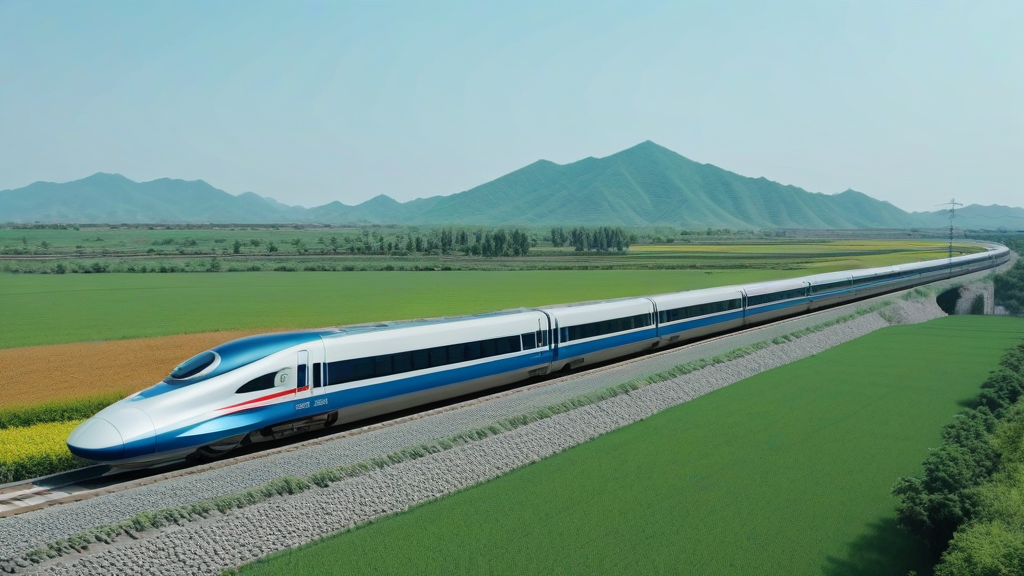
I still remember my first trip. 2018. Beijing South Station. I was walking through the concourse thinking I’d find something like a slightly nicer version of Britain’s trains. What I got instead felt like stepping into an airport terminal — except the plane was on rails and left *exactly* on time.
The train pulled in silently. No diesel fumes, no rattling windows, no announcements apologising for delays because of leaves on the track. I sat down in a seat with more legroom than British Airways economy, plugged my phone into the socket under the armrest, and watched the landscape blur past at 350 km/h. Four and a half hours later I was in Shanghai, having watched a movie, eaten a surprisingly decent hot lunch, and spent less than ¥600.
Eight years on, I’ve taken over 100 high-speed trains across China. Beijing to Shanghai. Chengdu to Xi’an. Guangzhou to Shenzhen. Shanghai to Kunming (that one’s 11 hours — bring snacks). Here’s everything I’ve learned.
The Network: It’s Bigger Than You Think
Let’s start with the numbers, because they’re genuinely staggering. As of 2026, China’s high-speed rail network stretches over **46,000 km** — that’s more than the rest of the world combined. Japan’s Shinkansen network? About 3,000 km. France’s TGV? Roughly 2,800 km. China has built the equivalent of the entire global high-speed network, and then doubled it.
Quick comparison table:
Country
Network Length
Top Speed
Approx. Annual Ridership
China
46,000+ km
350 km/h (380 on some lines)
4.2 billion (2025)
Japan
~3,000 km
320 km/h
450 million
France
~2,800 km
320 km/h
120 million
Germany
~1,600 km
300 km/h
100 million
Spain
~3,900 km
310 km/h
70 million
The scale is hard to grasp until you actually look at a map of Chinese HSR routes. It looks like a spiderweb centred on Beijing, with lines reaching out to every major city — and I mean *every* major city. You can get from Shanghai to Lanzhou in about 10 hours. From Beijing to Hong Kong in under 9. From Chengdu to Guiyang in 3.
There are two main types of trains you’ll encounter:
**G-series (Gāotiě):** The real bullet trains. 300–350 km/h. Long distances, big cities. These are what you want.
**D-series (Dòngchē):** Slower — 200–250 km/h. Still comfortable, but they stop at more stations. Sometimes cheaper. Useful for regional hops.
There are also C-series (intercity commuter) and S-series (suburban), but as a traveller you’ll almost always be on G or D trains.
Buying Tickets: The Great Frustration
This is where most foreigners screw up. You can’t buy tickets with a foreign passport on the official 12306 app — or rather, you *technically* can, but the app is legendary for being terrible. Even Chinese people complain about it. The captcha system alone has driven me to the brink.
Your best options in 2026:
**1. Trip.com (Ctrip)** — This is what I use. It adds a small service fee (usually ¥20–40, depending on the ticket price), but it works perfectly with foreign credit cards and passports. You can book up to 15 days in advance. They also send you the booking confirmation with a code you can use at the station.
**2. WeChat mini-programs** — If you have WeChat Pay set up, some mini-programs let you book directly. I’ve used this a few times but prefer Trip.com for reliability.
**3. At the station** — I don’t recommend this for popular routes. Beijing-Shanghai G-series sells out, especially around Chinese New Year, Golden Week, and summer holidays. But if you’re desperate, most major stations have English-speaking staff at the foreigner ticketing windows.
Important details you need to know:
**Your passport is your ticket.** After booking online, you don’t need a paper ticket. Just scan your passport at the gate. (Keep the booking confirmation on your phone as backup.)
**Real-name policy.** Every ticket is tied to your passport number. Don’t buy from scalpers outside stations — I’ve seen tourists get turned away at the gate.
**Cancellations.** You can cancel up to 30 minutes before departure with a small fee (5–20%). Within 30 minutes? You lose the money.
**Refund difference.** If you buy a ticket, then find a cheaper one later — sorry, no price-match refund. But you can cancel and rebook (if there are still seats).
Seat Classes: What’s Actually Worth It?
Here’s the breakdown based on actual experience, not brochure copy.
Second Class (Èr Děng Zuò) — ¥555 for Beijing-Shanghai
This is what I usually buy. It’s 3+2 seating, like premium economy on a plane but with *way* more legroom. The seats recline enough to nap. There’s a fold-down tray, a cupholder (important!), and a power socket under the armrest — both Chinese 2-pin and USB ports now.
Honestly? For a 4.5-hour trip, second class is perfectly fine. The only downside is the person next to you might be eating durian chips or watching Douyin videos at full volume. Pack noise-cancelling headphones. Trust me.
First Class (Yī Děng Zuò) — ¥933 for Beijing-Shanghai
2+2 seating, wider seats, more legroom, complimentary snacks (and sometimes tea). I upgrade to this when I’m working on the train — the extra elbow room makes a difference for laptop work. Each seat has its own reading light and more adjustable recline.
If you’re over 6 feet tall, this is probably worth the extra ¥378. I’m 5’11” and second class is fine, but taller friends of mine say first class is a lifesaver.
Business Class (Shāng Wù Zuò) — ¥1,748 for Beijing-Shanghai
Okay, this is wild. 2+1 seating with fully reclining seats that go completely flat. Like a pod on an airplane, but better. You get actual meals (not just snacks), slippers, eye mask, a blanket, and dedicated attendants. The seats have privacy screens and individual entertainment systems.
I’ve taken business class twice. Once when I had an early morning flight connection and needed to sleep on the train. Once when my parents visited and I wanted to show off. If you’ve got the budget — go for it. But for most trips, save your money.
Quick comparison:
Feature
Second Class
First Class
Business Class
Price (Beijing-Shanghai)
~¥555
~¥933
~¥1,748
Seat config
3+2
2+2
2+1
Recline
Moderate
Good
Full flat
Power sockets
Yes (shared)
Yes (per seat)
Yes (per seat)
Meals included
No
Snacks only
Full meal
Best for
Budget travel
Working / comfort
Sleeping / luxury
The Station Experience: What to Expect
Chinese train stations are *massive*. Beijing South, Shanghai Hongqiao, Xi’an North — these aren’t stations, they’re cities. Give yourself time.
Arrival time:
**30 minutes before** is fine for weekdays.
**45-60 minutes** if it’s a holiday or weekend.
**90 minutes** for Chinese New Year or Golden Week. I’m not kidding. The queues are apocalyptic.
The process:
**Security check** — Bags go through an X-ray machine, you walk through a metal detector. Water bottles? They might ask you to take a sip to prove it’s not acid or whatever. Laptops stay in your bag.
**Find the waiting area** — Check the big electronic board for your train number. The waiting room is organised by gate. Don’t wander too far — announcements are in Chinese only, though most boards show English now.
**Ticket gate opens 15 minutes before departure** — Scan your passport (or the QR code from your booking app). Walk to the platform. Your carriage number is marked on the floor — stand in the right spot.
**Doors close 1 minute before departure** — Chinese trains do NOT mess around. I’ve seen people sprinting down the platform as the doors slide shut. Don’t be that person.
Pro tip:
Look for the **priority lane** at the security check if you have a business class ticket or if you’re elderly, disabled, or travelling with small children. It’s usually on the far left.
Onboard: The Real Experience
This is where Chinese high-speed rail shines. The trains are clean — *really* clean. Cleaning staff walk through every 30 minutes or so. The toilets are surprisingly decent (western-style in all carriages I’ve been on, squat toilets only in some older D-series).
Food situation:
There’s a dining car (carriage 5 on most G-series trains) that serves hot meals — rice with braised pork, noodles, chicken with vegetables. Prices are reasonable, about ¥25–45 for a hot meal. The taste? Edible. Not amazing, not terrible.
But here’s what I always do: when the **trolley lady** comes through with the snack cart, get the **¥15 boxed noodles** — you know, the ones in the paper cup that you add hot water to. They’re actually really good. The braised beef flavour (红烧牛肉, Hóngshāo Niúròu) is my go-to. Rice cooker meals sold through the app? Skip those — overpriced at ¥60+.
**Order food via WeChat:** On most G-series, you can scan the QR code on the seat armrest and order food to your seat. The selection is better than the trolley — sandwiches, salads, fruit platters. Delivery is free to your seat.
Power and WiFi:
**Power sockets:** Under the armrest between seats (second class) or next to the seat (first/business). Type A + USB. Bring your own cable.
**WiFi:** Most G-series trains have free WiFi. It’s called “RailFi” or “CR-Web”. Speed is okay for WeChat and browsing. Don’t try to stream video — it’ll buffer into next year.
**Mobile signal:** Surprisingly good most of the way. China has excellent 5G coverage along HSR routes, even in tunnels. I usually hotspot my laptop.
Noise situation:
I’ll be honest — Chinese passengers aren’t shy about their phones. People take calls at normal volume, watch videos without headphones, and kids run around. It’s part of the experience. Noise-cancelling headphones are my #1 recommendation for any China traveller.
Luggage: What You Can Bring
No strict weight limits on HSR like airlines. You can bring surprisingly large luggage. I’ve seen people hauling 32-inch suitcases, massive backpacks, even folded bicycles (in bags). The overhead racks are generous — a carry-on suitcase fits easily. Larger bags go in the designated luggage areas at the ends of each carriage.
Rule of thumb: if you can carry it yourself, you can bring it on the train.
Chinese New Year and Golden Week: The War Stories
I made the mistake of travelling during Spring Festival once. Once. The station was like a refugee camp — people sleeping on the floor, queues wrapping around the building, tickets selling out in minutes. If you can possibly avoid travel during **Chunyun (春运, Spring Festival travel season)** — roughly 15 days before and 25 days after Chinese New Year — do. Same for **Golden Week** (first week of October).
If you *must* travel during peak periods:
Book tickets as soon as they go on sale (15 days ahead)
Consider buying a ticket to a slightly earlier or later station to increase availability
Pack snacks and water — the dining car runs out
Bring a good book because delays (while rare normally) happen more often during peak
FAQ: Things Real Tourists Ask Me
Can I use my foreign driver’s license to buy tickets?
No. Only passport or Chinese ID. Some stations now accept a photo of your passport on your phone, but I wouldn’t risk it — bring the physical document.
What happens if I miss my train?
You can change your ticket to a later one at the station’s ticket counter (手续费 Shǒuxùfèi — handling fee). It costs about 10–20% of the ticket price. But you have to do it before the departure time, not after. If you miss the train entirely… buy a new ticket.
Is the food safe for foreigners?
Yes. 100%. The hot meals are cooked fresh, the packaged snacks are sealed. I’ve eaten dozens of meals on trains without issue. The water in the hot water dispenser is boiling — safe to make tea or noodles.
Do conductors speak English?
Not reliably. Major routes (Beijing-Shanghai, Beijing-Guangzhou, Shanghai-Shenzhen) usually have one English-speaking attendant per train. For everything else, point, smile, and use Google Translate. I’ve never had a problem.
How early should I arrive at the station?
30-45 minutes for normal times. 1-1.5 hours during holidays. First time in China? Give yourself an extra 30 minutes to get lost and find your bearings.
A Final Thought
I’ve taken the train from Beijing to Shanghai easily 40+ times now. It’s become routine — I know which platform my train usually departs from at Beijing South (Platform 7-9, depending on the service), I know the exact spot where the trolley lady parks her cart so I can grab my ¥15 noodles, and I know that the sunset view crossing the Yangtze River Bridge near Nanjing is worth looking up from my laptop for.
China’s high-speed rail isn’t just transportation. It’s how this massive country holds together. It’s why I can have breakfast in Beijing, lunch in Shanghai, and dinner in Hangzhou. It’s why my Chinese friends think nothing of dating someone in a city three hours away.
If you’re visiting China in 2026, do yourself a favour: take the train. Don’t fly. Don’t drive. Sit back, watch China roll past your window at 350 km/h, and enjoy one of the best travel experiences the world has to offer.
Just bring headphones.
Chinese High-Speed Rail Guide 2026: Everything I Wish I Knew Before My First Ride
The First Time I Saw a Bullet Train
I still remember my first trip. 2018. Beijing South Station. I was walking through the concourse thinking I’d find something like a slightly nicer version of Britain’s trains. What I got instead felt like stepping into an airport terminal — except the plane was on rails and left *exactly* on time.
The train pulled in silently. No diesel fumes, no rattling windows, no announcements apologising for delays because of leaves on the track. I sat down in a seat with more legroom than British Airways economy, plugged my phone into the socket under the armrest, and watched the landscape blur past at 350 km/h. Four and a half hours later I was in Shanghai, having watched a movie, eaten a surprisingly decent hot lunch, and spent less than ¥600.
Eight years on, I’ve taken over 100 high-speed trains across China. Beijing to Shanghai. Chengdu to Xi’an. Guangzhou to Shenzhen. Shanghai to Kunming (that one’s 11 hours — bring snacks). Here’s everything I’ve learned.
The Network: It’s Bigger Than You Think
Let’s start with the numbers, because they’re genuinely staggering. As of 2026, China’s high-speed rail network stretches over **46,000 km** — that’s more than the rest of the world combined. Japan’s Shinkansen network? About 3,000 km. France’s TGV? Roughly 2,800 km. China has built the equivalent of the entire global high-speed network, and then doubled it.
Quick comparison table:
Country
Network Length
Top Speed
Approx. Annual Ridership
China
46,000+ km
350 km/h (380 on some lines)
4.2 billion (2025)
Japan
~3,000 km
320 km/h
450 million
France
~2,800 km
320 km/h
120 million
Germany
~1,600 km
300 km/h
100 million
Spain
~3,900 km
310 km/h
70 million
The scale is hard to grasp until you actually look at a map of Chinese HSR routes. It looks like a spiderweb centred on Beijing, with lines reaching out to every major city — and I mean *every* major city. You can get from Shanghai to Lanzhou in about 10 hours. From Beijing to Hong Kong in under 9. From Chengdu to Guiyang in 3.
There are two main types of trains you’ll encounter:
**G-series (Gāotiě):** The real bullet trains. 300–350 km/h. Long distances, big cities. These are what you want.
**D-series (Dòngchē):** Slower — 200–250 km/h. Still comfortable, but they stop at more stations. Sometimes cheaper. Useful for regional hops.
There are also C-series (intercity commuter) and S-series (suburban), but as a traveller you’ll almost always be on G or D trains.
Buying Tickets: The Great Frustration
This is where most foreigners screw up. You can’t buy tickets with a foreign passport on the official 12306 app — or rather, you *technically* can, but the app is legendary for being terrible. Even Chinese people complain about it. The captcha system alone has driven me to the brink.
Your best options in 2026:
**1. Trip.com (Ctrip)** — This is what I use. It adds a small service fee (usually ¥20–40, depending on the ticket price), but it works perfectly with foreign credit cards and passports. You can book up to 15 days in advance. They also send you the booking confirmation with a code you can use at the station.
**2. WeChat mini-programs** — If you have WeChat Pay set up, some mini-programs let you book directly. I’ve used this a few times but prefer Trip.com for reliability.
**3. At the station** — I don’t recommend this for popular routes. Beijing-Shanghai G-series sells out, especially around Chinese New Year, Golden Week, and summer holidays. But if you’re desperate, most major stations have English-speaking staff at the foreigner ticketing windows.
Important details you need to know:
**Your passport is your ticket.** After booking online, you don’t need a paper ticket. Just scan your passport at the gate. (Keep the booking confirmation on your phone as backup.)
**Real-name policy.** Every ticket is tied to your passport number. Don’t buy from scalpers outside stations — I’ve seen tourists get turned away at the gate.
**Cancellations.** You can cancel up to 30 minutes before departure with a small fee (5–20%). Within 30 minutes? You lose the money.
**Refund difference.** If you buy a ticket, then find a cheaper one later — sorry, no price-match refund. But you can cancel and rebook (if there are still seats).
Seat Classes: What’s Actually Worth It?
Here’s the breakdown based on actual experience, not brochure copy.
Second Class (Èr Děng Zuò) — ¥555 for Beijing-Shanghai
This is what I usually buy. It’s 3+2 seating, like premium economy on a plane but with *way* more legroom. The seats recline enough to nap. There’s a fold-down tray, a cupholder (important!), and a power socket under the armrest — both Chinese 2-pin and USB ports now.
Honestly? For a 4.5-hour trip, second class is perfectly fine. The only downside is the person next to you might be eating durian chips or watching Douyin videos at full volume. Pack noise-cancelling headphones. Trust me.
First Class (Yī Děng Zuò) — ¥933 for Beijing-Shanghai
2+2 seating, wider seats, more legroom, complimentary snacks (and sometimes tea). I upgrade to this when I’m working on the train — the extra elbow room makes a difference for laptop work. Each seat has its own reading light and more adjustable recline.
If you’re over 6 feet tall, this is probably worth the extra ¥378. I’m 5’11” and second class is fine, but taller friends of mine say first class is a lifesaver.
Business Class (Shāng Wù Zuò) — ¥1,748 for Beijing-Shanghai
Okay, this is wild. 2+1 seating with fully reclining seats that go completely flat. Like a pod on an airplane, but better. You get actual meals (not just snacks), slippers, eye mask, a blanket, and dedicated attendants. The seats have privacy screens and individual entertainment systems.
I’ve taken business class twice. Once when I had an early morning flight connection and needed to sleep on the train. Once when my parents visited and I wanted to show off. If you’ve got the budget — go for it. But for most trips, save your money.
Quick comparison:
Feature
Second Class
First Class
Business Class
Price (Beijing-Shanghai)
~¥555
~¥933
~¥1,748
Seat config
3+2
2+2
2+1
Recline
Moderate
Good
Full flat
Power sockets
Yes (shared)
Yes (per seat)
Yes (per seat)
Meals included
No
Snacks only
Full meal
Best for
Budget travel
Working / comfort
Sleeping / luxury
The Station Experience: What to Expect
Chinese train stations are *massive*. Beijing South, Shanghai Hongqiao, Xi’an North — these aren’t stations, they’re cities. Give yourself time.
Arrival time:
**30 minutes before** is fine for weekdays.
**45-60 minutes** if it’s a holiday or weekend.
**90 minutes** for Chinese New Year or Golden Week. I’m not kidding. The queues are apocalyptic.
The process:
**Security check** — Bags go through an X-ray machine, you walk through a metal detector. Water bottles? They might ask you to take a sip to prove it’s not acid or whatever. Laptops stay in your bag.
**Find the waiting area** — Check the big electronic board for your train number. The waiting room is organised by gate. Don’t wander too far — announcements are in Chinese only, though most boards show English now.
**Ticket gate opens 15 minutes before departure** — Scan your passport (or the QR code from your booking app). Walk to the platform. Your carriage number is marked on the floor — stand in the right spot.
**Doors close 1 minute before departure** — Chinese trains do NOT mess around. I’ve seen people sprinting down the platform as the doors slide shut. Don’t be that person.
Pro tip:
Look for the **priority lane** at the security check if you have a business class ticket or if you’re elderly, disabled, or travelling with small children. It’s usually on the far left.
Onboard: The Real Experience
This is where Chinese high-speed rail shines. The trains are clean — *really* clean. Cleaning staff walk through every 30 minutes or so. The toilets are surprisingly decent (western-style in all carriages I’ve been on, squat toilets only in some older D-series).
Food situation:
There’s a dining car (carriage 5 on most G-series trains) that serves hot meals — rice with braised pork, noodles, chicken with vegetables. Prices are reasonable, about ¥25–45 for a hot meal. The taste? Edible. Not amazing, not terrible.
But here’s what I always do: when the **trolley lady** comes through with the snack cart, get the **¥15 boxed noodles** — you know, the ones in the paper cup that you add hot water to. They’re actually really good. The braised beef flavour (红烧牛肉, Hóngshāo Niúròu) is my go-to. Rice cooker meals sold through the app? Skip those — overpriced at ¥60+.
**Order food via WeChat:** On most G-series, you can scan the QR code on the seat armrest and order food to your seat. The selection is better than the trolley — sandwiches, salads, fruit platters. Delivery is free to your seat.
Power and WiFi:
**Power sockets:** Under the armrest between seats (second class) or next to the seat (first/business). Type A + USB. Bring your own cable.
**WiFi:** Most G-series trains have free WiFi. It’s called “RailFi” or “CR-Web”. Speed is okay for WeChat and browsing. Don’t try to stream video — it’ll buffer into next year.
**Mobile signal:** Surprisingly good most of the way. China has excellent 5G coverage along HSR routes, even in tunnels. I usually hotspot my laptop.
Noise situation:
I’ll be honest — Chinese passengers aren’t shy about their phones. People take calls at normal volume, watch videos without headphones, and kids run around. It’s part of the experience. Noise-cancelling headphones are my #1 recommendation for any China traveller.
Luggage: What You Can Bring
No strict weight limits on HSR like airlines. You can bring surprisingly large luggage. I’ve seen people hauling 32-inch suitcases, massive backpacks, even folded bicycles (in bags). The overhead racks are generous — a carry-on suitcase fits easily. Larger bags go in the designated luggage areas at the ends of each carriage.
Rule of thumb: if you can carry it yourself, you can bring it on the train.
Chinese New Year and Golden Week: The War Stories
I made the mistake of travelling during Spring Festival once. Once. The station was like a refugee camp — people sleeping on the floor, queues wrapping around the building, tickets selling out in minutes. If you can possibly avoid travel during **Chunyun (春运, Spring Festival travel season)** — roughly 15 days before and 25 days after Chinese New Year — do. Same for **Golden Week** (first week of October).
If you *must* travel during peak periods:
Book tickets as soon as they go on sale (15 days ahead)
Consider buying a ticket to a slightly earlier or later station to increase availability
Pack snacks and water — the dining car runs out
Bring a good book because delays (while rare normally) happen more often during peak
FAQ: Things Real Tourists Ask Me
Can I use my foreign driver’s license to buy tickets?
No. Only passport or Chinese ID. Some stations now accept a photo of your passport on your phone, but I wouldn’t risk it — bring the physical document.
What happens if I miss my train?
You can change your ticket to a later one at the station’s ticket counter (手续费 Shǒuxùfèi — handling fee). It costs about 10–20% of the ticket price. But you have to do it before the departure time, not after. If you miss the train entirely… buy a new ticket.
Is the food safe for foreigners?
Yes. 100%. The hot meals are cooked fresh, the packaged snacks are sealed. I’ve eaten dozens of meals on trains without issue. The water in the hot water dispenser is boiling — safe to make tea or noodles.
Do conductors speak English?
Not reliably. Major routes (Beijing-Shanghai, Beijing-Guangzhou, Shanghai-Shenzhen) usually have one English-speaking attendant per train. For everything else, point, smile, and use Google Translate. I’ve never had a problem.
How early should I arrive at the station?
30-45 minutes for normal times. 1-1.5 hours during holidays. First time in China? Give yourself an extra 30 minutes to get lost and find your bearings.
A Final Thought
I’ve taken the train from Beijing to Shanghai easily 40+ times now. It’s become routine — I know which platform my train usually departs from at Beijing South (Platform 7-9, depending on the service), I know the exact spot where the trolley lady parks her cart so I can grab my ¥15 noodles, and I know that the sunset view crossing the Yangtze River Bridge near Nanjing is worth looking up from my laptop for.
China’s high-speed rail isn’t just transportation. It’s how this massive country holds together. It’s why I can have breakfast in Beijing, lunch in Shanghai, and dinner in Hangzhou. It’s why my Chinese friends think nothing of dating someone in a city three hours away.
If you’re visiting China in 2026, do yourself a favour: take the train. Don’t fly. Don’t drive. Sit back, watch China roll past your window at 350 km/h, and enjoy one of the best travel experiences the world has to offer.
Spring (April-May) and autumn (September-October) offer the best weather to visit most of China, but your ideal time depends on destination. Avoid Golden Week and Chinese New Year for fewer crowds.
Wondering what is the best time to visit China? Explore seasonal breakdowns, regional insights, and festival impacts to plan your perfect trip—from cherry blossoms in spring to ice sculptures in winter.
Wondering if China is safe for tourists in 2025? With a homicide rate of 0.5 per 100,000 and extensive security measures, China offers a secure and welcoming environment for travelers.