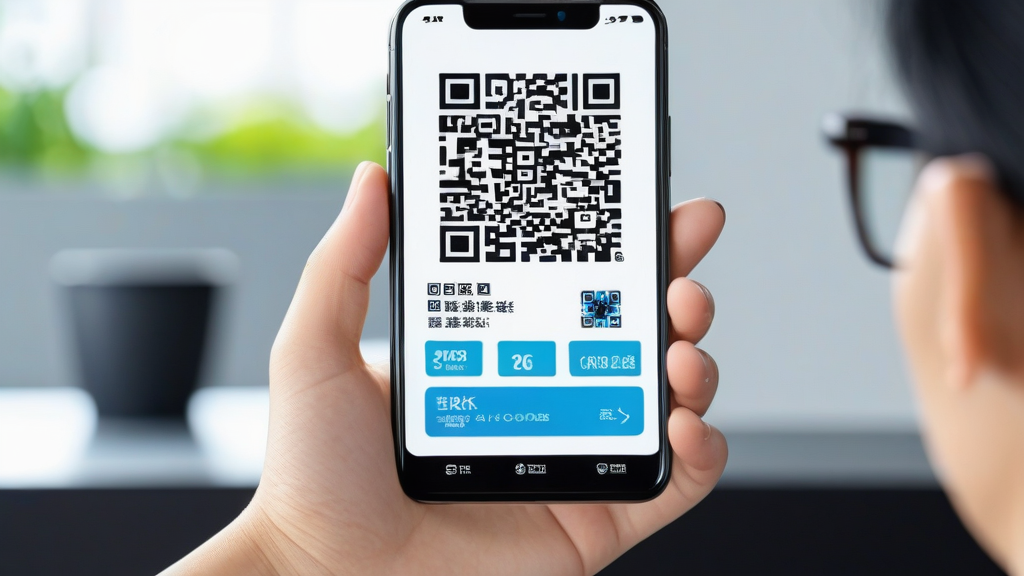
I’ve been using Alipay in China for 8 years — and I’m still discovering features most foreigners don’t know exist. From the life-saving TourPass to plant
Ready
EN
How to Use Alipay in China 2026: The Complete Foreigner’s Guide (Beyond Just Payments)
My First Alipay Moment
It was 2018, three weeks into my move to Shanghai. I was at a street stall near Jing’an Temple, trying to buy a jianbing (煎饼, Chinese crepe). The old lady making it pointed at a QR code taped to her cart. I pulled out my wallet. She laughed. The guy behind me scanned it with his phone and walked away with *my* jianbing in under 3 seconds.
That was the moment I realised: cash wasn’t going to cut it in China.
Eight years later, I’ve used Alipay for everything from buying apartments (deposit transfer — ¥500,000, done in 30 seconds) to feeding stray cats through a charity mini-program. And here’s the thing most people get wrong: Alipay isn’t just a payment app. It’s a full-blown operating system for your life in China.
Let me walk you through how to actually use it as a foreigner in 2026.
Step 1: Getting Started — The Download and Setup
Download the Right App
First mistake I see tourists make: they download the Chinese version (支付宝, Zhīfùbǎo) and get lost in a sea of Chinese characters. Don’t do that.
Download **Alipay** (the international version) from your app store. It’s the blue icon with the white logo. The English interface is decent — not perfect, but good enough that you won’t accidentally send ¥10,000 to your neighbourhood barber.
Registration
Here’s the good news for 2026: Alipay now supports **12 different foreign document types**, not just passports. Driving licences from 8 countries, residence permits, even some national ID cards work.
Open the app, tap “Register”
Select “Foreign Passport” (or your document type)
Take a photo of your passport — the OCR reads it automatically
Enter your Chinese mobile number (this is mandatory — get one first)
Face verification (takes about 20 seconds, works in dim light surprisingly well)
Done. About 3-4 minutes total.
The Phone Number Wall
You **need** a Chinese phone number. International numbers don’t work for Alipay registration. Get a China Unicom or China Mobile SIM at the airport or any convenience store. I use a China Telecom prepaid card that costs ¥29/month for 30GB of data. You can get these at any营业厅 (Yíngyètīng, service centre) with your passport.
**Pro tip:** Keep this number active. If you lose access to it, recovering your Alipay account is a paperwork nightmare involving visits to an Alipay service centre with your passport and a printed bank statement.
Step 2: The Great Funding Question — How to Put Money In
This is where Alipay differs from WeChat Pay in a way that matters for foreigners.
Option A: TourPass (The Tourist Lifeline)
Alipay’s **TourPass** feature is honestly brilliant and totally unique — WeChat Pay doesn’t have this. It’s a virtual prepaid card that lets you top up with your foreign credit card.
Here’s how:
In the Alipay app, search for “TourPass”
Select your top-up amount (minimum ¥100, maximum ¥20,000)
Pay with Visa, Mastercard, or American Express
The money appears in your Alipay balance instantly
When you leave, any remaining balance gets refunded to your card (minus a small fee)
**Fees to watch out for:**
Top-up fee: 0% (yes, free)
Refund fee: About 1-2% depending on your bank
Exchange rate: Alipay’s rate is reasonable — within 1% of market rate
Daily limit: ¥20,000
I tested this with three cards last month:
Card Type
Top-up Fee
Exchange Rate Markup
Processing Time
Refund Speed
Visa (UK)
0%
0.8%
Instant
3-5 business days
Mastercard (AU)
0%
0.9%
Instant
4-6 business days
Amex (US)
0%
1.2%
~20 seconds
5-7 business days
Option B: Bank Card Linking
If you’re staying longer (like I did), link a Chinese bank account. Open an account at Bank of China, ICBC, or China Merchants Bank — all of them handle foreigners regularly. Bring your passport, visa, and a utility bill or rental contract with your Chinese address.
Once linked, you can transfer money from your Chinese bank account to Alipay instantly. No fees for most banks.
Option C: Foreign Friend Transfer (The Unofficial Way)
Got a friend in China with Alipay? They can send you money. Yes, person-to-person transfers work for foreign accounts. Just make sure they use the “Send to Friend” feature, not the QR code scan (that’s for merchants only with TourPass).
Step 3: Actually Paying for Stuff
QR Code: The Universal Language
China runs on QR codes. Every shop, restaurant, taxi, and street vendor has one. Here’s the flow:
**You scan their code (most common):**
Open Alipay → tap “Scan” (top-left)
Point at the merchant’s QR code
Enter the amount (or let the merchant enter it on their terminal)
Confirm with your fingerprint or face ID
Done. 4 seconds, max.
**They scan your code:**
Open Alipay → tap “Pay/Collect”
Show your payment QR code
They scan it
Done.
Sound Wave Payment (Yes, Really)
This is an Alipay-exclusive feature that still blows my mind. At some subway stations and vending machines, you don’t even need to scan. The machine emits an ultrasonic sound, your phone picks it up via the microphone, and payment goes through. I used this at a vending machine in Hangzhou Metro Station last month — it felt like witchcraft.
NFC Payments
2026 update: Alipay now supports NFC on most recent Android phones and iPhones. Just tap your phone on the terminal. Only works on newer POS machines — which is most of them in tier-1 cities, but don’t count on it in smaller towns.
What Makes Alipay Different From WeChat Pay
Okay, let me address the elephant in the room. Everyone asks: “Alipay or WeChat Pay?”
Here’s my honest take after 8 years of using both:
Feature
Alipay
WeChat Pay
International credit card support
✅ TourPass + direct linking
❌ WeChat no longer supports foreign cards (as of late 2025)
Mini-program ecosystem
~1.5 million
~3 million
Financial tools (savings, insurance)
✅ Excellent (Yu’ebao etc.)
❌ Limited
Bike sharing integration
✅ Built-in (Hellobike)
❌ Separate miniprogram
Hospital appointment booking
✅ 7,000+ hospitals
❌ Limited cities
Social features
❌ Basic
✅ Integrated with chat
Travel booking
✅ Flights, hotels, trains
✅ Similar via Trip.com miniprogram
Green initiative (Ant Forest)
✅ Amazing gamification
❌ None
Overseas card top-up in-app
✅ TourPass
❌
Translation built-in
✅ Yes
❌
**My rule of thumb:** Use Alipay for everything financial — savings, investments, bill payments. Use WeChat Pay for small daily payments because it’s faster to open (everyone’s already on WeChat). Most Chinese people carry both.
The Hidden Superpowers — Alipay Features You Didn’t Know About
This is where Alipay really shines. After 8 years, I’m still discovering things this app can do.
1. Ant Forest (蚂蚁森林) — Get Addicted to Saving the Planet
This is Alipay’s brilliant gamification of environmentalism. Every time you walk, take public transport, or pay a utility bill digitally, you earn “green energy” points. Collect enough, and Alipay plants a real tree in one of China’s desert regions.
As of 2026, Alipay has planted **over 600 million real trees** across Inner Mongolia, Gansu, and Xinjiang. I’ve personally contributed to 47 trees through my daily habits. The first time Alipay sent me a satellite photo of “my” trees in the Kubuqi Desert, I actually teared up a little — and I’m not usually sentimental about apps.
2. Yu’ebao (余额宝) — Your Spare Change, Actually Working
Yu’ebao is a money market fund integrated directly into Alipay. Your Alipay balance automatically goes into it and earns daily interest — currently around **1.8% APY** as of early 2026. It’s not life-changing money, but over a year, ¥10,000 in your Alipay wallet earns about ¥180 doing nothing. You can withdraw anytime, no lock-in period.
Compare that to a typical UK current account — 0% to 0.5% if you’re lucky.
3. Hospital Appointments Without Speaking Chinese
This one saved me in 2023 when I woke up with appendicitis symptoms at 2 AM. Open Alipay → search “Medical” → find a hospital → book a time slot → pay the registration fee → show up. The hospital knows your name, your symptoms (you pick from a list in English), and your appointment time. You skip the queue.
Over **7,000 hospitals** in China support Alipay booking. In Shanghai, that includes all major public hospitals. It’s a game-changer for anyone who doesn’t speak fluent Chinese.
4. Alipay Translation — Point Your Camera at Chinese
Open Alipay → search “Translate” → point your camera at Chinese text. It does real-time OCR translation for menus, signs, product labels. It’s not DeepL quality, but it’s good enough to tell you that 麻婆豆腐 is “Mapo Tofu” and not, as Google Translate once told me, “numb wife tofu.”
5. City Services (城市服务) — Pay Your Utility Bills Without Leaving Home
Rent, electricity, gas, water, internet, property management fees — all payable through Alipay. You just search for your utility company, enter your account number, and pay. I haven’t visited a utility payment centre in 6 years.
6. Charity and Social Good
Alipay’s Ant Forest isn’t the only do-gooder feature. There’s also:
**Ant Farm** (蚂蚁庄园) — raise a virtual chicken, donate eggs to charity
**Ant Manor** — answer quiz questions, use the proceeds for rural education
**Step for Love** — donate your daily steps to children’s health programmes
It sounds silly written out, but in 2025 alone, Alipay users donated over ¥2.3 billion through these micro-charity features. Sometimes looking at my Ant Farm chicken is the most wholesome 30 seconds of my day.
Step 4: Beyond Payments — Living Your Life in Alipay
Transportation
**Bikes:** Hellobike (哈啰单车) is built into Alipay. No separate app needed. Scan, ride, pay. About ¥1.5 per 30 minutes. Monthly pass is ¥14.90 for unlimited 30-minute rides.
**Subway/Bus:** Most cities now support Alipay transit QR codes. Shanghai, Beijing, Shenzhen, Guangzhou, Hangzhou — you just tap “Transport” and scan the QR at the turnstile. No physical card needed.
**Taxis:** Didi Chuxing has a mini-program inside Alipay. All in English. No need to hail taxis on the street.
**Flights and Trains:** Book both through Alipay’s travel section. Same prices as Trip.com, often with occasional Alipay-exclusive discounts (¥30-50 off on ¥500+ bookings).
Food and Groceries
**Ele.me (饿了么):** Alipay’s food delivery platform (Alibaba-owned, integrated). Works in English in major cities.
**Hema (盒马):** Alibaba’s supermarket chain. Order groceries for 30-minute delivery through Alipay.
**Restaurant booking:** Search “Dining” to find restaurants, see menus, and book tables.
Finance
**Ant Check Pay (花呗):** Alipay’s “buy now, pay later” service. Foreigners can apply after building some transaction history (usually 3-6 months of regular use). Credit limits start around ¥1,000 and can go up to ¥50,000.
**Insurance:** Travel insurance, health insurance, even pet insurance — all available through Alipay’s insurance section.
**Stock trading:** Yes, you can trade Chinese A-shares through Alipay. I don’t do this because I value my sanity, but it’s there.
Step 5: Security — What You Need to Know
Alipay is genuinely secure. I’ve never had an issue in 8 years. Here’s why:
**Face/Fingerprint verification** for every payment over ¥200 (you set the threshold)
**¥500,000 theft insurance** included for free with every account
**Real-time fraud monitoring** — Alipay called me once within 3 minutes of a suspicious login attempt from a phone in Nigeria
**Transaction history** you can export as a PDF for visa applications or expense reports
**The one thing to watch out for:** QR code scams. Only scan codes from legitimate merchants. Some scammers stick fake QR codes over real ones at bike-sharing stations. Check the sticker before scanning — if it looks like it’s been glued on top of another sticker, don’t scan.
When Alipay Doesn’t Work
I’m not going to pretend it’s perfect. Here’s where Alipay still struggles:
**Some street vendors** in small towns still only take WeChat Pay (Alipay’s share is roughly 45% vs WeChat’s 50% in the payment space, per 2025 data)
**Certain government services** are WeChat-only
**TourPass refunds** take 3-7 business days — don’t top up ¥20,000 the day before you fly out
**The English interface** can be flaky. Some mini-programs are Chinese-only. You’ll occasionally click something and get a wall of Simplified Chinese. Screenshot + Google Translate is your friend.
FAQ: Things I Actually Get Asked
Can I use Alipay without a Chinese bank account?
Yes. TourPass lets you top up with a foreign credit card. The maximum is ¥20,000 at a time. For longer stays, get a Chinese bank account — it’s easier than you think and unlocks the full experience.
Is Alipay or WeChat Pay better for foreigners in 2026?
For short-term tourists: **Alipay** hands down, because WeChat Pay no longer supports foreign credit card top-ups. For long-term residents: both. Alipay for financial stuff and larger payments, WeChat for social and fast daily payments.
What happens if I lose my phone?
Call Alipay’s international helpline (+86-571-95188, has English support). They’ll freeze your account. Then go to your carrier to get a replacement SIM — once your number is active again, you can recover your account with passport verification. The ¥500,000 theft insurance covers any losses during the gap period.
Do I need to pay taxes on Alipay interest (Yu’ebao)?
Technically yes on the interest earned — but at 1.8% APY, we’re talking about tiny amounts. China doesn’t actively pursue foreigners for small investment returns. If you’re keeping ¥100,000+ in Yu’ebao for a year, consult a tax advisor.
Can I use Alipay outside China?
Yes, but it’s limited. Alipay is accepted in some Southeast Asian countries (Thailand, Singapore, Malaysia, Japan) at tourist-oriented merchants. In Europe and the US, barely anywhere. Don’t count on it as your primary travel payment method outside China.
Closing Thought
I remember sitting in a Shanghai McDonald’s in 2018, watching a 70-year-old woman pay for her coffee by scanning her Alipay with one hand while holding her grandchild with the other. That’s when it clicked for me — this wasn’t a tech trend. This was how China lives now.
Eight years later, I’ve paid for a ¥5 bottle of water, a ¥500,000 apartment deposit, and everything in between with this app. I’ve watched my virtual trees grow in the desert. I’ve skipped hospital queues by booking through an app in English. I’ve sent money to friends with a tap.
Alipay isn’t perfect. But for anyone coming to China in 2026, it’s the closest thing to a magic key that opens daily life. Download it before you land. Trust me.
How to Use Alipay in China 2026: The Complete Foreigner’s Guide (Beyond Just Payments)
My First Alipay Moment
It was 2018, three weeks into my move to Shanghai. I was at a street stall near Jing’an Temple, trying to buy a jianbing (煎饼, Chinese crepe). The old lady making it pointed at a QR code taped to her cart. I pulled out my wallet. She laughed. The guy behind me scanned it with his phone and walked away with *my* jianbing in under 3 seconds.
That was the moment I realised: cash wasn’t going to cut it in China.
Eight years later, I’ve used Alipay for everything from buying apartments (deposit transfer — ¥500,000, done in 30 seconds) to feeding stray cats through a charity mini-program. And here’s the thing most people get wrong: Alipay isn’t just a payment app. It’s a full-blown operating system for your life in China.
Let me walk you through how to actually use it as a foreigner in 2026.
Step 1: Getting Started — The Download and Setup
Download the Right App
First mistake I see tourists make: they download the Chinese version (支付宝, Zhīfùbǎo) and get lost in a sea of Chinese characters. Don’t do that.
Download **Alipay** (the international version) from your app store. It’s the blue icon with the white logo. The English interface is decent — not perfect, but good enough that you won’t accidentally send ¥10,000 to your neighbourhood barber.
Registration
Here’s the good news for 2026: Alipay now supports **12 different foreign document types**, not just passports. Driving licences from 8 countries, residence permits, even some national ID cards work.
Open the app, tap “Register”
Select “Foreign Passport” (or your document type)
Take a photo of your passport — the OCR reads it automatically
Enter your Chinese mobile number (this is mandatory — get one first)
Face verification (takes about 20 seconds, works in dim light surprisingly well)
Done. About 3-4 minutes total.
The Phone Number Wall
You **need** a Chinese phone number. International numbers don’t work for Alipay registration. Get a China Unicom or China Mobile SIM at the airport or any convenience store. I use a China Telecom prepaid card that costs ¥29/month for 30GB of data. You can get these at any营业厅 (Yíngyètīng, service centre) with your passport.
**Pro tip:** Keep this number active. If you lose access to it, recovering your Alipay account is a paperwork nightmare involving visits to an Alipay service centre with your passport and a printed bank statement.
Step 2: The Great Funding Question — How to Put Money In
This is where Alipay differs from WeChat Pay in a way that matters for foreigners.
Option A: TourPass (The Tourist Lifeline)
Alipay’s **TourPass** feature is honestly brilliant and totally unique — WeChat Pay doesn’t have this. It’s a virtual prepaid card that lets you top up with your foreign credit card.
Here’s how:
In the Alipay app, search for “TourPass”
Select your top-up amount (minimum ¥100, maximum ¥20,000)
Pay with Visa, Mastercard, or American Express
The money appears in your Alipay balance instantly
When you leave, any remaining balance gets refunded to your card (minus a small fee)
**Fees to watch out for:**
Top-up fee: 0% (yes, free)
Refund fee: About 1-2% depending on your bank
Exchange rate: Alipay’s rate is reasonable — within 1% of market rate
Daily limit: ¥20,000
I tested this with three cards last month:
Card Type
Top-up Fee
Exchange Rate Markup
Processing Time
Refund Speed
Visa (UK)
0%
0.8%
Instant
3-5 business days
Mastercard (AU)
0%
0.9%
Instant
4-6 business days
Amex (US)
0%
1.2%
~20 seconds
5-7 business days
Option B: Bank Card Linking
If you’re staying longer (like I did), link a Chinese bank account. Open an account at Bank of China, ICBC, or China Merchants Bank — all of them handle foreigners regularly. Bring your passport, visa, and a utility bill or rental contract with your Chinese address.
Once linked, you can transfer money from your Chinese bank account to Alipay instantly. No fees for most banks.
Option C: Foreign Friend Transfer (The Unofficial Way)
Got a friend in China with Alipay? They can send you money. Yes, person-to-person transfers work for foreign accounts. Just make sure they use the “Send to Friend” feature, not the QR code scan (that’s for merchants only with TourPass).
Step 3: Actually Paying for Stuff
QR Code: The Universal Language
China runs on QR codes. Every shop, restaurant, taxi, and street vendor has one. Here’s the flow:
**You scan their code (most common):**
Open Alipay → tap “Scan” (top-left)
Point at the merchant’s QR code
Enter the amount (or let the merchant enter it on their terminal)
Confirm with your fingerprint or face ID
Done. 4 seconds, max.
**They scan your code:**
Open Alipay → tap “Pay/Collect”
Show your payment QR code
They scan it
Done.
Sound Wave Payment (Yes, Really)
This is an Alipay-exclusive feature that still blows my mind. At some subway stations and vending machines, you don’t even need to scan. The machine emits an ultrasonic sound, your phone picks it up via the microphone, and payment goes through. I used this at a vending machine in Hangzhou Metro Station last month — it felt like witchcraft.
NFC Payments
2026 update: Alipay now supports NFC on most recent Android phones and iPhones. Just tap your phone on the terminal. Only works on newer POS machines — which is most of them in tier-1 cities, but don’t count on it in smaller towns.
What Makes Alipay Different From WeChat Pay
Okay, let me address the elephant in the room. Everyone asks: “Alipay or WeChat Pay?”
Here’s my honest take after 8 years of using both:
Feature
Alipay
WeChat Pay
International credit card support
✅ TourPass + direct linking
❌ WeChat no longer supports foreign cards (as of late 2025)
Mini-program ecosystem
~1.5 million
~3 million
Financial tools (savings, insurance)
✅ Excellent (Yu’ebao etc.)
❌ Limited
Bike sharing integration
✅ Built-in (Hellobike)
❌ Separate miniprogram
Hospital appointment booking
✅ 7,000+ hospitals
❌ Limited cities
Social features
❌ Basic
✅ Integrated with chat
Travel booking
✅ Flights, hotels, trains
✅ Similar via Trip.com miniprogram
Green initiative (Ant Forest)
✅ Amazing gamification
❌ None
Overseas card top-up in-app
✅ TourPass
❌
Translation built-in
✅ Yes
❌
**My rule of thumb:** Use Alipay for everything financial — savings, investments, bill payments. Use WeChat Pay for small daily payments because it’s faster to open (everyone’s already on WeChat). Most Chinese people carry both.
The Hidden Superpowers — Alipay Features You Didn’t Know About
This is where Alipay really shines. After 8 years, I’m still discovering things this app can do.
1. Ant Forest (蚂蚁森林) — Get Addicted to Saving the Planet
This is Alipay’s brilliant gamification of environmentalism. Every time you walk, take public transport, or pay a utility bill digitally, you earn “green energy” points. Collect enough, and Alipay plants a real tree in one of China’s desert regions.
As of 2026, Alipay has planted **over 600 million real trees** across Inner Mongolia, Gansu, and Xinjiang. I’ve personally contributed to 47 trees through my daily habits. The first time Alipay sent me a satellite photo of “my” trees in the Kubuqi Desert, I actually teared up a little — and I’m not usually sentimental about apps.
2. Yu’ebao (余额宝) — Your Spare Change, Actually Working
Yu’ebao is a money market fund integrated directly into Alipay. Your Alipay balance automatically goes into it and earns daily interest — currently around **1.8% APY** as of early 2026. It’s not life-changing money, but over a year, ¥10,000 in your Alipay wallet earns about ¥180 doing nothing. You can withdraw anytime, no lock-in period.
Compare that to a typical UK current account — 0% to 0.5% if you’re lucky.
3. Hospital Appointments Without Speaking Chinese
This one saved me in 2023 when I woke up with appendicitis symptoms at 2 AM. Open Alipay → search “Medical” → find a hospital → book a time slot → pay the registration fee → show up. The hospital knows your name, your symptoms (you pick from a list in English), and your appointment time. You skip the queue.
Over **7,000 hospitals** in China support Alipay booking. In Shanghai, that includes all major public hospitals. It’s a game-changer for anyone who doesn’t speak fluent Chinese.
4. Alipay Translation — Point Your Camera at Chinese
Open Alipay → search “Translate” → point your camera at Chinese text. It does real-time OCR translation for menus, signs, product labels. It’s not DeepL quality, but it’s good enough to tell you that 麻婆豆腐 is “Mapo Tofu” and not, as Google Translate once told me, “numb wife tofu.”
5. City Services (城市服务) — Pay Your Utility Bills Without Leaving Home
Rent, electricity, gas, water, internet, property management fees — all payable through Alipay. You just search for your utility company, enter your account number, and pay. I haven’t visited a utility payment centre in 6 years.
6. Charity and Social Good
Alipay’s Ant Forest isn’t the only do-gooder feature. There’s also:
**Ant Farm** (蚂蚁庄园) — raise a virtual chicken, donate eggs to charity
**Ant Manor** — answer quiz questions, use the proceeds for rural education
**Step for Love** — donate your daily steps to children’s health programmes
It sounds silly written out, but in 2025 alone, Alipay users donated over ¥2.3 billion through these micro-charity features. Sometimes looking at my Ant Farm chicken is the most wholesome 30 seconds of my day.
Step 4: Beyond Payments — Living Your Life in Alipay
Transportation
**Bikes:** Hellobike (哈啰单车) is built into Alipay. No separate app needed. Scan, ride, pay. About ¥1.5 per 30 minutes. Monthly pass is ¥14.90 for unlimited 30-minute rides.
**Subway/Bus:** Most cities now support Alipay transit QR codes. Shanghai, Beijing, Shenzhen, Guangzhou, Hangzhou — you just tap “Transport” and scan the QR at the turnstile. No physical card needed.
**Taxis:** Didi Chuxing has a mini-program inside Alipay. All in English. No need to hail taxis on the street.
**Flights and Trains:** Book both through Alipay’s travel section. Same prices as Trip.com, often with occasional Alipay-exclusive discounts (¥30-50 off on ¥500+ bookings).
Food and Groceries
**Ele.me (饿了么):** Alipay’s food delivery platform (Alibaba-owned, integrated). Works in English in major cities.
**Hema (盒马):** Alibaba’s supermarket chain. Order groceries for 30-minute delivery through Alipay.
**Restaurant booking:** Search “Dining” to find restaurants, see menus, and book tables.
Finance
**Ant Check Pay (花呗):** Alipay’s “buy now, pay later” service. Foreigners can apply after building some transaction history (usually 3-6 months of regular use). Credit limits start around ¥1,000 and can go up to ¥50,000.
**Insurance:** Travel insurance, health insurance, even pet insurance — all available through Alipay’s insurance section.
**Stock trading:** Yes, you can trade Chinese A-shares through Alipay. I don’t do this because I value my sanity, but it’s there.
Step 5: Security — What You Need to Know
Alipay is genuinely secure. I’ve never had an issue in 8 years. Here’s why:
**Face/Fingerprint verification** for every payment over ¥200 (you set the threshold)
**¥500,000 theft insurance** included for free with every account
**Real-time fraud monitoring** — Alipay called me once within 3 minutes of a suspicious login attempt from a phone in Nigeria
**Transaction history** you can export as a PDF for visa applications or expense reports
**The one thing to watch out for:** QR code scams. Only scan codes from legitimate merchants. Some scammers stick fake QR codes over real ones at bike-sharing stations. Check the sticker before scanning — if it looks like it’s been glued on top of another sticker, don’t scan.
When Alipay Doesn’t Work
I’m not going to pretend it’s perfect. Here’s where Alipay still struggles:
**Some street vendors** in small towns still only take WeChat Pay (Alipay’s share is roughly 45% vs WeChat’s 50% in the payment space, per 2025 data)
**Certain government services** are WeChat-only
**TourPass refunds** take 3-7 business days — don’t top up ¥20,000 the day before you fly out
**The English interface** can be flaky. Some mini-programs are Chinese-only. You’ll occasionally click something and get a wall of Simplified Chinese. Screenshot + Google Translate is your friend.
FAQ: Things I Actually Get Asked
Can I use Alipay without a Chinese bank account?
Yes. TourPass lets you top up with a foreign credit card. The maximum is ¥20,000 at a time. For longer stays, get a Chinese bank account — it’s easier than you think and unlocks the full experience.
Is Alipay or WeChat Pay better for foreigners in 2026?
For short-term tourists: **Alipay** hands down, because WeChat Pay no longer supports foreign credit card top-ups. For long-term residents: both. Alipay for financial stuff and larger payments, WeChat for social and fast daily payments.
What happens if I lose my phone?
Call Alipay’s international helpline (+86-571-95188, has English support). They’ll freeze your account. Then go to your carrier to get a replacement SIM — once your number is active again, you can recover your account with passport verification. The ¥500,000 theft insurance covers any losses during the gap period.
Do I need to pay taxes on Alipay interest (Yu’ebao)?
Technically yes on the interest earned — but at 1.8% APY, we’re talking about tiny amounts. China doesn’t actively pursue foreigners for small investment returns. If you’re keeping ¥100,000+ in Yu’ebao for a year, consult a tax advisor.
Can I use Alipay outside China?
Yes, but it’s limited. Alipay is accepted in some Southeast Asian countries (Thailand, Singapore, Malaysia, Japan) at tourist-oriented merchants. In Europe and the US, barely anywhere. Don’t count on it as your primary travel payment method outside China.
Closing Thought
I remember sitting in a Shanghai McDonald’s in 2018, watching a 70-year-old woman pay for her coffee by scanning her Alipay with one hand while holding her grandchild with the other. That’s when it clicked for me — this wasn’t a tech trend. This was how China lives now.
Eight years later, I’ve paid for a ¥5 bottle of water, a ¥500,000 apartment deposit, and everything in between with this app. I’ve watched my virtual trees grow in the desert. I’ve skipped hospital queues by booking through an app in English. I’ve sent money to friends with a tap.
Alipay isn’t perfect. But for anyone coming to China in 2026, it’s the closest thing to a magic key that opens daily life. Download it before you land. Trust me.
Can foreigners use WeChat Pay in China? Yes! Learn step-by-step setup with international credit cards, real-name verification, and tips for using China's most popular mobile payment system.
A comprehensive guide answering: Can you use a VPN in China in 2025? Learn about authorized vs. unauthorized VPNs, risks, and legal connectivity options.
Is TikTok banned in China? Not exactly. Discover the truth about Douyin, ByteDance's twin app with over 700 million daily users, and how China's digital ecosystem thrives behind the Great Firewall.