Spring (April-May) and autumn (September-October) offer the best weather to visit most of China, but your ideal time depends on destination. Avoid Golden Week and Chinese New Year for fewer crowds.
Ready
EN
Mục lục
Table of Contents
Why China’s Climate Is So Diverse
Spring (March to May): Blossoms and Mild Breezes
Where to Go
What to Expect
Summer (June to August): Heat, Monsoons, and Mountain Escapes
Where to Go
What to Avoid
Autumn (September to November): Clear Skies and Golden Landscapes
Where to Go
Key Consideration
Winter (December to February): Snow Festivals and Tropical Escapes
Where to Go
What to Be Careful Of
Avoiding Peak Travel Seasons
How to Navigate
Regional Cheat Sheet: Best Times for Specific Regions
FAQs About Visiting China
What is the absolute best month to visit China?
Is summer a bad time to visit China?
How bad are the crowds during Chinese New Year?
Can I visit Tibet in winter?
What about air quality in northern cities?
Which season is best for photography?
Conclusion
What is the best time to visit China? It’s a question that stumps even seasoned travelers—but the answer can transform your trip from chaotic to unforgettable. China spans nearly the same latitude as the United States, packing everything from subarctic cold in the north to tropical heat in the south, plus the world’s highest plateau. Spring (April–May) and autumn (September–October) offer the most pleasant weather nationwide, with temperatures averaging 15–25°C and low rainfall. However, your ideal travel window depends on where you are headed, what you want to experience, and how much you value avoiding crowds.
Table of Contents
Why China’s Climate Is So Diverse
Spring (March to May)
Summer (June to August)
Autumn (September to November)
Winter (December to February)
Avoiding Peak Travel Seasons
Regional Cheat Sheet
FAQs About Visiting China
Conclusion
Why China’s Climate Is So Diverse
China covers over 9.6 million square kilometers, crossing five time zones but officially using one (UTC+8). It includes:
Cold-temperate north (Heilongjiang, Inner Mongolia): Bitter winters, mild summers.
Temperate central (Beijing, Shanghai): Four distinct seasons.
Subtropical south (Guangzhou, Hong Kong): Humid, hot summers; mild winters.
High-altitude west (Tibet, Qinghai): Cool year-round, with summer being most accessible.
Arid northwest (Xinjiang, Gansu): Hot summers, cold winters, little rain.
This diversity means there is no single best time—but it also means you can find perfect weather somewhere in China no matter when you visit.
Spring (March to May): Blossoms and Mild Breezes
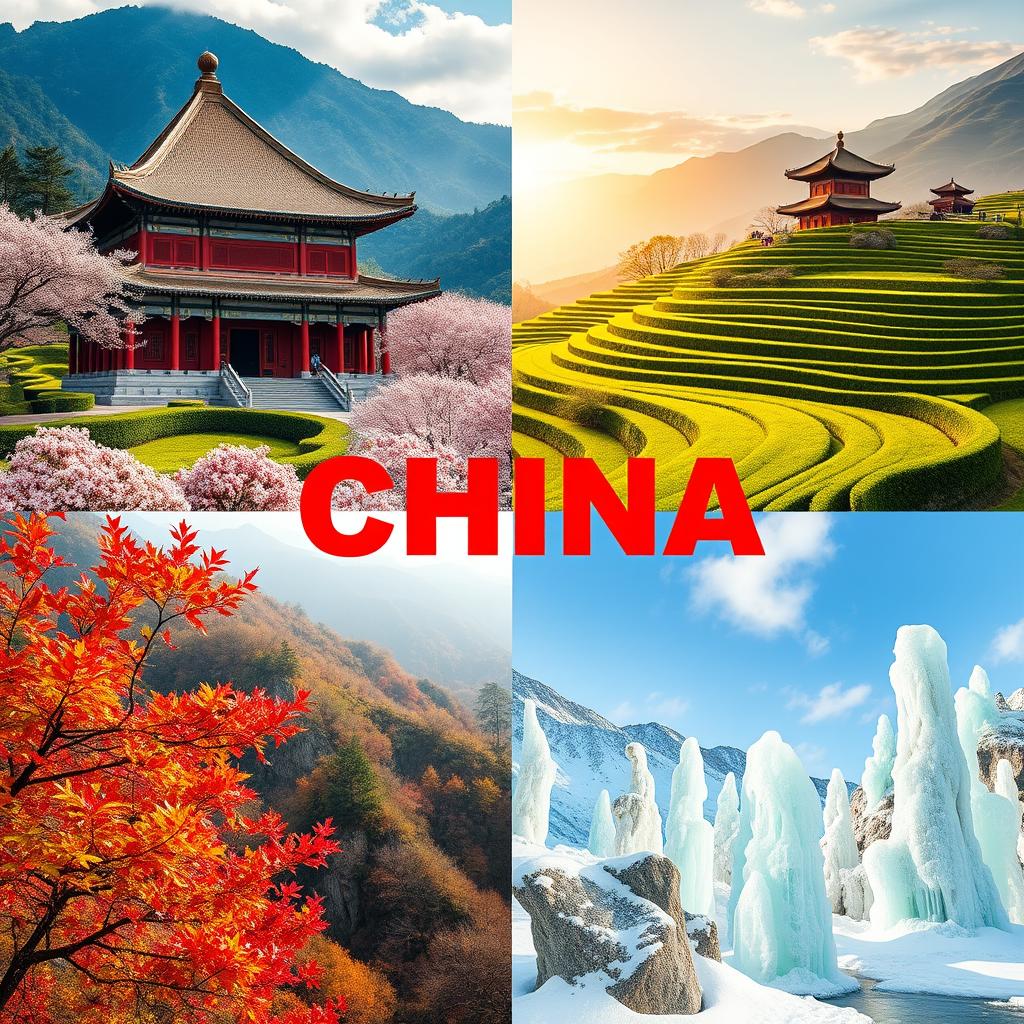
Spring is arguably the best time to visit most of China. From March to May, temperatures rise to a comfortable 10–25°C, and gardens burst into color.
Where to Go
Beijing: Cherry blossoms at Yuyuantan Park, Great Wall hikes without summer heat.
Guilin: Li River mist and rice terraces reflecting the sky.
Luoyang: Peony Festival (April), a thousand-year tradition.
Chengdu: Panda breeding base—giant pandas are most active in cooler weather.
What to Expect
Crowds: Moderate. Not as packed as autumn, but increasing toward May.
Weather: Sporadic rain in the south (April showers), but generally clear in the north.
Events: Qingming Festival (early April) sees domestic travel spikes.
Pro tip: Pack layers. Northern China can still feel chilly in March, while southern regions may already be warm.
Summer (June to August): Heat, Monsoons, and Mountain Escapes
Summer in much of China is hot and humid. Beijing often hits 35°C, and Shanghai feels like a steam bath. But this season is perfect for high-altitude and northerly destinations.
Where to Go
Tibet: Clear skies, comfortable 15–25°C, and full accessibility—most monasteries are open.
Yunnan: Kunming (the “Spring City”) averages 20°C; Lijiang and Shangri-La are cool.
Qinghai Lake: Vast blue water framed by rapeseed flowers (July–August).
Heilongjiang: Harbin’s summer is mild, and Sun Island Park is lush.
What to Avoid
Coastal cities: Typhoon risk from July to September (Hong Kong, Shenzhen, Shanghai).
Yangtze River cruise: Summer humidity and occasional flooding can dampen the experience.
Fact: During the 2023 National Day holiday (which falls in autumn, not summer), China recorded 826 million domestic tourist trips. Summer crowds are heavy but spread across more regions.
Autumn (September to November): Clear Skies and Golden Landscapes
If you can visit China only once, aim for autumn. Temperatures are mild (10–25°C), humidity drops, and air quality improves significantly—especially in northern cities where summer smog clears.
Where to Go
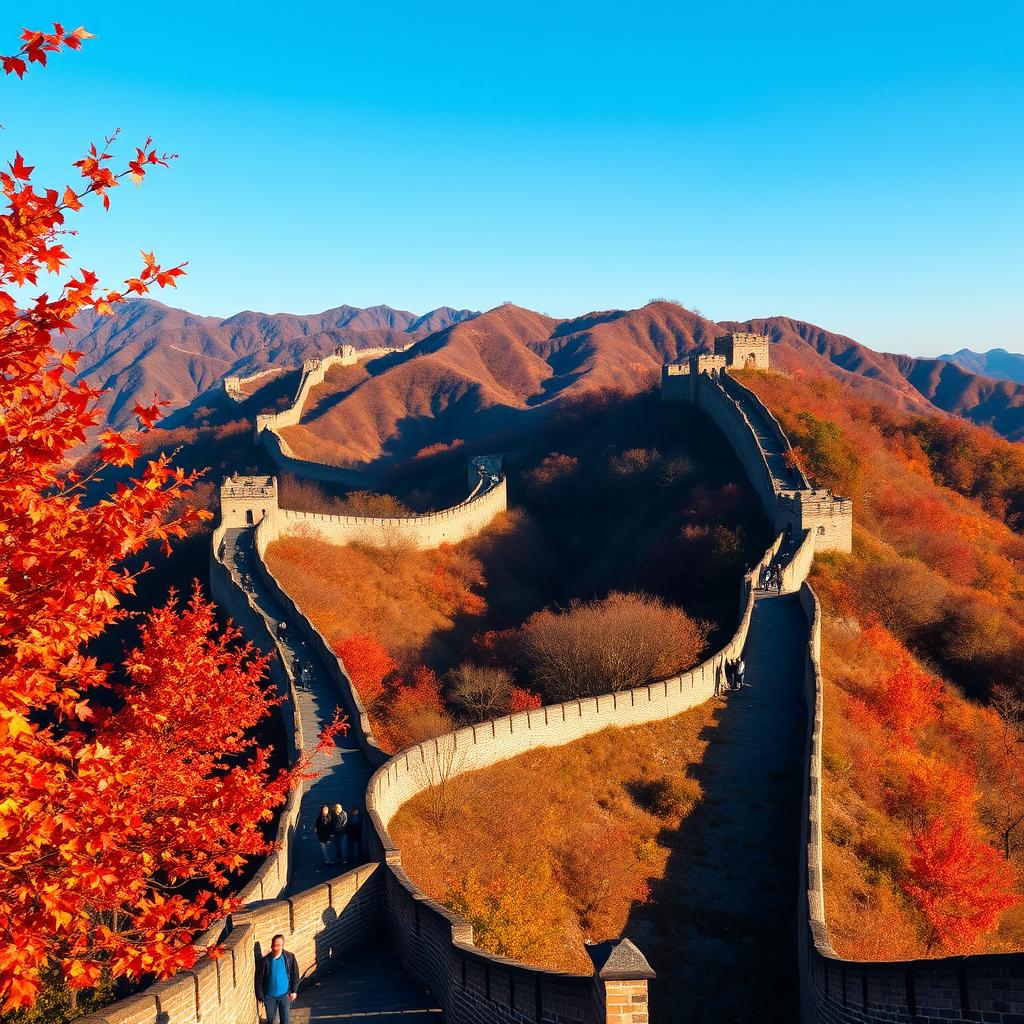
Beijing: Perfect for the Forbidden City and Great Wall amid crisp air.
Jiuzhaigou: Autumn foliage turns the valley into a kaleidoscope of red, gold, and green.
Huangshan (Yellow Mountain): The legendary “sea of clouds” is most dramatic in autumn.
Shanghai: Comfortable for exploring the Bund and French Concession.
Key Consideration
Golden Week (October 1–7): China’s National Day holiday. Tourist sites are jammed; flights and hotels triple in price. Travel during the last two weeks of October or November for a more relaxed experience.
Stat: China’s high-speed rail network—the world’s largest at 42,000 km—makes autumn weekend getaways easy. You can reach most major destinations within 4–5 hours from Beijing or Shanghai.
Winter (December to February): Snow Festivals and Tropical Escapes
Winter in China is a study in extremes. Harbin’s Ice and Snow Festival (-30°C) is a once-in-a-lifetime spectacle, while Hainan’s beaches offer 25°C warmth.
Where to Go
Harbin (Heilongjiang): Ice sculptures, Siberian tiger park, and Russian architecture.
Sanya (Hainan): China’s answer to Hawaii—snorkeling, palm trees, and warm sea.
Yunnan: Dali and Lijiang enjoy sunny days (10–15°C) with fewer tourists.
Hong Kong: Mild (15–20°C), great for sightseeing and dim sum.
What to Be Careful Of
Chinese New Year (late January/early February): This is the world’s largest human migration. Millions travel home, so trains and planes sell out weeks ahead. Tourist spots can be surprisingly quiet (everyone is with family), but transportation is a nightmare.
Air quality: Northern cities sometimes see heavy smog due to coal heating. Modern controls have improved, but you may still encounter haze in Beijing.
Avoiding Peak Travel Seasons
Two periods are best avoided unless you are prepared for crowds and high prices:
Chinese New Year (Spring Festival): Dates vary (January–February). Hotels in popular destinations like Shanghai and Hong Kong can be empty, but transportation is chaotic.
National Day Golden Week (October 1–7): Scenic spots like the Great Wall become “people mountains and people seas.”
How to Navigate
If you must travel during these times, book everything at least 2–3 months ahead.
Consider off-beat destinations like Xinjiang (autumn) or Guizhou (summer) where crowds are thinner.
Regional Cheat Sheet: Best Times for Specific Regions
Region
Best Months
Reason
North (Beijing, Xi’an)
April–May, September–October
Pleasant temperatures, clear skies
South (Guangzhou, Guilin)
October–December, March–April
Avoid summer humidity; winter is mild
West (Tibet, Xinjiang)
June–August
Roads open, passes free of snow
Central (Shanghai, Hangzhou)
September–November
Cooler weather, fewer typhoons
Northeast (Harbin)
December–February (for snow), June–August (for green)
Winter festival; summer escape
FAQs About Visiting China
What is the absolute best month to visit China?
For most travelers, October is ideal: autumn colors, comfortable temperatures, and low rainfall. But avoid the first week (Golden Week). Mid-October to mid-November is prime.
Is summer a bad time to visit China?
Not if you stick to high-altitude regions like Tibet, Yunnan, or Qinghai. Coastal and inland cities can be hot and humid, but summer festivals (like the Shanghai International Art Festival) add cultural flavor.
How bad are the crowds during Chinese New Year?
Domestic travel peaks, but many tourist attractions are surprisingly quiet—locals stay home. The main headache is transportation: book train or flight tickets at least 30 days in advance.
Can I visit Tibet in winter?
Yes, but expect temperatures below 0°C and some passes may close. Spring and autumn are better for trekking, while summer offers the most accessibility. Always check travel permits.
What about air quality in northern cities?
Beijing, Tianjin, and Hebei have seen dramatic improvements since 2013 due to anti-pollution policies. Spring and autumn typically have cleaner air than winter (when coal heating spikes). Check real-time AQI before your trip.
Which season is best for photography?
Autumn (especially October–November) delivers golden light, vibrant foliage, and clear skies. Spring’s cherry blossoms (March–April) and winter’s snowscapes (Harbin, Huangshan) are also stunning.
Conclusion
The best time to visit China depends on your itinerary and tolerance for crowds. Spring (April–May) and autumn (September–October) offer the most consistent pleasant weather across the country. For unique experiences, embrace winter’s ice festivals or summer’s mountain retreats. Avoid Chinese New Year and Golden Week unless you plan well. Remember, China’s vastness means there is always a perfect season for a region—so pick your destination first, then choose your travel window. With world-class high-speed rail and a rapidly improving travel infrastructure, you can explore this incredible nation any time of year.
Mục lục
What is the best time to visit China? It’s a question that stumps even seasoned travelers—but the answer can transform your trip from chaotic to unforgettable. China spans nearly the same latitude as the United States, packing everything from subarctic cold in the north to tropical heat in the south, plus the world’s highest plateau. Spring (April–May) and autumn (September–October) offer the most pleasant weather nationwide, with temperatures averaging 15–25°C and low rainfall. However, your ideal travel window depends on where you are headed, what you want to experience, and how much you value avoiding crowds.
Why China’s Climate Is So Diverse
China covers over 9.6 million square kilometers, crossing five time zones but officially using one (UTC+8). It includes:
Cold-temperate north (Heilongjiang, Inner Mongolia): Bitter winters, mild summers.
Temperate central (Beijing, Shanghai): Four distinct seasons.
Subtropical south (Guangzhou, Hong Kong): Humid, hot summers; mild winters.
High-altitude west (Tibet, Qinghai): Cool year-round, with summer being most accessible.
Arid northwest (Xinjiang, Gansu): Hot summers, cold winters, little rain.
This diversity means there is no single best time—but it also means you can find perfect weather somewhere in China no matter when you visit.
Spring (March to May): Blossoms and Mild Breezes
Spring is arguably the best time to visit most of China. From March to May, temperatures rise to a comfortable 10–25°C, and gardens burst into color.
Where to Go
Beijing: Cherry blossoms at Yuyuantan Park, Great Wall hikes without summer heat.
Guilin: Li River mist and rice terraces reflecting the sky.
Luoyang: Peony Festival (April), a thousand-year tradition.
Chengdu: Panda breeding base—giant pandas are most active in cooler weather.
What to Expect
Crowds: Moderate. Not as packed as autumn, but increasing toward May.
Weather: Sporadic rain in the south (April showers), but generally clear in the north.
Events: Qingming Festival (early April) sees domestic travel spikes.
Pro tip: Pack layers. Northern China can still feel chilly in March, while southern regions may already be warm.
Summer (June to August): Heat, Monsoons, and Mountain Escapes
Summer in much of China is hot and humid. Beijing often hits 35°C, and Shanghai feels like a steam bath. But this season is perfect for high-altitude and northerly destinations.
Where to Go
Tibet: Clear skies, comfortable 15–25°C, and full accessibility—most monasteries are open.
Yunnan: Kunming (the “Spring City”) averages 20°C; Lijiang and Shangri-La are cool.
Qinghai Lake: Vast blue water framed by rapeseed flowers (July–August).
Heilongjiang: Harbin’s summer is mild, and Sun Island Park is lush.
What to Avoid
Coastal cities: Typhoon risk from July to September (Hong Kong, Shenzhen, Shanghai).
Yangtze River cruise: Summer humidity and occasional flooding can dampen the experience.
Fact: During the 2023 National Day holiday (which falls in autumn, not summer), China recorded 826 million domestic tourist trips. Summer crowds are heavy but spread across more regions.
Autumn (September to November): Clear Skies and Golden Landscapes
If you can visit China only once, aim for autumn. Temperatures are mild (10–25°C), humidity drops, and air quality improves significantly—especially in northern cities where summer smog clears.
Where to Go
Beijing: Perfect for the Forbidden City and Great Wall amid crisp air.
Jiuzhaigou: Autumn foliage turns the valley into a kaleidoscope of red, gold, and green.
Huangshan (Yellow Mountain): The legendary “sea of clouds” is most dramatic in autumn.
Shanghai: Comfortable for exploring the Bund and French Concession.
Key Consideration
Golden Week (October 1–7): China’s National Day holiday. Tourist sites are jammed; flights and hotels triple in price. Travel during the last two weeks of October or November for a more relaxed experience.
Stat: China’s high-speed rail network—the world’s largest at 42,000 km—makes autumn weekend getaways easy. You can reach most major destinations within 4–5 hours from Beijing or Shanghai.
Winter (December to February): Snow Festivals and Tropical Escapes
Winter in China is a study in extremes. Harbin’s Ice and Snow Festival (-30°C) is a once-in-a-lifetime spectacle, while Hainan’s beaches offer 25°C warmth.
Where to Go
Harbin (Heilongjiang): Ice sculptures, Siberian tiger park, and Russian architecture.
Sanya (Hainan): China’s answer to Hawaii—snorkeling, palm trees, and warm sea.
Yunnan: Dali and Lijiang enjoy sunny days (10–15°C) with fewer tourists.
Hong Kong: Mild (15–20°C), great for sightseeing and dim sum.
What to Be Careful Of
Chinese New Year (late January/early February): This is the world’s largest human migration. Millions travel home, so trains and planes sell out weeks ahead. Tourist spots can be surprisingly quiet (everyone is with family), but transportation is a nightmare.
Air quality: Northern cities sometimes see heavy smog due to coal heating. Modern controls have improved, but you may still encounter haze in Beijing.
Avoiding Peak Travel Seasons
Two periods are best avoided unless you are prepared for crowds and high prices:
Chinese New Year (Spring Festival): Dates vary (January–February). Hotels in popular destinations like Shanghai and Hong Kong can be empty, but transportation is chaotic.
National Day Golden Week (October 1–7): Scenic spots like the Great Wall become “people mountains and people seas.”
How to Navigate
If you must travel during these times, book everything at least 2–3 months ahead.
Consider off-beat destinations like Xinjiang (autumn) or Guizhou (summer) where crowds are thinner.
Regional Cheat Sheet: Best Times for Specific Regions
For most travelers, October is ideal: autumn colors, comfortable temperatures, and low rainfall. But avoid the first week (Golden Week). Mid-October to mid-November is prime.
Is summer a bad time to visit China?
Not if you stick to high-altitude regions like Tibet, Yunnan, or Qinghai. Coastal and inland cities can be hot and humid, but summer festivals (like the Shanghai International Art Festival) add cultural flavor.
How bad are the crowds during Chinese New Year?
Domestic travel peaks, but many tourist attractions are surprisingly quiet—locals stay home. The main headache is transportation: book train or flight tickets at least 30 days in advance.
Can I visit Tibet in winter?
Yes, but expect temperatures below 0°C and some passes may close. Spring and autumn are better for trekking, while summer offers the most accessibility. Always check travel permits.
What about air quality in northern cities?
Beijing, Tianjin, and Hebei have seen dramatic improvements since 2013 due to anti-pollution policies. Spring and autumn typically have cleaner air than winter (when coal heating spikes). Check real-time AQI before your trip.
Which season is best for photography?
Autumn (especially October–November) delivers golden light, vibrant foliage, and clear skies. Spring’s cherry blossoms (March–April) and winter’s snowscapes (Harbin, Huangshan) are also stunning.
Conclusion
The best time to visit China depends on your itinerary and tolerance for crowds. Spring (April–May) and autumn (September–October) offer the most consistent pleasant weather across the country. For unique experiences, embrace winter’s ice festivals or summer’s mountain retreats. Avoid Chinese New Year and Golden Week unless you plan well. Remember, China’s vastness means there is always a perfect season for a region—so pick your destination first, then choose your travel window. With world-class high-speed rail and a rapidly improving travel infrastructure, you can explore this incredible nation any time of year.
Planning a trip to China? Our comprehensive guide covers visa types, the 144-hour transit policy, e-Visa options, step-by-step application, fees, and expert tips for a successful application.
Wondering what is the best time to visit China? Explore seasonal breakdowns, regional insights, and festival impacts to plan your perfect trip—from cherry blossoms in spring to ice sculptures in winter.
Discover the true cost of a trip to China in 2026. From flights and visas to daily expenses, we break down budgets for backpackers, mid-range, and luxury travelers. Save money with our expert tips.
3 thoughts on “What is the Best Time to Visit China? A Complete Seasonal Guide”
This was super helpful! I’m planning a trip in October and it sounds like that’s a good call. How crowded are the major attractions during that time?


This was super helpful! I’m planning a trip in October and it sounds like that’s a good call. How crowded are the major attractions during that time?
I’m planning a trip in October but worried about crowds. Is that a good time?
I visited in July once and the heat was brutal. Wish I’d read this guide beforehand!