Discover how China’s 5G network dwarfs the US in scale, speed, and coverage. With over 2.3 million base stations and double the download speeds, China’s government-backed strategy sets a new global standard. Learn the key differences and what they mean for the future of connectivity.
Ready
EN
Mục lục
Introduction
Table of Contents
Deployment Scale: China’s Massive Infrastructure Advantage
Base Station Density
Speed and Performance: How China’s Networks Outperform the US
Comparison Table
Coverage: Urban vs Rural, Density and Strategy Differences
Technology and Vendors: China’s Homegrown Giants vs US Reliance on Foreign Tech
Government Policy and Investment: Central Planning vs Private Sector
Challenges: Spectrum Allocation, Security Concerns, and Future Outlook
Conclusion
FAQ
How does China’s 5G speed compare to the US?
Why does China have more 5G base stations than the US?
Is Huawei involved in US 5G?
What spectrum does China use for 5G?
How does government policy affect 5G in China and the US?
What is the future of 5G in both countries?
Introduction
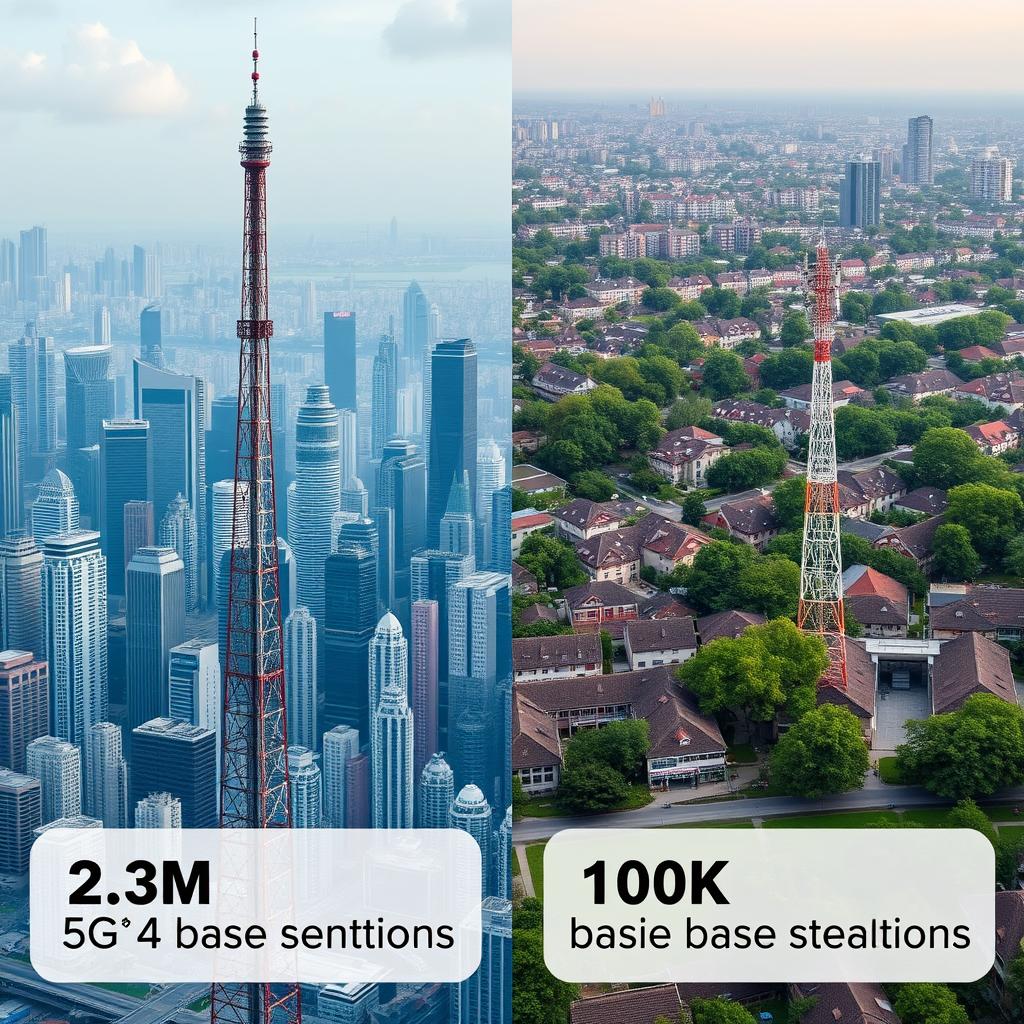
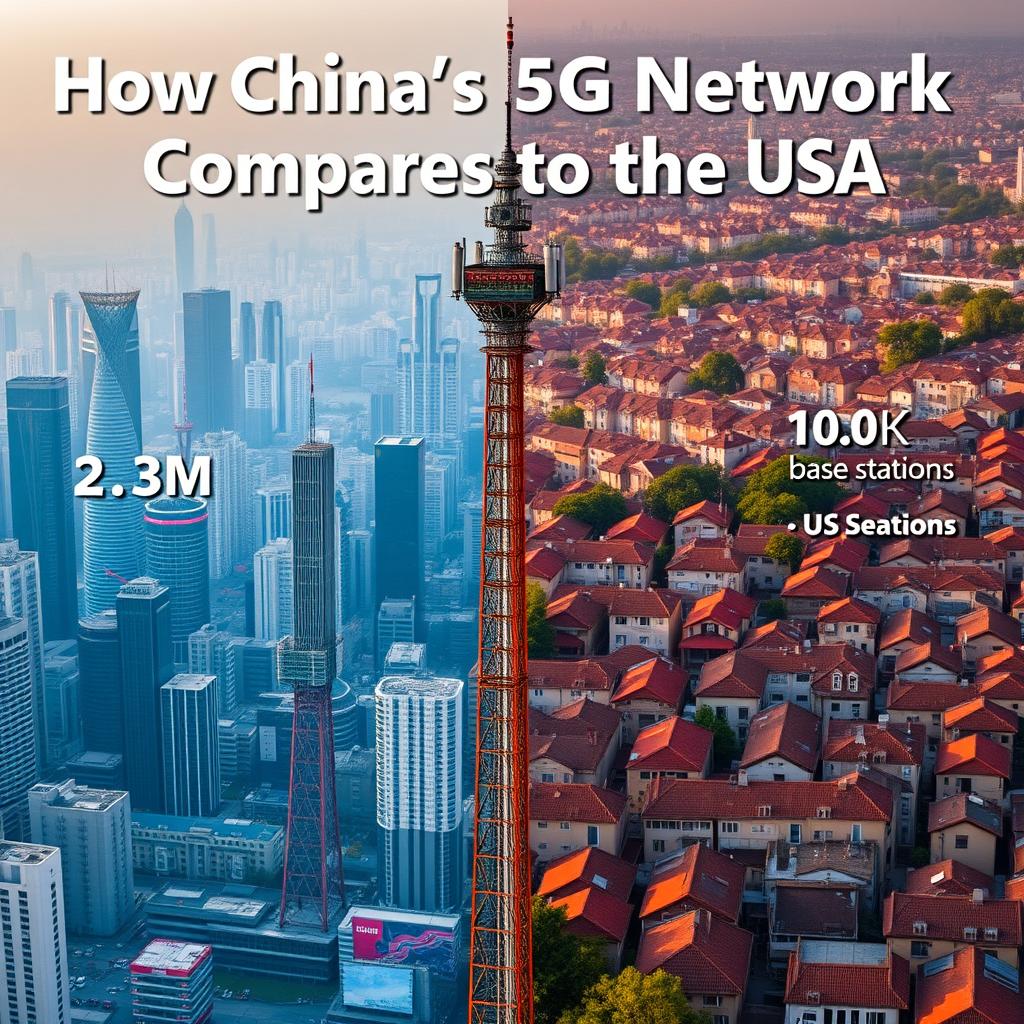
The race for 5G dominance is reshaping global technology leadership, and How China’s 5G network compares to the US reveals stark contrasts in deployment, performance, and strategy. As of early 2023, China had deployed over 2.3 million 5G base stations, while the US had about 100,000. This scale difference underscores a deeper divide in infrastructure ambition and execution.
Table of Contents
Introduction
Deployment Scale: China’s Massive Infrastructure Advantage
Speed and Performance: How China’s Networks Outperform the US
Coverage: Urban vs Rural, Density and Strategy Differences
Technology and Vendors: China’s Homegrown Giants vs US Reliance on Foreign Tech
Government Policy and Investment: Central Planning vs Private Sector
Challenges: Spectrum Allocation, Security Concerns, and Future Outlook
Conclusion
FAQ
Deployment Scale: China’s Massive Infrastructure Advantage
China’s 5G rollout is unprecedented in speed and scope. The government-backed initiative has blanketed major cities with thousands of base stations, covering over 95% of urban areas. In contrast, the US relies on a patchwork of private carriers, leading to uneven coverage.
Base Station Density
China: 2.3 million base stations (early 2023)
US: ~100,000 base stations
This density gives China an edge in capacity and reliability, especially in high-traffic zones.
Speed and Performance: How China’s Networks Outperform the US
According to Opensignal, average 5G download speeds in China reached 305 Mbps in Q2 2022, more than double the US average of 148 Mbps. This performance gap stems from spectrum allocation: China uses more mid-band spectrum (2.6 GHz, 3.5 GHz), which balances speed and coverage, while the US relies heavily on mmWave, which offers high speeds but poor penetration.
Comparison Table
Metric
China
US
Avg download speed
305 Mbps
148 Mbps
Mid-band spectrum
Abundant
Limited
mmWave reliance
Low
High
Coverage: Urban vs Rural, Density and Strategy Differences
China’s 5G covers over 95% of urban areas and is expanding rapidly into rural regions via government subsidies. The US lags in rural 5G, with many areas still dependent on 4G. Strategy differences—central planning versus market-driven—explain this: China treats 5G as a national priority, while US carriers prioritize profitability.
Technology and Vendors: China’s Homegrown Giants vs US Reliance on Foreign Tech
Chinese vendors like Huawei and ZTE dominate the domestic 5G equipment market, driving down costs and enabling rapid deployment. In contrast, the US has banned Huawei due to security concerns, relying on Ericsson, Nokia, and Samsung. This has slowed US deployment and increased costs.
Government Policy and Investment: Central Planning vs Private Sector
China’s government set aggressive 5G targets and allocated generous spectrum for free to operators. The US relies on expensive spectrum auctions and private investment. For instance, China assigned 5G spectrum without auction, cutting deployment costs, while US carriers spent billions on auctioned licenses.
Challenges: Spectrum Allocation, Security Concerns, and Future Outlook
Both countries face challenges: China must manage cybersecurity risks from extensive state involvement, while the US wrestles with spectrum scarcity and vendor diversity. Future 6G research is underway in both nations, with China already filing more 6G patents.
Conclusion
In the contest of How China’s 5G network compares to the US, China leads in scale, speed, and coverage due to strategic government support and homegrown technology. The US faces hurdles that may impact its long-term competitiveness. For tech enthusiasts and investors, watching this race offers insights into broader economic and technological trends.
FAQ
How does China’s 5G speed compare to the US?
China’s average 5G download speed is about 305 Mbps, more than double the US average of 148 Mbps, thanks to extensive mid-band spectrum use.
Why does China have more 5G base stations than the US?
China’s government-led strategy prioritized rapid infrastructure buildout, with over 2.3 million base stations compared to 100,000 in the US, giving it a significant coverage advantage.
Is Huawei involved in US 5G?
No, the US banned Huawei and other Chinese vendors over security concerns, leading US carriers to rely on European and Korean suppliers instead.
What spectrum does China use for 5G?
China primarily uses mid-band spectrum (2.6 GHz, 3.5 GHz), which offers a good balance of coverage and speed, while the US relies more on high-band mmWave.
How does government policy affect 5G in China and the US?
China’s centralized planning and free spectrum allocation accelerated deployment, while the US market-driven approach with costly auctions has slowed progress.
What is the future of 5G in both countries?
Both are investing in 6G research, but China’s current lead in 5G infrastructure and patents suggests it may continue to dominate next-generation networks.
Mục lục
Introduction
The race for 5G dominance is reshaping global technology leadership, and How China’s 5G network compares to the US reveals stark contrasts in deployment, performance, and strategy. As of early 2023, China had deployed over 2.3 million 5G base stations, while the US had about 100,000. This scale difference underscores a deeper divide in infrastructure ambition and execution.
China’s 5G rollout is unprecedented in speed and scope. The government-backed initiative has blanketed major cities with thousands of base stations, covering over 95% of urban areas. In contrast, the US relies on a patchwork of private carriers, leading to uneven coverage.
Base Station Density
China: 2.3 million base stations (early 2023)
US: ~100,000 base stations
This density gives China an edge in capacity and reliability, especially in high-traffic zones.
Speed and Performance: How China’s Networks Outperform the US
According to Opensignal, average 5G download speeds in China reached 305 Mbps in Q2 2022, more than double the US average of 148 Mbps. This performance gap stems from spectrum allocation: China uses more mid-band spectrum (2.6 GHz, 3.5 GHz), which balances speed and coverage, while the US relies heavily on mmWave, which offers high speeds but poor penetration.
Comparison Table
Metric
China
US
Avg download speed
305 Mbps
148 Mbps
Mid-band spectrum
Abundant
Limited
mmWave reliance
Low
High
Coverage: Urban vs Rural, Density and Strategy Differences
China’s 5G covers over 95% of urban areas and is expanding rapidly into rural regions via government subsidies. The US lags in rural 5G, with many areas still dependent on 4G. Strategy differences—central planning versus market-driven—explain this: China treats 5G as a national priority, while US carriers prioritize profitability.
Technology and Vendors: China’s Homegrown Giants vs US Reliance on Foreign Tech
Chinese vendors like Huawei and ZTE dominate the domestic 5G equipment market, driving down costs and enabling rapid deployment. In contrast, the US has banned Huawei due to security concerns, relying on Ericsson, Nokia, and Samsung. This has slowed US deployment and increased costs.
Government Policy and Investment: Central Planning vs Private Sector
China’s government set aggressive 5G targets and allocated generous spectrum for free to operators. The US relies on expensive spectrum auctions and private investment. For instance, China assigned 5G spectrum without auction, cutting deployment costs, while US carriers spent billions on auctioned licenses.
Challenges: Spectrum Allocation, Security Concerns, and Future Outlook
Both countries face challenges: China must manage cybersecurity risks from extensive state involvement, while the US wrestles with spectrum scarcity and vendor diversity. Future 6G research is underway in both nations, with China already filing more 6G patents.
Conclusion
In the contest of How China’s 5G network compares to the US, China leads in scale, speed, and coverage due to strategic government support and homegrown technology. The US faces hurdles that may impact its long-term competitiveness. For tech enthusiasts and investors, watching this race offers insights into broader economic and technological trends.
FAQ
How does China’s 5G speed compare to the US?
China’s average 5G download speed is about 305 Mbps, more than double the US average of 148 Mbps, thanks to extensive mid-band spectrum use.
Why does China have more 5G base stations than the US?
China’s government-led strategy prioritized rapid infrastructure buildout, with over 2.3 million base stations compared to 100,000 in the US, giving it a significant coverage advantage.
Is Huawei involved in US 5G?
No, the US banned Huawei and other Chinese vendors over security concerns, leading US carriers to rely on European and Korean suppliers instead.
What spectrum does China use for 5G?
China primarily uses mid-band spectrum (2.6 GHz, 3.5 GHz), which offers a good balance of coverage and speed, while the US relies more on high-band mmWave.
How does government policy affect 5G in China and the US?
China’s centralized planning and free spectrum allocation accelerated deployment, while the US market-driven approach with costly auctions has slowed progress.
What is the future of 5G in both countries?
Both are investing in 6G research, but China’s current lead in 5G infrastructure and patents suggests it may continue to dominate next-generation networks.
Are Chinese cars any good? In 2025, the answer is a strong yes. This review covers safety, quality, EV innovation, and value for money, with data from Euro NCAP, J.D. Power, and more.
Discover the most advanced Chinese smartphones that are rarely available in Western markets—from Huawei's 5G comeback to Xiaomi's Leica-tuned cameras. Learn why they're exclusive and how to get one.
China produces 28.7% of the world's goods. But why? This deep dive explores the historical shift, cost advantages, supply chains, and government policies that made China the world's factory. Read more to understand the forces…
4 thoughts on “How China’s 5G Network Compares to the US: A Comprehensive Analysis”
I live in Shanghai and my 5G speeds are consistently over 800 Mbps. My family in New York barely gets 200 Mbps. The gap is huge.


I live in Shanghai and my 5G speeds are consistently over 800 Mbps. My family in New York barely gets 200 Mbps. The gap is huge.
I was amazed by the 5G speed in Shenzhen. It puts my US provider to shame! Do you think Chinese carriers will ever expand globally?
Thanks for the detailed comparison. I’m curious about the real-world coverage in rural vs urban areas – is it as consistent as claimed?
Is the 5G coverage in rural China as good as in cities? I’m considering remote work from smaller towns.