Inspired by James Cameron’s Avatar, Zhangjiajie’s towering sandstone pillars are a must-see. This comprehensive guide helps you navigate Tianzi Mountain, Bailong Elevator, Glass Bridge, and more.
Ready
EN
Mục lục
Introduction
Key Takeaways
Table of Contents
The Geology Behind the Avatar Mountains
Quartzite Sandstone Pillars: A 300-Million-Year Story
Comparison with Western Landscapes
Top Attractions: Tianzi Mountain, Yuanjiajie, and the Hallelujah Mountain
Tianzi Mountain: The Sea of Clouds
Yuanjiajie and the Hallelujah Mountain
Comparison Table: Three Main Scenic Areas
The Bailong Elevator: World’s Tallest Outdoor Elevator
Engineering Marvel
Visitor Experience
Zhangjiajie Grand Canyon Glass Bridge
World’s Highest and Longest Glass-Bottomed Bridge
Ticket and Activities
Best Time to Visit and Weather Considerations
Seasonal Guide
Average Monthly Conditions
Pro Tips
Getting There: Transportation Options
Flights: Zhangjiajie Hehua International Airport
High-Speed Trains: China’s Incredible Rail Network
Long-Distance Buses
Ticket Information and Suggested Itineraries
Ticket Prices (as of 2024)
Sample 3-Day Itinerary
Accommodation Tips: Staying In or Near the Park
Inside the Park: A Unique Experience
Outside the Park: Wulingyuan Town
Cultural and Ecological Highlights Beyond the Pillars
Tujia and Miao Ethnic Minorities
Biodiversity and Conservation
FAQ
1. What is the best time of year to visit Zhangjiajie?
2. How many days do I need to see the main attractions?
3. Is the Bailong Elevator worth it?
4. Can I hike as an alternative to taking the elevator?
5. How do I get from Zhangjiajie city to the national park?
6. Is the Zhangjiajie Grand Canyon Glass Bridge scary?
7. Are there English-speaking guides available?
8. What should I pack for Zhangjiajie?
Conclusion
Introduction
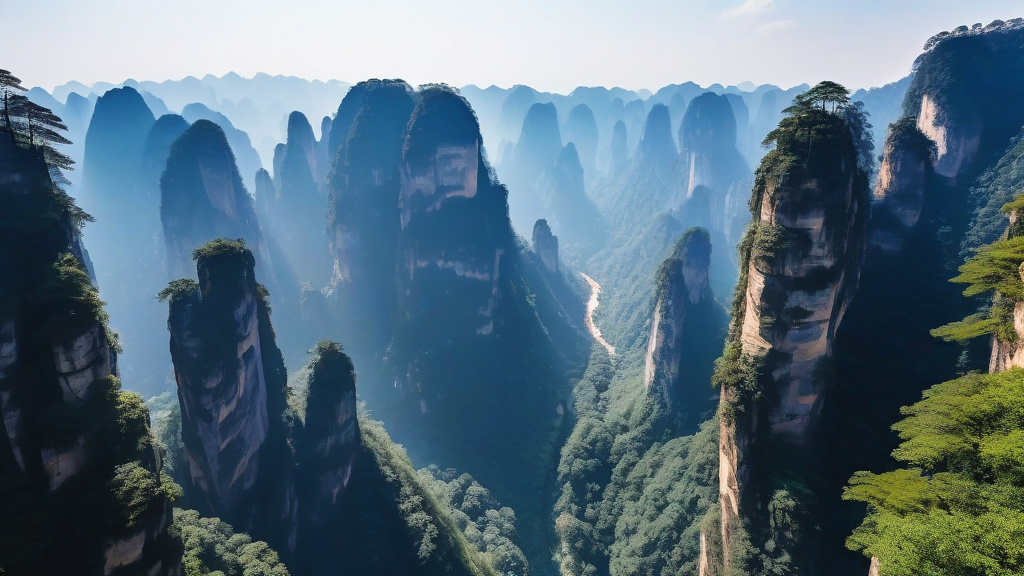
Imagine walking among colossal sandstone pillars that soar hundreds of meters into the sky, shrouded in mist—a landscape so surreal it inspired the floating Hallelujah Mountains in James Cameron’s 2009 blockbuster Avatar. This is Zhangjiajie, China’s first national forest park (established 1982) and a UNESCO World Heritage Site since 1992. With over 3,000 quartzite sandstone pillars, many over 200 meters tall, Zhangjiajie offers a once-in-a-lifetime travel experience. In this Zhangjiajie Avatar mountains travel guide, we cover everything you need to know: top attractions, ticket prices, best times to visit, transportation, and insider tips.
We’ll explore the geology behind the pillars, must-see peaks like Tianzi Mountain and Yuanjiajie, the thrilling Bailong Elevator and Glass Bridge, practical logistics, and cultural highlights. Let’s dive in.
Key Takeaways
Location: Hunan Province, China – Wulingyuan Scenic Area, about 800 km southwest of Shanghai.
Best Time to Visit: April–June and September–November for mild weather and clear views.
Must-See: Tianzi Mountain (1,262 m), Yuanjiajie (Hallelujah Mountain), Bailong Elevator (world’s tallest outdoor elevator at 326 m), Zhangjiajie Grand Canyon Glass Bridge (430 m long, 300 m high).
Ticket Prices: National Forest Park: 225 RMB (~$31); Bailong Elevator: 65 RMB (~$9); Glass Bridge: 138 RMB (~$19).
Getting There: Flights to Zhangjiajie Hehua International Airport, high-speed trains from major cities, or long-distance buses.
Table of Contents
The Geology Behind the Avatar Mountains
Top Attractions: Tianzi Mountain, Yuanjiajie, and the Hallelujah Mountain
The Bailong Elevator: World’s Tallest Outdoor Elevator
Zhangjiajie Grand Canyon Glass Bridge
Best Time to Visit and Weather Considerations
Getting There: Transportation Options
Ticket Information and Suggested Itineraries
Accommodation Tips: Staying In or Near the Park
Cultural and Ecological Highlights Beyond the Pillars
FAQ
Conclusion
The Geology Behind the Avatar Mountains
Quartzite Sandstone Pillars: A 300-Million-Year Story
Zhangjiajie’s iconic pillars are composed of quartzite sandstone, formed from ancient seabed deposits uplifted and eroded over millions of years. Unlike granite or limestone, quartzite is extremely hard, resisting erosion and creating vertical cliffs and pillars. The area contains over 3,000 pillars, with the tallest, Tianzi Mountain, reaching 1,262 meters above sea level. Their unique shape—narrow at the base and wider at the top—results from differential weathering, where softer rock erodes faster, leaving hard caps.
Comparison with Western Landscapes
While the US has the Grand Canyon (carved by the Colorado River) and Monument Valley (sandstone buttes), Zhangjiajie’s pillars are denser and more numerous. The closest Western analogue is perhaps the hoodoos of Bryce Canyon, but those are limestone and much smaller. Zhangjiajie’s scale—a forest of 3,000 pillars—has no direct equivalent. A 2019 study by the Chinese Academy of Sciences noted an erosion rate of about 0.1 mm per year, meaning the landscape evolves too slowly to be observed in a human lifetime.
Top Attractions: Tianzi Mountain, Yuanjiajie, and the Hallelujah Mountain
Tianzi Mountain: The Sea of Clouds
Tianzi Mountain (天子山) translates to “Son of Heaven Mountain” and offers panoramic views of the pillar forest. At 1,262 meters, it’s the highest peak in the park. The best time to visit is early morning, when clouds fill the valleys, creating a “sea of clouds” effect. Accessible via cable car (67 RMB one way) or hiking (about 3 hours from the base), the mountain features iconic viewpoints like Imperial Writing Brush Peak and Fairy Maiden Scattering Flowers. Tianzi Mountain receives over 2 million visitors annually (2019 data).
Yuanjiajie and the Hallelujah Mountain
Yuanjiajie is the scenic area that directly inspired the Hallelujah Mountains in Avatar. The most famous pillar is the Southern Sky Column (南天一柱), officially renamed “Hallelujah Mountain” in 2010 after the film’s release. The pillar stands 153 meters tall with a width of only 5–8 meters at its widest. Yuanjiajie also features the “First Bridge Under Heaven,” a natural stone arch connecting two peaks. The area is easily accessible via the Bailong Elevator or by bus from the park entrance.
Comparison Table: Three Main Scenic Areas
Feature
Zhangjiajie National Forest Park
Tianzi Mountain
Yuanjiajie
Elevation
1,000–1,200 m
1,262 m
1,080 m
Main attraction
Thousands of pillars
Sea of clouds
Hallelujah Mountain
Access
Park entrance by bus
Cable car or hike
Bailong Elevator or bus
Entrance fee (RMB)
225
Included in park ticket
Included in park ticket
Best time
All year
Early morning
Morning/afternoon
The Bailong Elevator: World’s Tallest Outdoor Elevator
Engineering Marvel
The Bailong (Hundred Dragons) Elevator is a glass elevator built into the vertical cliff of Yuanjiajie. At 326 meters (1,070 feet), it holds the Guinness World Record for the tallest outdoor elevator. The elevator rises from the valley floor to the mountaintop in about 1 minute 32 seconds, carrying up to 50 passengers per trip. Construction took 3 years and was completed in 2002. A single ride costs 65 RMB (~$9) for ascending or descending; a round-trip ticket costs 130 RMB. While environmentalists criticized its impact on the landscape, the elevator significantly reduced hiking time for visitors.
Visitor Experience
Riding the Bailong Elevator is thrilling: as you ascend, the pillar forest unfolds beneath you, with mist often wrapping around the cliffs. For the best photo opportunities, stand at the front of the car. The elevator operates from 7:30 AM to 5:00 PM (summer) and 8:00 AM to 4:30 PM (winter). Wait times can exceed 1 hour during peak season (Chinese holidays), so plan accordingly.
Zhangjiajie Grand Canyon Glass Bridge
World’s Highest and Longest Glass-Bottomed Bridge
The Zhangjiajie Grand Canyon Glass Bridge (Zhangjiajie Da Xia Gu Boli Qiao) spans 430 meters (1,410 feet) and hangs 300 meters (984 feet) above the canyon floor. Opened in August 2016, it broke five world records, including the longest and highest glass bridge. The bridge can hold up to 800 people at once, but management limits capacity for safety. The glass panels are 3.8 cm thick and composed of 99 clear glass layers. A 2016 safety test used a sledgehammer to demonstrate their strength.
Ticket and Activities
Admission to the glass bridge is 138 RMB (~$19) for adults, and an additional 38 RMB for the “Slide of Valor” (a stainless steel slide down the canyon). The bridge is often crowded, especially on weekends. For a less crowded experience, visit on a weekday or purchase a VIP ticket (additional 100 RMB) for priority access. The bridge closes during heavy rain or high winds; check the official WeChat account for updates.
Best Time to Visit and Weather Considerations
Seasonal Guide
Spring (April–June) and autumn (September–November) offer the most comfortable temperatures (15–25°C) and clearer skies. Summer (July–August) is hot and rainy, with temperatures reaching 35°C and frequent thunderstorms. Winter (December–February) is cold (0–10°C) but can be beautiful, with snow dusting the pillars. The rainy season (May–July) brings mist that can obscure views, but often creates dramatic cloud seas.
Average Monthly Conditions
Month
Avg Temp (°C)
Rain (mm)
Crowd Level
April
18
140
Moderate
July
28
200
High
October
18
80
Moderate
January
4
30
Low
Pro Tips
Check the 48-hour weather forecast before booking.
Bring a rain jacket and waterproof shoes, even in dry season.
For photography, aim to arrive by 7 AM to catch the morning mist.
Getting There: Transportation Options
Flights: Zhangjiajie Hehua International Airport
Zhangjiajie Hehua International Airport (DYG) offers direct flights from Beijing (2.5 hours), Shanghai (3 hours), Guangzhou (2 hours), and several international cities such as Seoul and Tokyo. In 2019, the airport handled 2.5 million passengers. A taxi from the airport to Wulingyuan (the gateway town) costs about 200 RMB (~$28) and takes 40 minutes. Alternatively, an airport bus runs every 30 minutes (20 RMB) to the city center, where you can transfer to a bus to Wulingyuan.
High-Speed Trains: China’s Incredible Rail Network
Since 2019, Zhangjiajie has been connected to China’s high-speed rail network. Trains from Changsha (the capital of Hunan) take about 3 hours and cost approximately 160 RMB (~$22) for a second-class seat. From Beijing, a direct G-train runs in about 7 hours (538 RMB / $75). The station is Zhangjiajie West Station, about 8 km from the city center. From there, take a bus (10 RMB) or taxi (30 RMB) to Wulingyuan. As of 2024, high-speed train frequencies have increased to 30+ daily departures from major cities.
Long-Distance Buses
Budget travelers can take buses from Changsha (4–5 hours, 120 RMB) or from other cities like Fenghuang (3 hours, 80 RMB). However, buses are less comfortable and prone to delays. For a stress-free trip, book a private car transfer through your hotel.
Ticket Information and Suggested Itineraries
Ticket Prices (as of 2024)
Zhangjiajie National Forest Park (4-day pass): 225 RMB (~$31). Includes unlimited access to the park and all scenic areas (except cable cars, elevators, and mini-buses).
Bailong Elevator: 65 RMB one way (130 RMB round trip).
Tianzi Mountain Cable Car: 67 RMB one way (round trip not necessary).
Yuanjiajie Mini Bus: 25 RMB per segment.
Zhangjiajie Grand Canyon Glass Bridge: 138 RMB (includes the bridge and canyon walk; slide is extra). Use: 1 USD ≈ 7.2 RMB.
Sample 3-Day Itinerary
Day 1: Arrive in Zhangjiajie, check into hotel in Wulingyuan. Afternoon: Visit the Grand Canyon Glass Bridge (2 hours). Evening: Enjoy local cuisine at Xibu Street.
Day 2: Morning: Enter the National Forest Park, take Bailong Elevator up to Yuanjiajie (Hallelujah Mountain, First Bridge Under Heaven). Afternoon: Hike to Tianzi Mountain (via cable car or hike down). Watch sunset from Tianzi.
Day 3: Morning: Explore the Golden Whip Stream (a 7.5 km valley hike). Afternoon: Depart or visit Huanglong Cave (limestone cave, separate ticket 60 RMB).
Accommodation Tips: Staying In or Near the Park
Inside the Park: A Unique Experience
Few visitors know you can stay inside the park at the Tianzi Mountain Summit area. Options include the Tianzi Mountain Hotel (basic, rooms from 300 RMB / $42) and family-run guesthouses near the old village of Gaoyun. Staying inside allows you to watch sunrise without the crowds. However, amenities are limited, and the park’s internal shuttle stops at 6 PM. Book in advance through travel sites like Ctrip.
Outside the Park: Wulingyuan Town
Most tourists base themselves in Wulingyuan (also called Suoxiyu), a 30-minute walk from the park entrance. Hotels range from budget hostels (100 RMB) to international chains like the Pullman (800 RMB). The town has restaurants, night markets, and an evening performance “Charming Xiangxi” (from 180 RMB). Alternatively, Zhangjiajie city (25 km away) offers more accommodation but requires a 40-minute bus ride to the park.
Cultural and Ecological Highlights Beyond the Pillars
Tujia and Miao Ethnic Minorities
The Zhangjiajie region is home to the Tujia and Miao peoples, who have lived here for centuries. Visit the Tujia Folk Village near the park entrance to see traditional stilted houses (Diaojiaolou), watch dance performances, and taste local dishes like spicy tofu and bacon stew. The Tujia people are known for their colorful embroidery and weaving.
Biodiversity and Conservation
Wulingyuan is a biodiversity hotspot. The park hosts over 3,000 plant species (including rare ginkgo and dove trees) and 200+ animal species, such as the golden monkey, clouded leopard, and Chinese giant salamander (the world’s largest amphibian). Conservation efforts have increased since the 1990s, with reforestation projects and limits on visitor numbers. However, tourism pressure remains high: 61.42 million visitors in 2019 (pre-COVID). The park uses a reservation system to cap daily visitors at 85,000.
FAQ
1. What is the best time of year to visit Zhangjiajie?
The best times are April to June and September to November. Spring offers blooming flowers and moderate temperatures; autumn provides crisp air and clear skies. Avoid Chinese public holidays (May 1, October 1) when crowds peak.
2. How many days do I need to see the main attractions?
A minimum of 3 days is recommended: Day 1 for Grand Canyon Glass Bridge, Day 2 for Yuanjiajie and Tianzi Mountain, Day 3 for Golden Whip Stream. If you have only 2 days, focus on the National Forest Park and skip the glass bridge.
3. Is the Bailong Elevator worth it?
Yes, it saves hours of hiking and offers spectacular views. Many consider it a highlight. However, queues can be long; visit early in the morning or after 3 PM.
4. Can I hike as an alternative to taking the elevator?
Yes, there are hiking trails. For example, the Ten-Mile Gallery hike takes about 2 hours from the valley to Yuanjiajie. However, the climb is steep and strenuous. The elevator is recommended for most visitors.
5. How do I get from Zhangjiajie city to the national park?
From Zhangjiajie city center, take bus line 1 or 2 to the central bus station, then a direct bus to Wulingyuan (20 RMB, 40 minutes). Alternatively, take a taxi for about 120 RMB.
6. Is the Zhangjiajie Grand Canyon Glass Bridge scary?
It can be, but the glass panels are very strong. Many visitors walk across without issue. If you’re afraid, try walking on the sides (where the bridge is solid). The bridge also has a bungee jump option (not for the faint-hearted).
7. Are there English-speaking guides available?
Yes, but they are more expensive. Booking through a travel agency like Sinoway or Ctrip can provide an English-speaking guide for about 500–800 RMB per day. Alternatively, download a self-guided audio tour app.
8. What should I pack for Zhangjiajie?
Comfortable hiking shoes, rain gear, sunscreen, insect repellent, snacks, and a portable charger. Also bring a face mask (some public transport requires it). In winter, pack layers and gloves.
Conclusion
Zhangjiajie’s Avatar mountains are as breathtaking as they appear on screen. This Zhangjiajie Avatar mountains travel guide has equipped you with essential tips: visit in spring or autumn, prioritize Yuanjiajie and the Bailong Elevator, and stay in Wulingyuan for convenience. With advanced ticket booking and a flexible itinerary, you can avoid the worst crowds and fully immerse yourself in this otherworldly landscape. Begin planning your trip today—check cut-off dates for your travel dates on official booking platforms. For more China travel inspiration, read our Best Places to Visit in China for First-Timers Guide and discover how China’s high-speed rail network makes exploring easy.
Statistics cited in this article are from official sources and Wikipedia as of 2024.
Mục lục
Introduction
Imagine walking among colossal sandstone pillars that soar hundreds of meters into the sky, shrouded in mist—a landscape so surreal it inspired the floating Hallelujah Mountains in James Cameron’s 2009 blockbuster Avatar. This is Zhangjiajie, China’s first national forest park (established 1982) and a UNESCO World Heritage Site since 1992. With over 3,000 quartzite sandstone pillars, many over 200 meters tall, Zhangjiajie offers a once-in-a-lifetime travel experience. In this Zhangjiajie Avatar mountains travel guide, we cover everything you need to know: top attractions, ticket prices, best times to visit, transportation, and insider tips.
We’ll explore the geology behind the pillars, must-see peaks like Tianzi Mountain and Yuanjiajie, the thrilling Bailong Elevator and Glass Bridge, practical logistics, and cultural highlights. Let’s dive in.
Key Takeaways
Location: Hunan Province, China – Wulingyuan Scenic Area, about 800 km southwest of Shanghai.
Best Time to Visit: April–June and September–November for mild weather and clear views.
Must-See: Tianzi Mountain (1,262 m), Yuanjiajie (Hallelujah Mountain), Bailong Elevator (world’s tallest outdoor elevator at 326 m), Zhangjiajie Grand Canyon Glass Bridge (430 m long, 300 m high).
Getting There: Flights to Zhangjiajie Hehua International Airport, high-speed trains from major cities, or long-distance buses.
The Geology Behind the Avatar Mountains
Quartzite Sandstone Pillars: A 300-Million-Year Story
Zhangjiajie’s iconic pillars are composed of quartzite sandstone, formed from ancient seabed deposits uplifted and eroded over millions of years. Unlike granite or limestone, quartzite is extremely hard, resisting erosion and creating vertical cliffs and pillars. The area contains over 3,000 pillars, with the tallest, Tianzi Mountain, reaching 1,262 meters above sea level. Their unique shape—narrow at the base and wider at the top—results from differential weathering, where softer rock erodes faster, leaving hard caps.
Comparison with Western Landscapes
While the US has the Grand Canyon (carved by the Colorado River) and Monument Valley (sandstone buttes), Zhangjiajie’s pillars are denser and more numerous. The closest Western analogue is perhaps the hoodoos of Bryce Canyon, but those are limestone and much smaller. Zhangjiajie’s scale—a forest of 3,000 pillars—has no direct equivalent. A 2019 study by the Chinese Academy of Sciences noted an erosion rate of about 0.1 mm per year, meaning the landscape evolves too slowly to be observed in a human lifetime.
Top Attractions: Tianzi Mountain, Yuanjiajie, and the Hallelujah Mountain
Tianzi Mountain: The Sea of Clouds
Tianzi Mountain (天子山) translates to “Son of Heaven Mountain” and offers panoramic views of the pillar forest. At 1,262 meters, it’s the highest peak in the park. The best time to visit is early morning, when clouds fill the valleys, creating a “sea of clouds” effect. Accessible via cable car (67 RMB one way) or hiking (about 3 hours from the base), the mountain features iconic viewpoints like Imperial Writing Brush Peak and Fairy Maiden Scattering Flowers. Tianzi Mountain receives over 2 million visitors annually (2019 data).
Yuanjiajie and the Hallelujah Mountain
Yuanjiajie is the scenic area that directly inspired the Hallelujah Mountains in Avatar. The most famous pillar is the Southern Sky Column (南天一柱), officially renamed “Hallelujah Mountain” in 2010 after the film’s release. The pillar stands 153 meters tall with a width of only 5–8 meters at its widest. Yuanjiajie also features the “First Bridge Under Heaven,” a natural stone arch connecting two peaks. The area is easily accessible via the Bailong Elevator or by bus from the park entrance.
Comparison Table: Three Main Scenic Areas
Feature
Zhangjiajie National Forest Park
Tianzi Mountain
Yuanjiajie
Elevation
1,000–1,200 m
1,262 m
1,080 m
Main attraction
Thousands of pillars
Sea of clouds
Hallelujah Mountain
Access
Park entrance by bus
Cable car or hike
Bailong Elevator or bus
Entrance fee (RMB)
225
Included in park ticket
Included in park ticket
Best time
All year
Early morning
Morning/afternoon
The Bailong Elevator: World’s Tallest Outdoor Elevator
Engineering Marvel
The Bailong (Hundred Dragons) Elevator is a glass elevator built into the vertical cliff of Yuanjiajie. At 326 meters (1,070 feet), it holds the Guinness World Record for the tallest outdoor elevator. The elevator rises from the valley floor to the mountaintop in about 1 minute 32 seconds, carrying up to 50 passengers per trip. Construction took 3 years and was completed in 2002. A single ride costs 65 RMB (~$9) for ascending or descending; a round-trip ticket costs 130 RMB. While environmentalists criticized its impact on the landscape, the elevator significantly reduced hiking time for visitors.
Visitor Experience
Riding the Bailong Elevator is thrilling: as you ascend, the pillar forest unfolds beneath you, with mist often wrapping around the cliffs. For the best photo opportunities, stand at the front of the car. The elevator operates from 7:30 AM to 5:00 PM (summer) and 8:00 AM to 4:30 PM (winter). Wait times can exceed 1 hour during peak season (Chinese holidays), so plan accordingly.
Zhangjiajie Grand Canyon Glass Bridge
World’s Highest and Longest Glass-Bottomed Bridge
The Zhangjiajie Grand Canyon Glass Bridge (Zhangjiajie Da Xia Gu Boli Qiao) spans 430 meters (1,410 feet) and hangs 300 meters (984 feet) above the canyon floor. Opened in August 2016, it broke five world records, including the longest and highest glass bridge. The bridge can hold up to 800 people at once, but management limits capacity for safety. The glass panels are 3.8 cm thick and composed of 99 clear glass layers. A 2016 safety test used a sledgehammer to demonstrate their strength.
Ticket and Activities
Admission to the glass bridge is 138 RMB (~$19) for adults, and an additional 38 RMB for the “Slide of Valor” (a stainless steel slide down the canyon). The bridge is often crowded, especially on weekends. For a less crowded experience, visit on a weekday or purchase a VIP ticket (additional 100 RMB) for priority access. The bridge closes during heavy rain or high winds; check the official WeChat account for updates.
Best Time to Visit and Weather Considerations
Seasonal Guide
Spring (April–June) and autumn (September–November) offer the most comfortable temperatures (15–25°C) and clearer skies. Summer (July–August) is hot and rainy, with temperatures reaching 35°C and frequent thunderstorms. Winter (December–February) is cold (0–10°C) but can be beautiful, with snow dusting the pillars. The rainy season (May–July) brings mist that can obscure views, but often creates dramatic cloud seas.
Average Monthly Conditions
Month
Avg Temp (°C)
Rain (mm)
Crowd Level
April
18
140
Moderate
July
28
200
High
October
18
80
Moderate
January
4
30
Low
Pro Tips
Check the 48-hour weather forecast before booking.
Bring a rain jacket and waterproof shoes, even in dry season.
For photography, aim to arrive by 7 AM to catch the morning mist.
Getting There: Transportation Options
Flights: Zhangjiajie Hehua International Airport
Zhangjiajie Hehua International Airport (DYG) offers direct flights from Beijing (2.5 hours), Shanghai (3 hours), Guangzhou (2 hours), and several international cities such as Seoul and Tokyo. In 2019, the airport handled 2.5 million passengers. A taxi from the airport to Wulingyuan (the gateway town) costs about 200 RMB (~$28) and takes 40 minutes. Alternatively, an airport bus runs every 30 minutes (20 RMB) to the city center, where you can transfer to a bus to Wulingyuan.
Since 2019, Zhangjiajie has been connected to China’s high-speed rail network. Trains from Changsha (the capital of Hunan) take about 3 hours and cost approximately 160 RMB (~$22) for a second-class seat. From Beijing, a direct G-train runs in about 7 hours (538 RMB / $75). The station is Zhangjiajie West Station, about 8 km from the city center. From there, take a bus (10 RMB) or taxi (30 RMB) to Wulingyuan. As of 2024, high-speed train frequencies have increased to 30+ daily departures from major cities.
Long-Distance Buses
Budget travelers can take buses from Changsha (4–5 hours, 120 RMB) or from other cities like Fenghuang (3 hours, 80 RMB). However, buses are less comfortable and prone to delays. For a stress-free trip, book a private car transfer through your hotel.
Ticket Information and Suggested Itineraries
Ticket Prices (as of 2024)
Zhangjiajie National Forest Park (4-day pass): 225 RMB (~$31). Includes unlimited access to the park and all scenic areas (except cable cars, elevators, and mini-buses).
Bailong Elevator: 65 RMB one way (130 RMB round trip).
Tianzi Mountain Cable Car: 67 RMB one way (round trip not necessary).
Yuanjiajie Mini Bus: 25 RMB per segment.
Zhangjiajie Grand Canyon Glass Bridge: 138 RMB (includes the bridge and canyon walk; slide is extra). Use: 1 USD ≈ 7.2 RMB.
Sample 3-Day Itinerary
Day 1: Arrive in Zhangjiajie, check into hotel in Wulingyuan. Afternoon: Visit the Grand Canyon Glass Bridge (2 hours). Evening: Enjoy local cuisine at Xibu Street.
Day 2: Morning: Enter the National Forest Park, take Bailong Elevator up to Yuanjiajie (Hallelujah Mountain, First Bridge Under Heaven). Afternoon: Hike to Tianzi Mountain (via cable car or hike down). Watch sunset from Tianzi.
Day 3: Morning: Explore the Golden Whip Stream (a 7.5 km valley hike). Afternoon: Depart or visit Huanglong Cave (limestone cave, separate ticket 60 RMB).
Accommodation Tips: Staying In or Near the Park
Inside the Park: A Unique Experience
Few visitors know you can stay inside the park at the Tianzi Mountain Summit area. Options include the Tianzi Mountain Hotel (basic, rooms from 300 RMB / $42) and family-run guesthouses near the old village of Gaoyun. Staying inside allows you to watch sunrise without the crowds. However, amenities are limited, and the park’s internal shuttle stops at 6 PM. Book in advance through travel sites like Ctrip.
Outside the Park: Wulingyuan Town
Most tourists base themselves in Wulingyuan (also called Suoxiyu), a 30-minute walk from the park entrance. Hotels range from budget hostels (100 RMB) to international chains like the Pullman (800 RMB). The town has restaurants, night markets, and an evening performance “Charming Xiangxi” (from 180 RMB). Alternatively, Zhangjiajie city (25 km away) offers more accommodation but requires a 40-minute bus ride to the park.
Cultural and Ecological Highlights Beyond the Pillars
Tujia and Miao Ethnic Minorities
The Zhangjiajie region is home to the Tujia and Miao peoples, who have lived here for centuries. Visit the Tujia Folk Village near the park entrance to see traditional stilted houses (Diaojiaolou), watch dance performances, and taste local dishes like spicy tofu and bacon stew. The Tujia people are known for their colorful embroidery and weaving.
Biodiversity and Conservation
Wulingyuan is a biodiversity hotspot. The park hosts over 3,000 plant species (including rare ginkgo and dove trees) and 200+ animal species, such as the golden monkey, clouded leopard, and Chinese giant salamander (the world’s largest amphibian). Conservation efforts have increased since the 1990s, with reforestation projects and limits on visitor numbers. However, tourism pressure remains high: 61.42 million visitors in 2019 (pre-COVID). The park uses a reservation system to cap daily visitors at 85,000.
FAQ
1. What is the best time of year to visit Zhangjiajie?
The best times are April to June and September to November. Spring offers blooming flowers and moderate temperatures; autumn provides crisp air and clear skies. Avoid Chinese public holidays (May 1, October 1) when crowds peak.
2. How many days do I need to see the main attractions?
A minimum of 3 days is recommended: Day 1 for Grand Canyon Glass Bridge, Day 2 for Yuanjiajie and Tianzi Mountain, Day 3 for Golden Whip Stream. If you have only 2 days, focus on the National Forest Park and skip the glass bridge.
3. Is the Bailong Elevator worth it?
Yes, it saves hours of hiking and offers spectacular views. Many consider it a highlight. However, queues can be long; visit early in the morning or after 3 PM.
4. Can I hike as an alternative to taking the elevator?
Yes, there are hiking trails. For example, the Ten-Mile Gallery hike takes about 2 hours from the valley to Yuanjiajie. However, the climb is steep and strenuous. The elevator is recommended for most visitors.
5. How do I get from Zhangjiajie city to the national park?
From Zhangjiajie city center, take bus line 1 or 2 to the central bus station, then a direct bus to Wulingyuan (20 RMB, 40 minutes). Alternatively, take a taxi for about 120 RMB.
6. Is the Zhangjiajie Grand Canyon Glass Bridge scary?
It can be, but the glass panels are very strong. Many visitors walk across without issue. If you’re afraid, try walking on the sides (where the bridge is solid). The bridge also has a bungee jump option (not for the faint-hearted).
7. Are there English-speaking guides available?
Yes, but they are more expensive. Booking through a travel agency like Sinoway or Ctrip can provide an English-speaking guide for about 500–800 RMB per day. Alternatively, download a self-guided audio tour app.
8. What should I pack for Zhangjiajie?
Comfortable hiking shoes, rain gear, sunscreen, insect repellent, snacks, and a portable charger. Also bring a face mask (some public transport requires it). In winter, pack layers and gloves.
Conclusion
Zhangjiajie’s Avatar mountains are as breathtaking as they appear on screen. This Zhangjiajie Avatar mountains travel guide has equipped you with essential tips: visit in spring or autumn, prioritize Yuanjiajie and the Bailong Elevator, and stay in Wulingyuan for convenience. With advanced ticket booking and a flexible itinerary, you can avoid the worst crowds and fully immerse yourself in this otherworldly landscape. Begin planning your trip today—check cut-off dates for your travel dates on official booking platforms. For more China travel inspiration, read our Best Places to Visit in China for First-Timers Guide and discover how China’s high-speed rail network makes exploring easy.
Statistics cited in this article are from official sources and Wikipedia as of 2024.
Planning your first trip to China? Discover the must-see destinations including Beijing's Great Wall, Shanghai's skyline, Xi'an's Terracotta Army, Guilin's karst mountains, and Chengdu's pandas. Get practical tips and a sample itinerary.
Planning a trip to China? Our comprehensive guide covers visa types, the 144-hour transit policy, e-Visa options, step-by-step application, fees, and expert tips for a successful application.
Wondering what is the best time to visit China? Explore seasonal breakdowns, regional insights, and festival impacts to plan your perfect trip—from cherry blossoms in spring to ice sculptures in winter.

Great guide! Is it better to stay in Wulingyuan or near the national park entrance?
Just got back from Zhangjiajie last month! The glass bridge was terrifying but totally worth it. Any tips for avoiding the worst crowds?