Wondering about Chinese street food safety? Discover how strict regulations, high turnover, and local initiatives make street food safer than ever—plus tips for worry-free eating.
Ready
EN
Mục lục
Introduction
Key Takeaways
Table of Contents
Government Regulations: A Robust Legal Framework
China’s Food Safety Law
Comparison to Western Standards
Inspection and Licensing: Local Authorities on the Ground
Licensing Rates and Enforcement
Table: Street Food Safety Metrics in Major Cities
Common Practices: Fresh Ingredients, High Turnover, Visible Cooking
Freshness by Design
Why High Turnover Matters
Local Government Initiatives: Pilots and Standardization
Chengdu’s Model Success
Other City Programs
Cultural Context: Street Food as Heritage
Xiaochi: More Than a Snack
Comparison to Global Street Food
Tips for Travelers: How to Choose Safe Street Food
Look for High Traffic Stalls
Watch the Cooking Process
Hygiene Cues
Stick to Water-Based Treats
FAQ
Is Chinese street food generally safe to eat?
What is the most common cause of foodborne illness from street food?
Are there any specific foods to avoid?
How does China enforce street food safety?
What is the fine for a food safety violation?
Are there pilot programs for safe street food?
How do Chinese street vendors keep ingredients fresh?
What is HACCP certification in Chinese street food?
Conclusion
Introduction
Chinese street food—vibrant, aromatic, and an integral part of daily life—attracts millions of travelers each year. Yet a common question lingers: Chinese street food safety is it safe to eat? The answer, backed by rigorous regulations and modern oversight, is a resounding yes—when you know what to look for. China has overhauled its food safety framework, from strict licensing to smart monitoring, making street food safer than ever. Here’s what we’ll cover: the regulatory landscape, local enforcement, cultural practices, and practical tips to enjoy xiaochi with confidence.
Key Takeaways
China’s 2015 Food Safety Law imposes fines up to 30 times the product value, deterring unsafe practices.
In Beijing, over 90% of street food vendors are licensed and inspected (municipal data, 2020).
Chengdu’s “Street Food Standardization” program cut foodborne illness incidents by 40% in pilot districts (2017–2019).
85% of Chinese street food vendors source fresh ingredients daily from local markets (2019 survey).
Table of Contents
Government Regulations: A Robust Legal Framework
Inspection and Licensing: Local Authorities on the Ground
Common Practices: Fresh Ingredients, High Turnover, Visible Cooking
Local Government Initiatives: Pilots and Standardization
Cultural Context: Street Food as Heritage
Tips for Travelers: How to Choose Safe Street Food
FAQ
Conclusion
Government Regulations: A Robust Legal Framework
China’s Food Safety Law
The cornerstone of modern street food safety is the Food Safety Law of the People’s Republic of China, first enacted in 2009 and significantly revised in 2015. The revision introduced draconian penalties: fines can reach up to 30 times the value of the illegal product. For a small vendor selling unsafe snacks, that could mean a fine of 30,000 yuan (≈ $4,200 USD) for a 1,000-yuan infraction. Repeat offenders risk business license revocation and criminal liability.
Comparison to Western Standards
While the US FDA’s maximum penalty for food safety violations is around $250,000 per violation per label, China’s punitive model relies on proportional fines that hit small vendors hard. Critics argue that enforcement is uneven, but in tier-1 cities like Beijing, Shanghai, and Guangzhou, inspections are frequent and penalties publicized. The law also mandates that all food vendors register with local authorities, creating a traceable chain.
Inspection and Licensing: Local Authorities on the Ground
Licensing Rates and Enforcement
By 2020, over 90% of street food vendors in Beijing were licensed and subject to routine inspections. Municipal data shows that unlicensed stalls face immediate shutdown. Local food and drug administrations conduct spot checks, testing for heavy metals, pesticide residues, and microbial contamination. In Shanghai, the “Smart Street Food” initiative uses IoT sensors to monitor cooking temperatures in real time, alerting inspectors if thresholds are breached.
Table: Street Food Safety Metrics in Major Cities
City
Licensed Vendors (%)
Inspection Frequency
Tech Adoption
Beijing
90%+
Monthly spot checks
Manual logging
Shanghai
85%+
Bi-weekly + IoT sensors
Real-time temp monitoring
Chengdu
80%+ (pilot areas)
Weekly during pilot
HACCP certification
Data sources: Beijing Municipal Food Safety Commission, Shanghai FDA, Chengdu Pilot Program Reports.
Common Practices: Fresh Ingredients, High Turnover, Visible Cooking
Freshness by Design
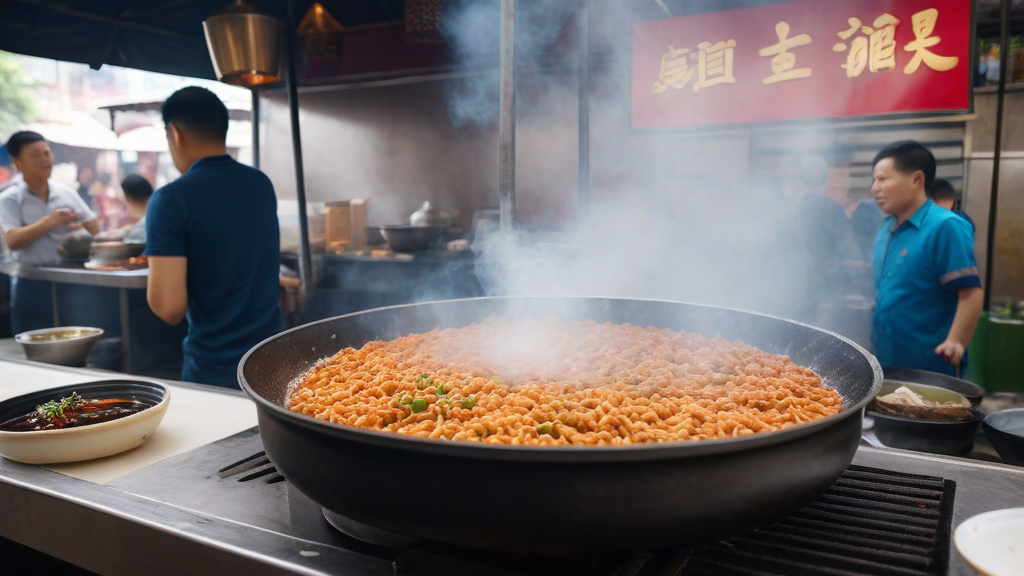
A 2019 survey found that 85% of Chinese street food vendors source ingredients daily from local wet markets. High turnover—most stalls sell out within hours—reduces the time food sits at unsafe temperatures. Noodles are cooked to order, skewers grilled on the spot, and soups simmered continuously. The open kitchen format allows customers to watch every step, from chopping to frying.
Why High Turnover Matters
Unlike pre-packaged fast food, Chinese street food is often made in small batches. A stall selling 300 jianbing (savory crepes) per day has little leftover inventory. This “just-in-time” model naturally limits bacterial growth. The average stall operates on margins that incentivize buying only what can be sold, reducing waste and spoilage.
Local Government Initiatives: Pilots and Standardization
Chengdu’s Model Success
Chengdu’s “Street Food Standardization” program, launched in 2017, transformed 500 stalls into licensed, HACCP-certified units. Vendors received training in hygiene, waste disposal, and temperature control. Result: foodborne illness incidents dropped by 40% in pilot districts from 2017 to 2019. The city now plans to expand city-wide, adding nutritional labeling and mobile payment records for traceability.
Other City Programs
Guangzhou: Designated street food zones with centralized washing stations.
Hangzhou: QR code traceability for every ingredient batch.
Xi’an: Night market licenses that require visible cooking and covered ingredients.
These initiatives show that local governments treat street food not as a nuisance but as a cultural asset worth safeguarding.
Cultural Context: Street Food as Heritage
Xiaochi: More Than a Snack
Street food (xiaochi, 小吃) has been part of Chinese urban life for centuries. From Beijing’s zhajiangmian to Shanghai’s shengjianbao, each city boasts specialties that define its identity. The Chinese value “huo” (fire) and “qi” (energy)—food cooked quickly over high heat, which also kills pathogens. This cultural appreciation for freshly cooked meals aligns with basic food safety principles.
Comparison to Global Street Food
Compared to street food in Southeast Asia, China’s regulatory framework is more stringent. For example, Thailand’s street food is iconic but less regulated, while Singapore’s hawker centers are government-run. China occupies a middle ground: vibrant street markets with official oversight. A 2021 study published in Food Control found that microbial contamination rates in Chinese street food are comparable to those in sit-down restaurants in the US.
Tips for Travelers: How to Choose Safe Street Food
Look for High Traffic Stalls
Busy stalls sell fresh batches. If a vendor is constantly turning over ingredients, the food hasn’t sat out long. Avoid stalls with few customers or pre-made dishes sitting under heat lamps.
Watch the Cooking Process
Choose stalls where you can see the cooking: oil bubbling, flames high, and food cooked to order. Avoid anything that looks lukewarm or held at room temperature. Always opt for fully cooked items—steamed buns, grilled meats, stir-fried noodles. Raw or cold dishes (like some cold salads) carry higher risk.
Hygiene Cues
Clean surfaces and utensils
Vendor wearing gloves or using tongs
Covered ingredient bins
Visible trash disposal (not piled up)
Stick to Water-Based Treats
Boiled or steamed items—dumplings, wontons, baozi—are excellent choices. The boiling water kills bacteria. Fried foods are also safe if the oil is fresh (look for clear, not dark, oil).
FAQ
Is Chinese street food generally safe to eat?
A: Yes, when purchased from licensed vendors with high turnover. Government regulations and local inspections have significantly improved safety. The 2015 Food Safety Law imposes heavy fines, and cities like Beijing have over 90% of vendors licensed.
What is the most common cause of foodborne illness from street food?
A: Improper holding temperatures and cross-contamination are the main risks. Always choose cooked-to-order items and avoid food that has been sitting out for hours.
Are there any specific foods to avoid?
A: Raw or cold dishes (e.g., cold rice noodles, raw seafood) carry higher risk. Stick to hot, freshly cooked items like jianbing, skewers, or steamed dumplings.
How does China enforce street food safety?
A: Local food and drug administrations conduct regular inspections, issue licenses, and use fines, closure, and public shaming. Smart tech, like IoT sensors in Shanghai, monitors cooking temperatures in real time.
What is the fine for a food safety violation?
A: Fines can be up to 30 times the value of the illegal product. For example, a 10-yuan item could result in a 300-yuan fine (≈ $42 USD). Repeat offenders may lose their license.
Are there pilot programs for safe street food?
A: Yes, Chengdu’s program reduced foodborne illness by 40% by standardizing stalls. Other cities have designated zones, centralized washing, and QR code traceability.
How do Chinese street vendors keep ingredients fresh?
A: Most vendors buy fresh ingredients daily from local markets. High turnover means little storage; ingredients are often used within hours.
What is HACCP certification in Chinese street food?
A: HACCP (Hazard Analysis Critical Control Point) is a preventive food safety system increasingly adopted by vendors in pilot areas like Chengdu, focusing on controlling hazards at critical points.
Conclusion
Chinese street food is not only delicious but also safe when you follow simple rules: choose busy stalls, watch food cooked to order, and observe hygiene. With stringent laws like the 2015 Food Safety Law, local initiatives like Chengdu’s standardization, and cultural practices emphasizing freshness, the risks are minimal. So go ahead—explore the night markets, savor the xiaochi, and enjoy one of China’s greatest culinary traditions. For more on Chinese food culture, check out our guide to Chinese tea culture explained for beginners and best places to visit China first timers guide.
Mục lục
Introduction
Chinese street food—vibrant, aromatic, and an integral part of daily life—attracts millions of travelers each year. Yet a common question lingers: Chinese street food safety is it safe to eat? The answer, backed by rigorous regulations and modern oversight, is a resounding yes—when you know what to look for. China has overhauled its food safety framework, from strict licensing to smart monitoring, making street food safer than ever. Here’s what we’ll cover: the regulatory landscape, local enforcement, cultural practices, and practical tips to enjoy xiaochi with confidence.
Key Takeaways
China’s 2015 Food Safety Law imposes fines up to 30 times the product value, deterring unsafe practices.
In Beijing, over 90% of street food vendors are licensed and inspected (municipal data, 2020).
Chengdu’s “Street Food Standardization” program cut foodborne illness incidents by 40% in pilot districts (2017–2019).
85% of Chinese street food vendors source fresh ingredients daily from local markets (2019 survey).
Government Regulations: A Robust Legal Framework
China’s Food Safety Law
The cornerstone of modern street food safety is the Food Safety Law of the People’s Republic of China, first enacted in 2009 and significantly revised in 2015. The revision introduced draconian penalties: fines can reach up to 30 times the value of the illegal product. For a small vendor selling unsafe snacks, that could mean a fine of 30,000 yuan (≈ $4,200 USD) for a 1,000-yuan infraction. Repeat offenders risk business license revocation and criminal liability.
Comparison to Western Standards
While the US FDA’s maximum penalty for food safety violations is around $250,000 per violation per label, China’s punitive model relies on proportional fines that hit small vendors hard. Critics argue that enforcement is uneven, but in tier-1 cities like Beijing, Shanghai, and Guangzhou, inspections are frequent and penalties publicized. The law also mandates that all food vendors register with local authorities, creating a traceable chain.
Inspection and Licensing: Local Authorities on the Ground
Licensing Rates and Enforcement
By 2020, over 90% of street food vendors in Beijing were licensed and subject to routine inspections. Municipal data shows that unlicensed stalls face immediate shutdown. Local food and drug administrations conduct spot checks, testing for heavy metals, pesticide residues, and microbial contamination. In Shanghai, the “Smart Street Food” initiative uses IoT sensors to monitor cooking temperatures in real time, alerting inspectors if thresholds are breached.
Table: Street Food Safety Metrics in Major Cities
City
Licensed Vendors (%)
Inspection Frequency
Tech Adoption
Beijing
90%+
Monthly spot checks
Manual logging
Shanghai
85%+
Bi-weekly + IoT sensors
Real-time temp monitoring
Chengdu
80%+ (pilot areas)
Weekly during pilot
HACCP certification
Data sources: Beijing Municipal Food Safety Commission, Shanghai FDA, Chengdu Pilot Program Reports.
Common Practices: Fresh Ingredients, High Turnover, Visible Cooking
Freshness by Design
A 2019 survey found that 85% of Chinese street food vendors source ingredients daily from local wet markets. High turnover—most stalls sell out within hours—reduces the time food sits at unsafe temperatures. Noodles are cooked to order, skewers grilled on the spot, and soups simmered continuously. The open kitchen format allows customers to watch every step, from chopping to frying.
Why High Turnover Matters
Unlike pre-packaged fast food, Chinese street food is often made in small batches. A stall selling 300 jianbing (savory crepes) per day has little leftover inventory. This “just-in-time” model naturally limits bacterial growth. The average stall operates on margins that incentivize buying only what can be sold, reducing waste and spoilage.
Local Government Initiatives: Pilots and Standardization
Chengdu’s Model Success
Chengdu’s “Street Food Standardization” program, launched in 2017, transformed 500 stalls into licensed, HACCP-certified units. Vendors received training in hygiene, waste disposal, and temperature control. Result: foodborne illness incidents dropped by 40% in pilot districts from 2017 to 2019. The city now plans to expand city-wide, adding nutritional labeling and mobile payment records for traceability.
Other City Programs
Guangzhou: Designated street food zones with centralized washing stations.
Hangzhou: QR code traceability for every ingredient batch.
Xi’an: Night market licenses that require visible cooking and covered ingredients.
These initiatives show that local governments treat street food not as a nuisance but as a cultural asset worth safeguarding.
Cultural Context: Street Food as Heritage
Xiaochi: More Than a Snack
Street food (xiaochi, 小吃) has been part of Chinese urban life for centuries. From Beijing’s zhajiangmian to Shanghai’s shengjianbao, each city boasts specialties that define its identity. The Chinese value “huo” (fire) and “qi” (energy)—food cooked quickly over high heat, which also kills pathogens. This cultural appreciation for freshly cooked meals aligns with basic food safety principles.
Comparison to Global Street Food
Compared to street food in Southeast Asia, China’s regulatory framework is more stringent. For example, Thailand’s street food is iconic but less regulated, while Singapore’s hawker centers are government-run. China occupies a middle ground: vibrant street markets with official oversight. A 2021 study published in Food Control found that microbial contamination rates in Chinese street food are comparable to those in sit-down restaurants in the US.
Tips for Travelers: How to Choose Safe Street Food
Look for High Traffic Stalls
Busy stalls sell fresh batches. If a vendor is constantly turning over ingredients, the food hasn’t sat out long. Avoid stalls with few customers or pre-made dishes sitting under heat lamps.
Watch the Cooking Process
Choose stalls where you can see the cooking: oil bubbling, flames high, and food cooked to order. Avoid anything that looks lukewarm or held at room temperature. Always opt for fully cooked items—steamed buns, grilled meats, stir-fried noodles. Raw or cold dishes (like some cold salads) carry higher risk.
Hygiene Cues
Clean surfaces and utensils
Vendor wearing gloves or using tongs
Covered ingredient bins
Visible trash disposal (not piled up)
Stick to Water-Based Treats
Boiled or steamed items—dumplings, wontons, baozi—are excellent choices. The boiling water kills bacteria. Fried foods are also safe if the oil is fresh (look for clear, not dark, oil).
FAQ
Is Chinese street food generally safe to eat?
A: Yes, when purchased from licensed vendors with high turnover. Government regulations and local inspections have significantly improved safety. The 2015 Food Safety Law imposes heavy fines, and cities like Beijing have over 90% of vendors licensed.
What is the most common cause of foodborne illness from street food?
A: Improper holding temperatures and cross-contamination are the main risks. Always choose cooked-to-order items and avoid food that has been sitting out for hours.
Are there any specific foods to avoid?
A: Raw or cold dishes (e.g., cold rice noodles, raw seafood) carry higher risk. Stick to hot, freshly cooked items like jianbing, skewers, or steamed dumplings.
How does China enforce street food safety?
A: Local food and drug administrations conduct regular inspections, issue licenses, and use fines, closure, and public shaming. Smart tech, like IoT sensors in Shanghai, monitors cooking temperatures in real time.
What is the fine for a food safety violation?
A: Fines can be up to 30 times the value of the illegal product. For example, a 10-yuan item could result in a 300-yuan fine (≈ $42 USD). Repeat offenders may lose their license.
Are there pilot programs for safe street food?
A: Yes, Chengdu’s program reduced foodborne illness by 40% by standardizing stalls. Other cities have designated zones, centralized washing, and QR code traceability.
How do Chinese street vendors keep ingredients fresh?
A: Most vendors buy fresh ingredients daily from local markets. High turnover means little storage; ingredients are often used within hours.
What is HACCP certification in Chinese street food?
A: HACCP (Hazard Analysis Critical Control Point) is a preventive food safety system increasingly adopted by vendors in pilot areas like Chengdu, focusing on controlling hazards at critical points.
Conclusion
Chinese street food is not only delicious but also safe when you follow simple rules: choose busy stalls, watch food cooked to order, and observe hygiene. With stringent laws like the 2015 Food Safety Law, local initiatives like Chengdu’s standardization, and cultural practices emphasizing freshness, the risks are minimal. So go ahead—explore the night markets, savor the xiaochi, and enjoy one of China’s greatest culinary traditions. For more on Chinese food culture, check out our guide to Chinese tea culture explained for beginners and best places to visit China first timers guide.
Master the art of Chinese hotpot with our insider guide. Discover broth secrets, dipping sauce recipes, cooking order, and etiquette to eat like a local. From Chongqing spicy to Cantonese seafood, become a hotpot pro.
I've lived in China for 8 years and eaten roast duck more times than I can count. Here's everything I know — the best restaurants, what to order, how to
Surprising differences in Chinese vs Western food portions: family-style sharing cuts calories, rice and protein sizes vary greatly, and health outcomes reflect these habits. Compare the numbers.
2 thoughts on “Chinese Street Food Safety: Is It Safe to Eat? A Comprehensive Guide”
Great article! What about hygiene ratings? Do Chinese street vendors have any visible certifications?
Great article! What about hygiene ratings? Do Chinese street vendors have any visible certifications?
I got sick once from a street stall in Chengdu, but the food was so good I’d risk it again. Any specific dishes safer than others?