The first time I tried authentic Sichuan hotpot, I literally thought my mouth was on fire and my tongue had gone numb. Eight years on, I can’t get enough. Here’s everything I wish someone had told me before I sat down—broths, dipping sauces, must-eat ingredients, and the unspoken rules of the table.
Ready
EN
# Sichuan Hotpot: The Ultimate Guide for First-Timers (From a Brit Who’s Eaten His Weight in Chilies)
I remember my first Sichuan hotpot like it was yesterday. It was a rainy evening in Chengdu, 2017. A local friend dragged me to a place called Huangcheng Laoma (皇城老妈) – a chain, but a good one. I sat down, looked at the bubbling crimson broth covered in a slick of oil and dried chilies, and thought, “How bad can it be?”
Forty-five minutes later, my face was the colour of the broth, sweat was dripping off my nose, and my lips had gone completely numb. I loved it. And I hated it. And then I loved it again.
If you’re new to Sichuan hotpot, let me be your guide. I’ve eaten my way through dozens of hotpot joints in Chengdu, Chongqing, and beyond. I’ve burned my tongue, stained countless shirts, and learned a few tricks along the way.
What Exactly Is Sichuan Hotpot?
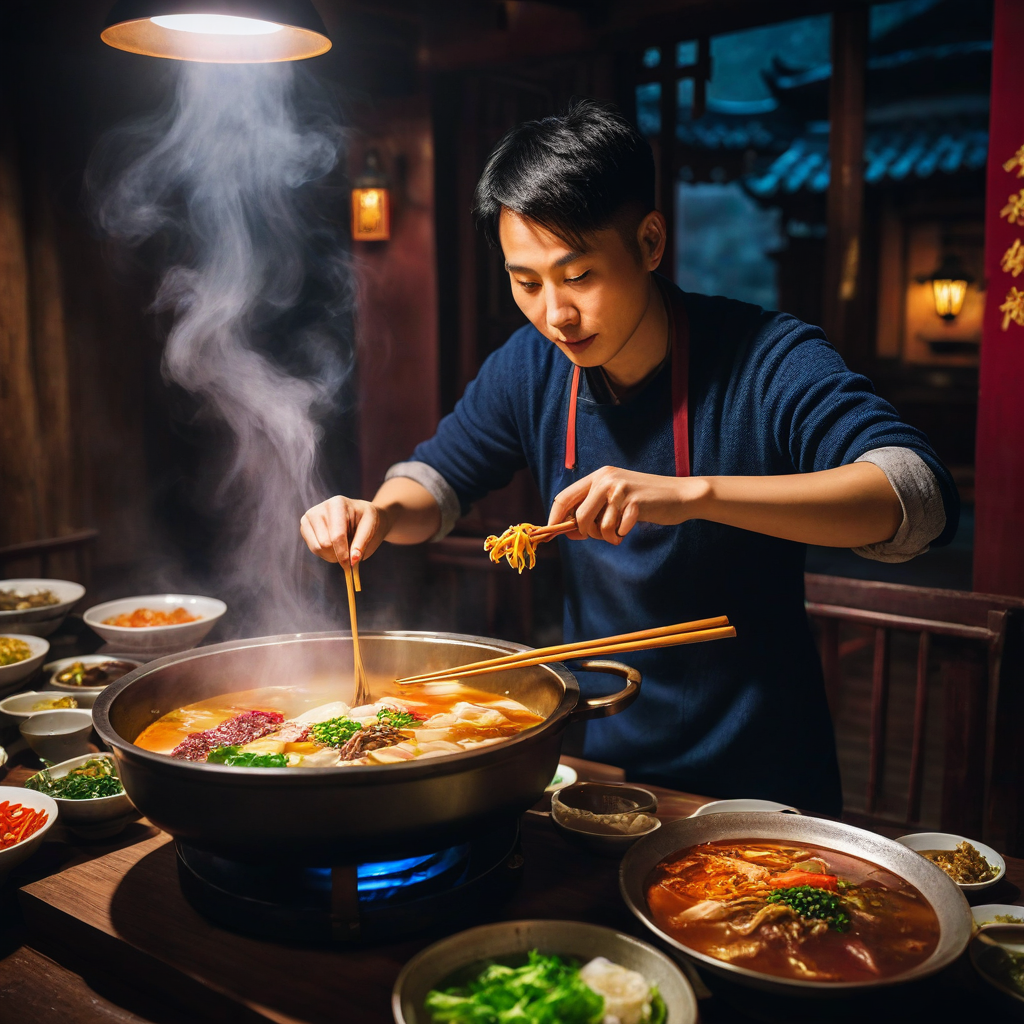
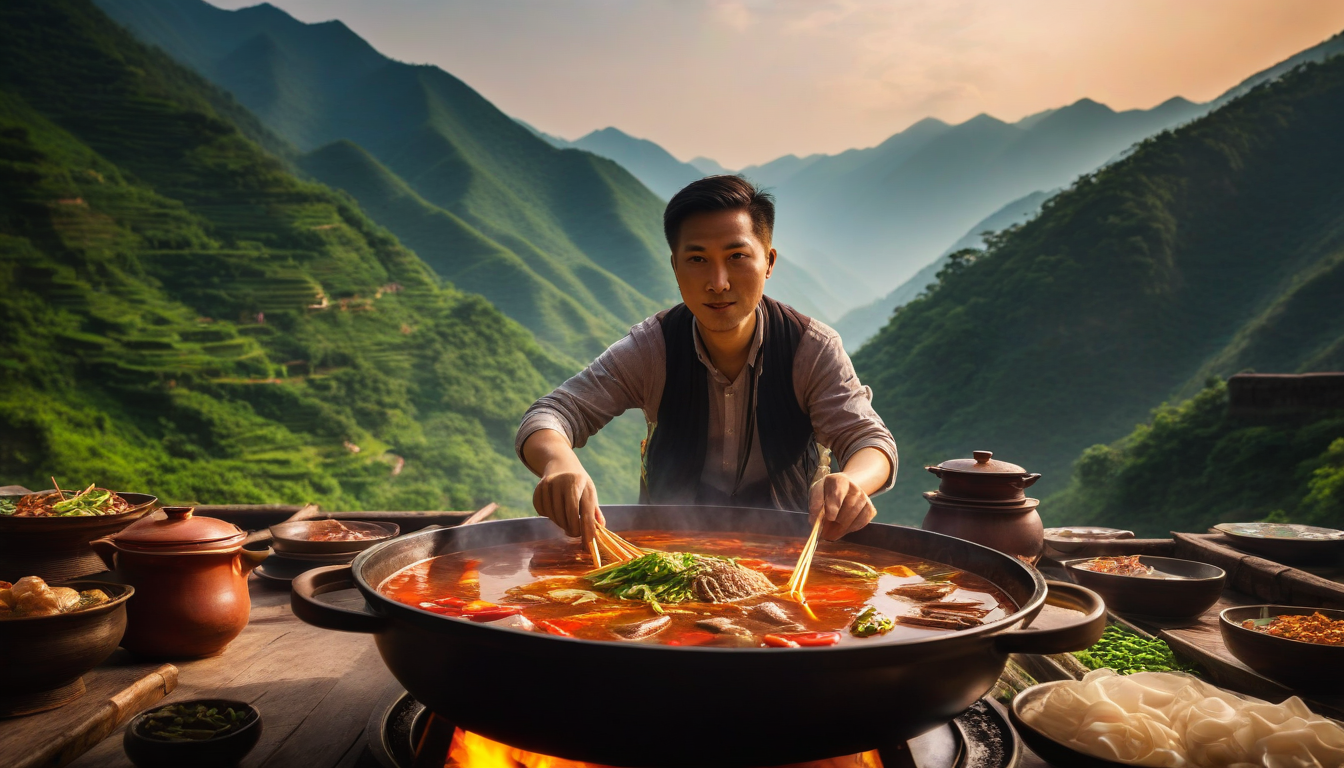
Hotpot (huǒguō, 火锅) is China’s great communal dining experience. A pot of simmering broth sits in the middle of the table, heated by a gas burner or induction hob. You order raw ingredients – thinly sliced meats, vegetables, tofu, offal, noodles – and cook them yourself at the table. Then you dip the cooked morsels into a custom sauce before eating.
Sichuan hotpot is the fiery, numbing king of all hotpots. It’s defined by málà (麻辣) – that unique combination of spicy chili (là) and numbing Sichuan peppercorn (má). The peppercorns contain a compound called hydroxy-alpha-sanshool that creates a weird, tingly vibration on your tongue. At first it’s jarring. Later? Addictive.
The birthplace is actually Chongqing, a city that takes its hotpot so seriously it has a whole museum dedicated to it. But Chengdu, the capital of Sichuan province, has its own version – slightly more aromatic, sometimes less aggressively oily.
The Core Elements: Broth, Dipping Sauce, Ingredients
Broth Choices
Most places offer two broths: the classic red (red chili oil) and a mild, clear broth (often chicken or mushroom). The smartest move? Get a yuanyang (鸳鸯) pot – split in half, red on one side, mild on the other. It’s not cowardly; it’s strategic. You can pace yourself and save your taste buds.
Here’s a rough guide to the broths you’ll encounter:
Type
Description
Heat Level
Best For
Traditional Red (传统红汤)
Pure chili oil, dried chilies, Sichuan peppercorns, spices
🌶️🌶️🌶️🌶️🌶️
The brave, the locals, offal lovers
Yuanyang (鸳鸯锅)
Half red, half clear (chicken or tomato)
🌶️🌶️ (on red side)
First-timers, groups with mixed tolerance
Tomato Broth (番茄锅)
Mild, sweet, tangy tomato soup
🌶️
Kids, damaged palates, anyone who wants actual flavour without pain
Mushroom Broth (菌汤)
Earthy, umami-rich mushroom stock
🌶️
Vegetarians, pairing with red for dipping vegetables
The Dipping Sauce Station
This is where newcomers get it wrong. In northern China, the go-to hotpot dip is sesame paste – thick, nutty, comforting. In Sichuan, they do the opposite: a thin, oily sauce based on sesame oil (香油), garlic, chopped coriander, spring onions, and maybe a splash of vinegar.
Why sesame oil? Because the fat helps cool down your mouth after the chili assault. It’s not about adding more heat; it’s about balancing.
My personal recipe: one cup of sesame oil, a heap of minced garlic (don’t be shy), a spoonful of chopped coriander, a pinch of salt, and a splash of Zhenjiang black vinegar. Sometimes I add crushed peanuts or a dollop of houjiaojiang (fermented chili paste) if I’m feeling dangerous.
Must-Try Ingredients
You’ll get a menu that looks like a biology textbook – pig brain, cow stomach, duck blood, beef tendon, tripe. I know it sounds intimidating. But trust me, when cooked right in that spicy broth, some of these become transcendent.
Here’s my pick of the essentials for beginners:
Beef tripe (牛肚, niú dǔ): That honeycomb-looking stuff. Cook for 10-15 seconds – any longer and it turns into rubber. The texture is slightly crunchy, and it soaks up the broth like nothing else.
Lamb or beef slices (肉片): Thinly sliced, they cook in 20 seconds. The go-to for anyone who wants meat without the offal adventure.
Lotus root (莲藕, lián ǒu): Sliced thin. It stays crunchy even after boiling – a great palate cleanser between spicy bites.
Tofu skin (豆腐皮, dòufu pí): A soy product that looks like wrinkled cloth. Absorbs flavour like a sponge.
Potato slices (土豆片, tǔdòu piàn): Thick cut. They take longer to cook but turn soft and creamy. Fantastic with the tomato broth.
Enoki mushrooms (金针菇, jīnzhēn gū): Those long, thin white mushrooms. Cook quickly, mild flavour, fun to slurp.
Duck blood (鸭血, yā xuè): Okay, this one’s an acquired taste. It comes in dark red blocks. Smooth, slightly metallic, but in the spicy broth it’s surprisingly good. If you’re squeamish, skip it.
Fish balls (鱼丸, yúwán): Safe, bouncy, kid-friendly. They float when done.
For the brave: pig brain (猪脑, zhū nǎo) – it’s like silken tofu but richer. And beef stomach (毛肚, máo dǔ) – the real deal in Chongqing hotpot.
The Numbing Spice: Understanding Málà
Let’s talk about the star of the show: huājiāo (花椒) – Sichuan peppercorn. It’s not actually a pepper; it’s the dried husk of a prickly ash tree. Bite into one and you’ll feel a strange, electric buzzing on your lips and tongue. It’s almost like carbonation. Some people hate it. I can’t live without it.
In a good hotpot, the má and là work together in a dance: the chili burns, the peppercorn numbs, and then the cycle repeats. It’s uncomfortable at first, but after a few rounds, your brain starts to crave it. Seriously – it’s scientifically proven to release endorphins.
If you’re worried about the heat, here’s a hack: instead of drinking water (which spreads the capsaicin), drink whole milk or a soy-milk drink (dòunǎi, 豆奶). The fat and casein bind with the spicy molecules and flush them out. Or just order a bowl of ice cream afterwards. That works too.
How to Eat Hotpot (The Right Way)
This might seem obvious, but I’ve seen tourists do some wild things.
Don’t dump everything in at once. Cook in small batches. Different ingredients have different cooking times – tripe and thin meat take seconds; potatoes and tofu take minutes. Use the wire basket (lòuzi, 漏勺) to fish things out.
Use your personal bowl. You have a small bowl for the dipping sauce. Dip each cooked piece before eating. Do not double-dip with your chopsticks – that’s gross and locals will notice.
Drink the broth? At the end of the meal, some people ladle the now-concentrated red broth into bowls and drink it. This is an advanced move. If you’re a beginner, don’t – your stomach will hate you. But the mild broth is perfectly safe and delicious.
The order matters. Start with meats and offal to flavour the broth, then vegetables, and finish with noodles or rice. The starch soaks up all that spicy goodness.
Control the heat. The gas burner is usually adjustable. If it’s too fierce, turn it down. If the broth reduces too much, ask for more stock (they’ll bring a kettle).
Etiquette and Practical Tips
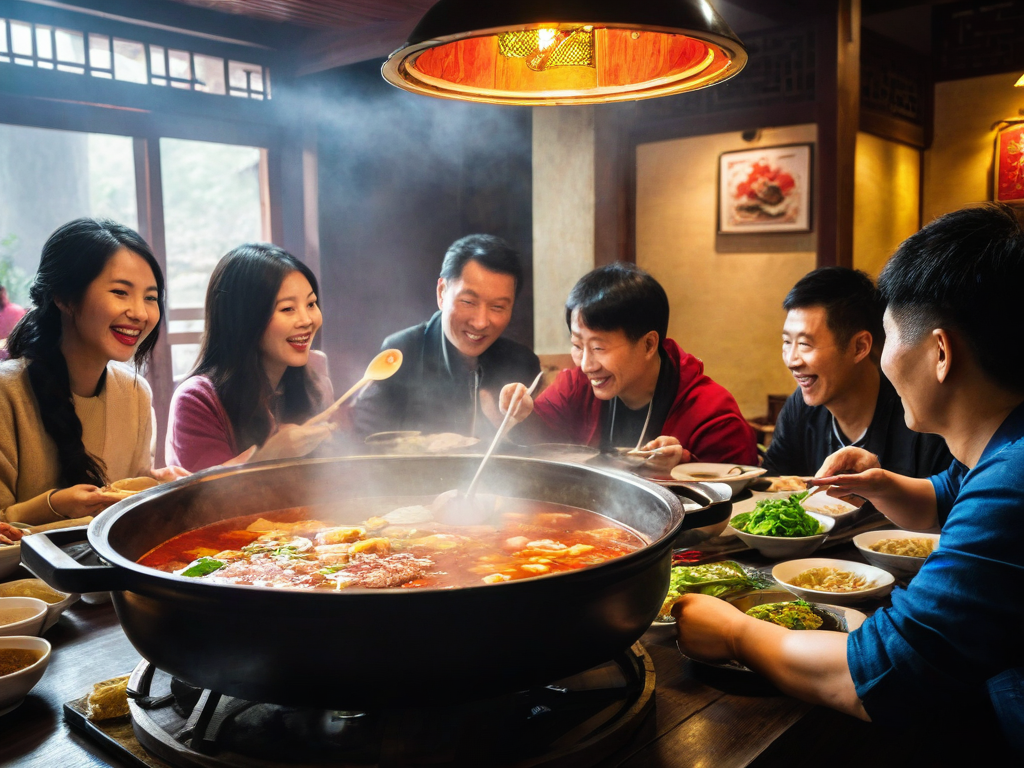
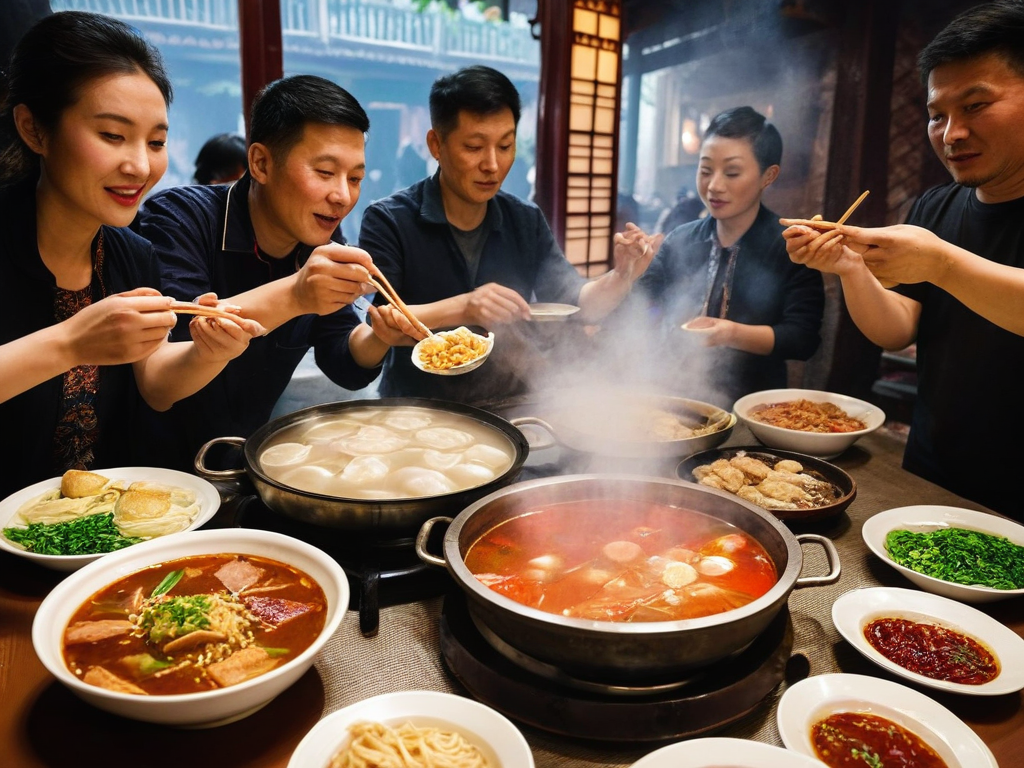
Hotpot is loud, messy, and social. No one dresses up for it. Expect noise, steam, and spilled sauces. The best hotpot joints are chaotic, with waiters shouting orders and tables crammed together.
Booking: Popular places in Chengdu and Chongqing have queues an hour long. Download Dianping (大众点评) to check wait times, or go early (11:30 AM for lunch, 5:30 PM for dinner).
Cost: Expect to pay around ¥70–150 per person (about $10–20 USD). That’s for a decent meal with a few beers. Chongqing is slightly cheaper than Chengdu.
Drinks: Sour plum drink (酸梅汤, suān méi tāng) is the classic hotpot companion – sweet, sour, cooling. Or get a Lao (老) brand beer like Chongqing Beer. Avoid baijiu unless you really want to regret everything.
Stains: Red oil WILL splash onto your clothes. The white aprons they give you are mostly useless. Best to wear dark colours.
Chengdu vs. Chongqing: The Great Hotpot Rivalry
Every Sichuan hotpot guide has to address this. Chengdu and Chongqing are like Manchester and Liverpool – same passion, different style.
Chongqing hotpot: Uses pure beef tallow (牛油, niú yóu) as the base. It’s heavy, oily, and intensely savoury. The broth is darker, spicier, and the mala is more aggressive. The ingredients are simpler – mostly offal and fewer fancy vegetables. Locals will tell you the water in Chongqing (from the Yangtze and Jialing Rivers) makes the peppercorns taste better. I’m not sure if that’s true, but the hotpot there hits different.
Chengdu hotpot: Often uses a blend of beef tallow and vegetable oil. The flavour is more layered – you’ll taste star anise, cinnamon, and fennel alongside the chili. There’s more variety in ingredients: seafood, exotic mushrooms, even cheese balls (don’t knock it till you try it). The atmosphere is trendier, with music and stylish interiors.
My advice? Try both. They’re different enough to justify two separate meals. If you can only do one, go to Chongqing for the visceral, pounding experience, and Chengdu for the refined, aromatic version.
My Favourite Spots (If You’re Visiting)
In Chengdu, I like Ma Long (马龙火锅) for its old-school vibe and generous portions. Also Shu Jiuxiang (蜀九香) – a chain that’s consistent and has English menus (useful for beginners). The original branch near Kuanzhai Alley is solid.
In Chongqing, you can’t go wrong with Zhou Shi San (周师兄) – they do a killer beef tripe. Or Lao Huo Guo (老火锅) – literally “old hotpot” – any one with a sign that looks like it’s been there for 40 years. Don’t go to the fancy tourist traps on Jiefangbei; find a hole-in-the-wall in a hutong with plastic stools and peeling paint.
FAQ (Questions Real Tourists Ask)
Q: Is Sichuan hotpot really that spicy?
Yes, but it’s manageable if you take it slow. The numbing effect of Sichuan peppercorn actually reduces the burn. Order yuanyang broth, drink milk, and don’t be shy about asking for mild broth. The locals won’t judge you (much).
Q: What if I can’t handle chili at all?
Stick to the clear broth. There’s still plenty of flavour from the stock and your dipping sauce. You can also order a clear broth hotpot (清汤火锅) – some places do a tomato-based mild version. It’s not the “real” Sichuan experience, but you’ll still enjoy the social cooking.
Q: What are the vegetarian options?
More than you’d think. Mushroom broth is common. Tofu, tofu skin, all sorts of vegetables, mushrooms, and fake meat (mock duck, etc.) are widely available. Just tell the waiter wǒ chī sù (我吃素) – I’m vegetarian. Note: the red broth is not vegetarian (beef tallow). Go for the clear side.
Q: Do I need to know Chinese to order?
Big chains in tourist areas have picture menus or English translations. Smaller local places don’t. Learn to say wǒ yào yuānyāng guō (我要鸳鸯锅) – I want a yuanyang pot – and duō suàn (多蒜) – more garlic. Pointing works too.
Q: Can I take the leftovers home?
Not really. The broth is communal and the ingredients are raw – food safety rules say no. But you can ask for a box for any uncooked items you didn’t touch. Expect weird looks.
A Final Word (What I’d Tell My Mate)
If you’re coming to China for a week, you’ll hear about Sichuan hotpot from everyone. You’ll be nervous. That’s normal. But here’s the thing: it’s not just a meal. It’s a ritual, a conversation starter, a shared endurance test. You’ll sit with friends or strangers, cooking together, laughing at the pain, and eventually feeling that strange warmth that comes from conquering a bowl of boiling oil.
Start with the yuanyang pot. Dip in sesame oil. Drink the sour plum drink. And whatever you do, don’t wear a white shirt.
You’ll be fine. And you’ll be back for more.
– Mark, a Brit who now carries Sichuan peppercorns in his travel bag.
# Sichuan Hotpot: The Ultimate Guide for First-Timers (From a Brit Who’s Eaten His Weight in Chilies)
I remember my first Sichuan hotpot like it was yesterday. It was a rainy evening in Chengdu, 2017. A local friend dragged me to a place called Huangcheng Laoma (皇城老妈) – a chain, but a good one. I sat down, looked at the bubbling crimson broth covered in a slick of oil and dried chilies, and thought, “How bad can it be?”
Forty-five minutes later, my face was the colour of the broth, sweat was dripping off my nose, and my lips had gone completely numb. I loved it. And I hated it. And then I loved it again.
If you’re new to Sichuan hotpot, let me be your guide. I’ve eaten my way through dozens of hotpot joints in Chengdu, Chongqing, and beyond. I’ve burned my tongue, stained countless shirts, and learned a few tricks along the way.
What Exactly Is Sichuan Hotpot?
Hotpot (huǒguō, 火锅) is China’s great communal dining experience. A pot of simmering broth sits in the middle of the table, heated by a gas burner or induction hob. You order raw ingredients – thinly sliced meats, vegetables, tofu, offal, noodles – and cook them yourself at the table. Then you dip the cooked morsels into a custom sauce before eating.
Sichuan hotpot is the fiery, numbing king of all hotpots. It’s defined by málà (麻辣) – that unique combination of spicy chili (là) and numbing Sichuan peppercorn (má). The peppercorns contain a compound called hydroxy-alpha-sanshool that creates a weird, tingly vibration on your tongue. At first it’s jarring. Later? Addictive.
The birthplace is actually Chongqing, a city that takes its hotpot so seriously it has a whole museum dedicated to it. But Chengdu, the capital of Sichuan province, has its own version – slightly more aromatic, sometimes less aggressively oily.
The Core Elements: Broth, Dipping Sauce, Ingredients
Broth Choices
Most places offer two broths: the classic red (red chili oil) and a mild, clear broth (often chicken or mushroom). The smartest move? Get a yuanyang (鸳鸯) pot – split in half, red on one side, mild on the other. It’s not cowardly; it’s strategic. You can pace yourself and save your taste buds.
Here’s a rough guide to the broths you’ll encounter:
Type
Description
Heat Level
Best For
Traditional Red (传统红汤)
Pure chili oil, dried chilies, Sichuan peppercorns, spices
🌶️🌶️🌶️🌶️🌶️
The brave, the locals, offal lovers
Yuanyang (鸳鸯锅)
Half red, half clear (chicken or tomato)
🌶️🌶️ (on red side)
First-timers, groups with mixed tolerance
Tomato Broth (番茄锅)
Mild, sweet, tangy tomato soup
🌶️
Kids, damaged palates, anyone who wants actual flavour without pain
Mushroom Broth (菌汤)
Earthy, umami-rich mushroom stock
🌶️
Vegetarians, pairing with red for dipping vegetables
The Dipping Sauce Station
This is where newcomers get it wrong. In northern China, the go-to hotpot dip is sesame paste – thick, nutty, comforting. In Sichuan, they do the opposite: a thin, oily sauce based on sesame oil (香油), garlic, chopped coriander, spring onions, and maybe a splash of vinegar.
Why sesame oil? Because the fat helps cool down your mouth after the chili assault. It’s not about adding more heat; it’s about balancing.
My personal recipe: one cup of sesame oil, a heap of minced garlic (don’t be shy), a spoonful of chopped coriander, a pinch of salt, and a splash of Zhenjiang black vinegar. Sometimes I add crushed peanuts or a dollop of houjiaojiang (fermented chili paste) if I’m feeling dangerous.
Must-Try Ingredients
You’ll get a menu that looks like a biology textbook – pig brain, cow stomach, duck blood, beef tendon, tripe. I know it sounds intimidating. But trust me, when cooked right in that spicy broth, some of these become transcendent.
Here’s my pick of the essentials for beginners:
Beef tripe (牛肚, niú dǔ): That honeycomb-looking stuff. Cook for 10-15 seconds – any longer and it turns into rubber. The texture is slightly crunchy, and it soaks up the broth like nothing else.
Lamb or beef slices (肉片): Thinly sliced, they cook in 20 seconds. The go-to for anyone who wants meat without the offal adventure.
Lotus root (莲藕, lián ǒu): Sliced thin. It stays crunchy even after boiling – a great palate cleanser between spicy bites.
Tofu skin (豆腐皮, dòufu pí): A soy product that looks like wrinkled cloth. Absorbs flavour like a sponge.
Potato slices (土豆片, tǔdòu piàn): Thick cut. They take longer to cook but turn soft and creamy. Fantastic with the tomato broth.
Enoki mushrooms (金针菇, jīnzhēn gū): Those long, thin white mushrooms. Cook quickly, mild flavour, fun to slurp.
Duck blood (鸭血, yā xuè): Okay, this one’s an acquired taste. It comes in dark red blocks. Smooth, slightly metallic, but in the spicy broth it’s surprisingly good. If you’re squeamish, skip it.
Fish balls (鱼丸, yúwán): Safe, bouncy, kid-friendly. They float when done.
For the brave: pig brain (猪脑, zhū nǎo) – it’s like silken tofu but richer. And beef stomach (毛肚, máo dǔ) – the real deal in Chongqing hotpot.
The Numbing Spice: Understanding Málà
Let’s talk about the star of the show: huājiāo (花椒) – Sichuan peppercorn. It’s not actually a pepper; it’s the dried husk of a prickly ash tree. Bite into one and you’ll feel a strange, electric buzzing on your lips and tongue. It’s almost like carbonation. Some people hate it. I can’t live without it.
In a good hotpot, the má and là work together in a dance: the chili burns, the peppercorn numbs, and then the cycle repeats. It’s uncomfortable at first, but after a few rounds, your brain starts to crave it. Seriously – it’s scientifically proven to release endorphins.
If you’re worried about the heat, here’s a hack: instead of drinking water (which spreads the capsaicin), drink whole milk or a soy-milk drink (dòunǎi, 豆奶). The fat and casein bind with the spicy molecules and flush them out. Or just order a bowl of ice cream afterwards. That works too.
How to Eat Hotpot (The Right Way)
This might seem obvious, but I’ve seen tourists do some wild things.
Don’t dump everything in at once. Cook in small batches. Different ingredients have different cooking times – tripe and thin meat take seconds; potatoes and tofu take minutes. Use the wire basket (lòuzi, 漏勺) to fish things out.
Use your personal bowl. You have a small bowl for the dipping sauce. Dip each cooked piece before eating. Do not double-dip with your chopsticks – that’s gross and locals will notice.
Drink the broth? At the end of the meal, some people ladle the now-concentrated red broth into bowls and drink it. This is an advanced move. If you’re a beginner, don’t – your stomach will hate you. But the mild broth is perfectly safe and delicious.
The order matters. Start with meats and offal to flavour the broth, then vegetables, and finish with noodles or rice. The starch soaks up all that spicy goodness.
Control the heat. The gas burner is usually adjustable. If it’s too fierce, turn it down. If the broth reduces too much, ask for more stock (they’ll bring a kettle).
Etiquette and Practical Tips
Hotpot is loud, messy, and social. No one dresses up for it. Expect noise, steam, and spilled sauces. The best hotpot joints are chaotic, with waiters shouting orders and tables crammed together.
Booking: Popular places in Chengdu and Chongqing have queues an hour long. Download Dianping (大众点评) to check wait times, or go early (11:30 AM for lunch, 5:30 PM for dinner).
Cost: Expect to pay around ¥70–150 per person (about $10–20 USD). That’s for a decent meal with a few beers. Chongqing is slightly cheaper than Chengdu.
Drinks: Sour plum drink (酸梅汤, suān méi tāng) is the classic hotpot companion – sweet, sour, cooling. Or get a Lao (老) brand beer like Chongqing Beer. Avoid baijiu unless you really want to regret everything.
Stains: Red oil WILL splash onto your clothes. The white aprons they give you are mostly useless. Best to wear dark colours.
Chengdu vs. Chongqing: The Great Hotpot Rivalry
Every Sichuan hotpot guide has to address this. Chengdu and Chongqing are like Manchester and Liverpool – same passion, different style.
Chongqing hotpot: Uses pure beef tallow (牛油, niú yóu) as the base. It’s heavy, oily, and intensely savoury. The broth is darker, spicier, and the mala is more aggressive. The ingredients are simpler – mostly offal and fewer fancy vegetables. Locals will tell you the water in Chongqing (from the Yangtze and Jialing Rivers) makes the peppercorns taste better. I’m not sure if that’s true, but the hotpot there hits different.
Chengdu hotpot: Often uses a blend of beef tallow and vegetable oil. The flavour is more layered – you’ll taste star anise, cinnamon, and fennel alongside the chili. There’s more variety in ingredients: seafood, exotic mushrooms, even cheese balls (don’t knock it till you try it). The atmosphere is trendier, with music and stylish interiors.
My advice? Try both. They’re different enough to justify two separate meals. If you can only do one, go to Chongqing for the visceral, pounding experience, and Chengdu for the refined, aromatic version.
My Favourite Spots (If You’re Visiting)
In Chengdu, I like Ma Long (马龙火锅) for its old-school vibe and generous portions. Also Shu Jiuxiang (蜀九香) – a chain that’s consistent and has English menus (useful for beginners). The original branch near Kuanzhai Alley is solid.
In Chongqing, you can’t go wrong with Zhou Shi San (周师兄) – they do a killer beef tripe. Or Lao Huo Guo (老火锅) – literally “old hotpot” – any one with a sign that looks like it’s been there for 40 years. Don’t go to the fancy tourist traps on Jiefangbei; find a hole-in-the-wall in a hutong with plastic stools and peeling paint.
FAQ (Questions Real Tourists Ask)
Q: Is Sichuan hotpot really that spicy?
Yes, but it’s manageable if you take it slow. The numbing effect of Sichuan peppercorn actually reduces the burn. Order yuanyang broth, drink milk, and don’t be shy about asking for mild broth. The locals won’t judge you (much).
Q: What if I can’t handle chili at all?
Stick to the clear broth. There’s still plenty of flavour from the stock and your dipping sauce. You can also order a clear broth hotpot (清汤火锅) – some places do a tomato-based mild version. It’s not the “real” Sichuan experience, but you’ll still enjoy the social cooking.
Q: What are the vegetarian options?
More than you’d think. Mushroom broth is common. Tofu, tofu skin, all sorts of vegetables, mushrooms, and fake meat (mock duck, etc.) are widely available. Just tell the waiter wǒ chī sù (我吃素) – I’m vegetarian. Note: the red broth is not vegetarian (beef tallow). Go for the clear side.
Q: Do I need to know Chinese to order?
Big chains in tourist areas have picture menus or English translations. Smaller local places don’t. Learn to say wǒ yào yuānyāng guō (我要鸳鸯锅) – I want a yuanyang pot – and duō suàn (多蒜) – more garlic. Pointing works too.
Q: Can I take the leftovers home?
Not really. The broth is communal and the ingredients are raw – food safety rules say no. But you can ask for a box for any uncooked items you didn’t touch. Expect weird looks.
A Final Word (What I’d Tell My Mate)
If you’re coming to China for a week, you’ll hear about Sichuan hotpot from everyone. You’ll be nervous. That’s normal. But here’s the thing: it’s not just a meal. It’s a ritual, a conversation starter, a shared endurance test. You’ll sit with friends or strangers, cooking together, laughing at the pain, and eventually feeling that strange warmth that comes from conquering a bowl of boiling oil.
Start with the yuanyang pot. Dip in sesame oil. Drink the sour plum drink. And whatever you do, don’t wear a white shirt.
You’ll be fine. And you’ll be back for more.
– Mark, a Brit who now carries Sichuan peppercorns in his travel bag.
Is China safer than the US? Compare crime rates, gun violence, police efficiency, and public perception. See why China's murder rate is 12x lower and 90% of residents feel safe at night.
I remember my first mouthful of Sichuan hotpot – a mix of terror, sweat, and pure joy. Eight years on, I still can't get enough. Here's everything I wish someone had told me before I…
I’ll never forget my first real Sichuan hotpot. I walked into a tiny joint in Chengdu, the air so thick with chili fumes my eyes started watering before I even sat down. Eight years later,…
One thought on “Sichuan Hotpot: The Ultimate Guide for First-Timers (From a Brit Who’s Eaten His Weight in Chilies)”
Your first hotpot story is exactly what happened to me! Forgot to stir the sesame paste – disaster.

Your first hotpot story is exactly what happened to me! Forgot to stir the sesame paste – disaster.